
What Drives the Cost of Emergency Roof Repair
No made-up prices here. Instead: the factors that move a number up or down, so you can compare quotes on equal terms.
- No fixed prices
- Editable planning tool
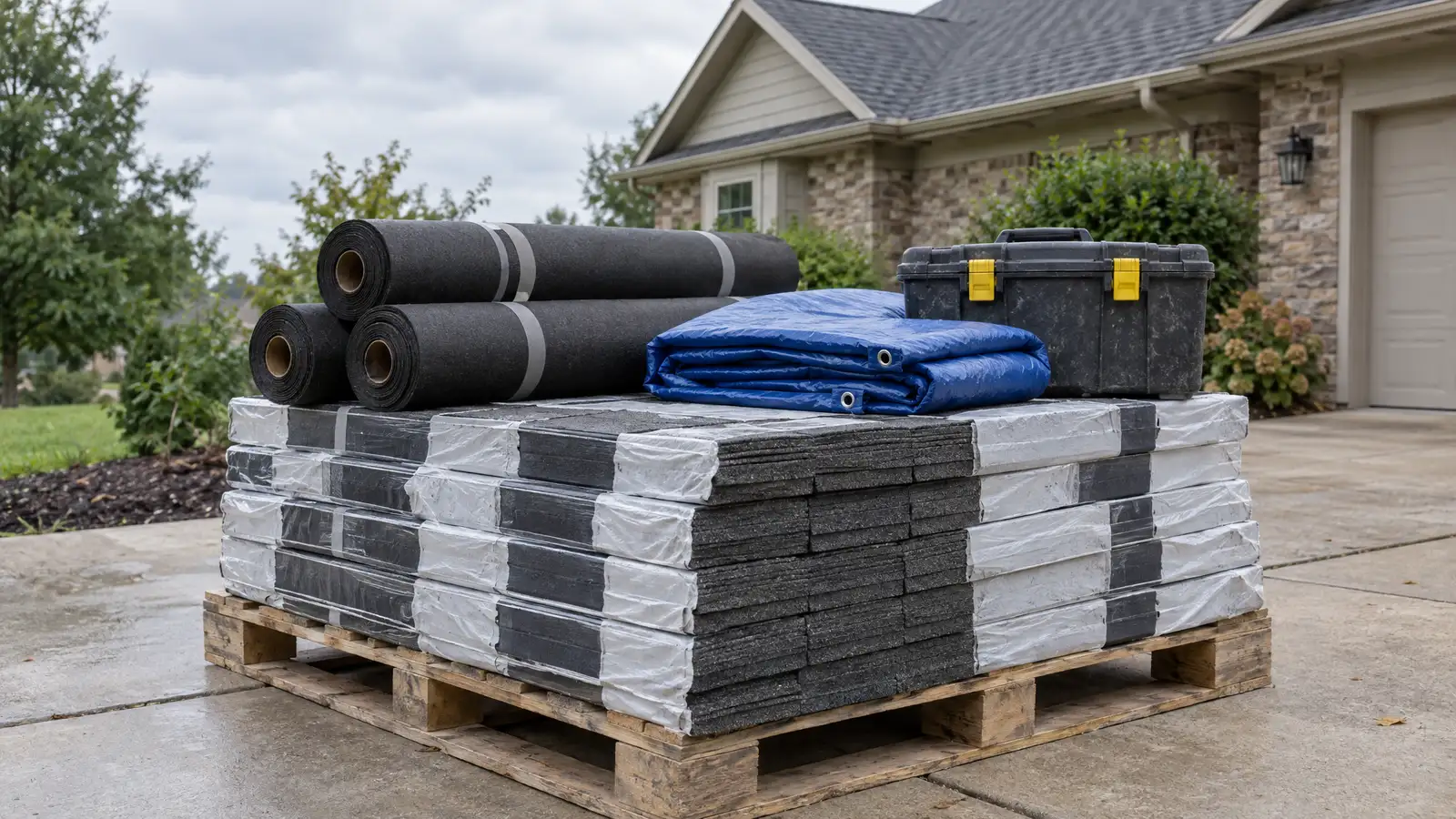
Eight things that move the price.
Size of the damage
A small tarp and a whole-slope cover are different jobs. Area, pitch and shape drive materials and time.
Roof type and pitch
Steep, tall or fragile roofs need more equipment and care, and flat roofs need different methods.
Debris and limbs
Fallen limbs and debris must be removed before covering or repairing, and large trees need other trades.
Hidden damage
Wet or broken decking and framing are often found only once roofing is removed, which can change the scope.
Commercial scale
Large roofs, equipment and access limits increase materials, crews and planning time.
Permits and code
Replacement and structural repairs may need permits and code upgrades that add cost.
Weather and timing
Wet, windy or freezing conditions change how work is done and how long it takes.
Documentation
Photo reports, claim packages and adjuster meetings take time and are priced into the job.
A ballpark, never a quote.
Ranges below are editable placeholders for planning, not our prices.
Compare scopes, not just totals.
Ask every roofer to describe the same job. List what each includes: the area covered, the materials, how the tarp is fastened, what is done about decking, whether debris is removed, whether photos and documentation are included and how extra work is priced and approved.
A quote that is far below the others may leave things out. A good quote says what it includes, what it assumes and what it excludes, and does not ask for full payment up front.
How to vet an emergency rooferStorm hit your roof? Call before the next rain.
Tell us what happened and where you see water. We will explain the safest next step and how we can cover and repair the roof.