Cover it before the next rain
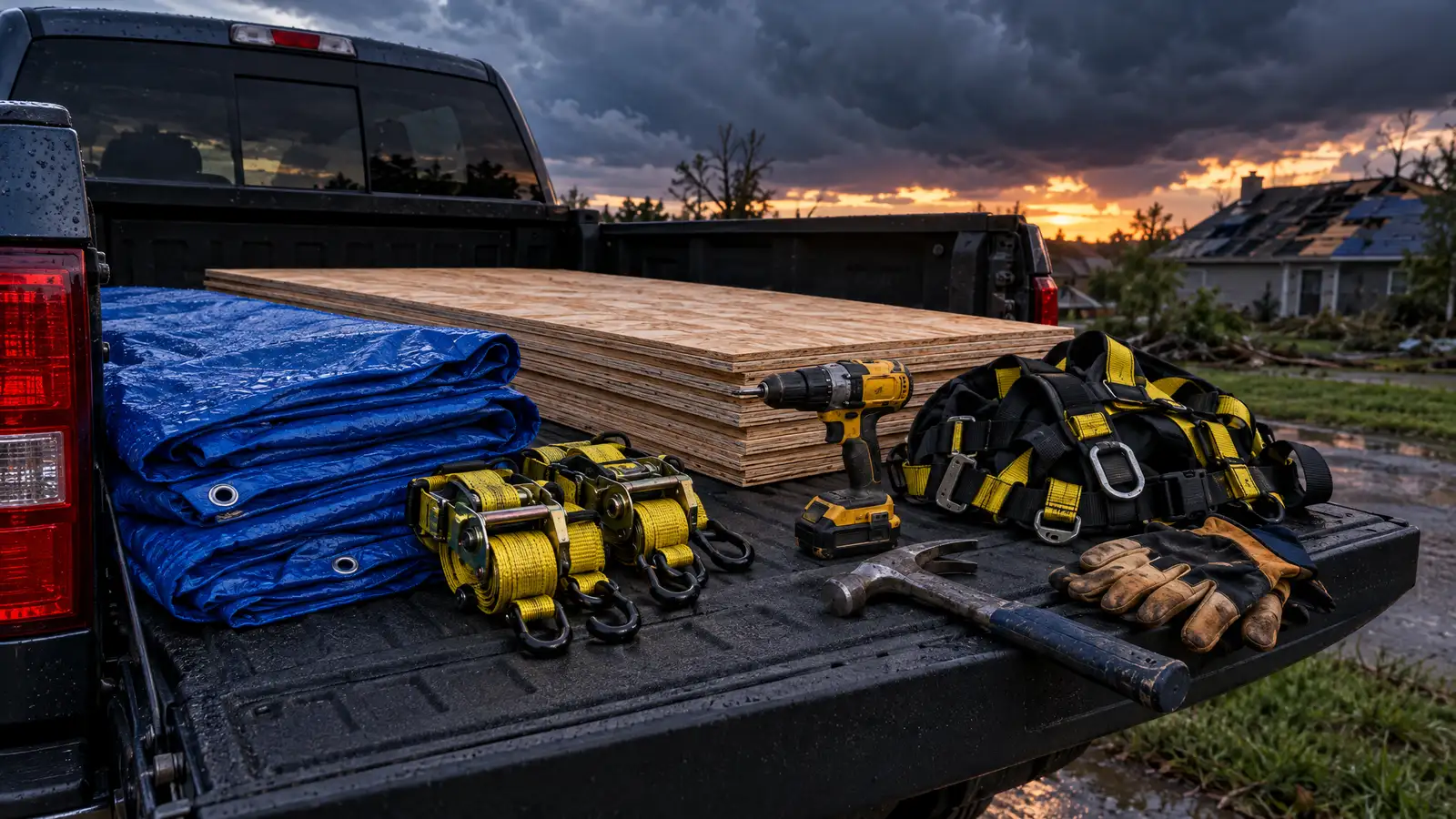
Tarps, board-up and emergency seals go on first, so rain stops entering the building and the interior is protected while everything else is planned.
From your first call to the finished roof, the same six steps apply to one tarp or a whole community.
Tell us what happened, where you see water and whether anyone is in danger.
We look for hazards first: lines, unstable framing and the safest way onto the roof.
Tarps, board-up and seals go on so water stops entering the building.
Damage, the cover and the roof beneath are photographed and described.
We repair or replace what the storm damaged, in the right order.
The work is checked, the site is cleaned and you get your photos and notes.
Every job moves through up to four stages, matched to what the roof needs.
Tarps, board-up and emergency seals go on first, so rain stops entering the building and the interior is protected while everything else is planned.
Debris is cleared, damaged areas are braced and temporary repairs make the roof and the building safe to work on and live under.
Shingles, flashing, decking and details are repaired or replaced, matched as closely as practical and sealed so the roof sheds water properly again.
When repair will not make sense, the roof is replaced: planned, permitted, documented and built to last, with the options explained first.
Yes. Flat, low-slope, metal and shingle roofs on offices, retail, warehouses, apartments, churches and schools, with equipment and crews sized to the building.
Call (615) 410-9749 or send the form on this page. Tell us what happened and where you see water, and we will explain the safest next step.
Many owners protect the property and document first, then call. Read your policy for deadlines, and keep receipts for emergency steps.
It depends on the size and type of damage, access and the repair needed. Our cost planner shows factors with placeholder ranges, and we explain the price before work begins.
Tell us what happened and where you see water. We will explain the safest next step and how we can cover and repair the roof.
Send the form or call. Say what the storm did, where you see water and whether anyone is in danger, and we will explain the safest next step and how we can help protect the roof.
Prefer to talk? Call us(615) 410-9749