Cover it before the next rain
Tarps, board-up and emergency seals go on first, so rain stops entering the building and the interior is protected while everything else is planned.
48 services in five families, each with its own page: what it is, how the job runs, what to know and what it connects to.
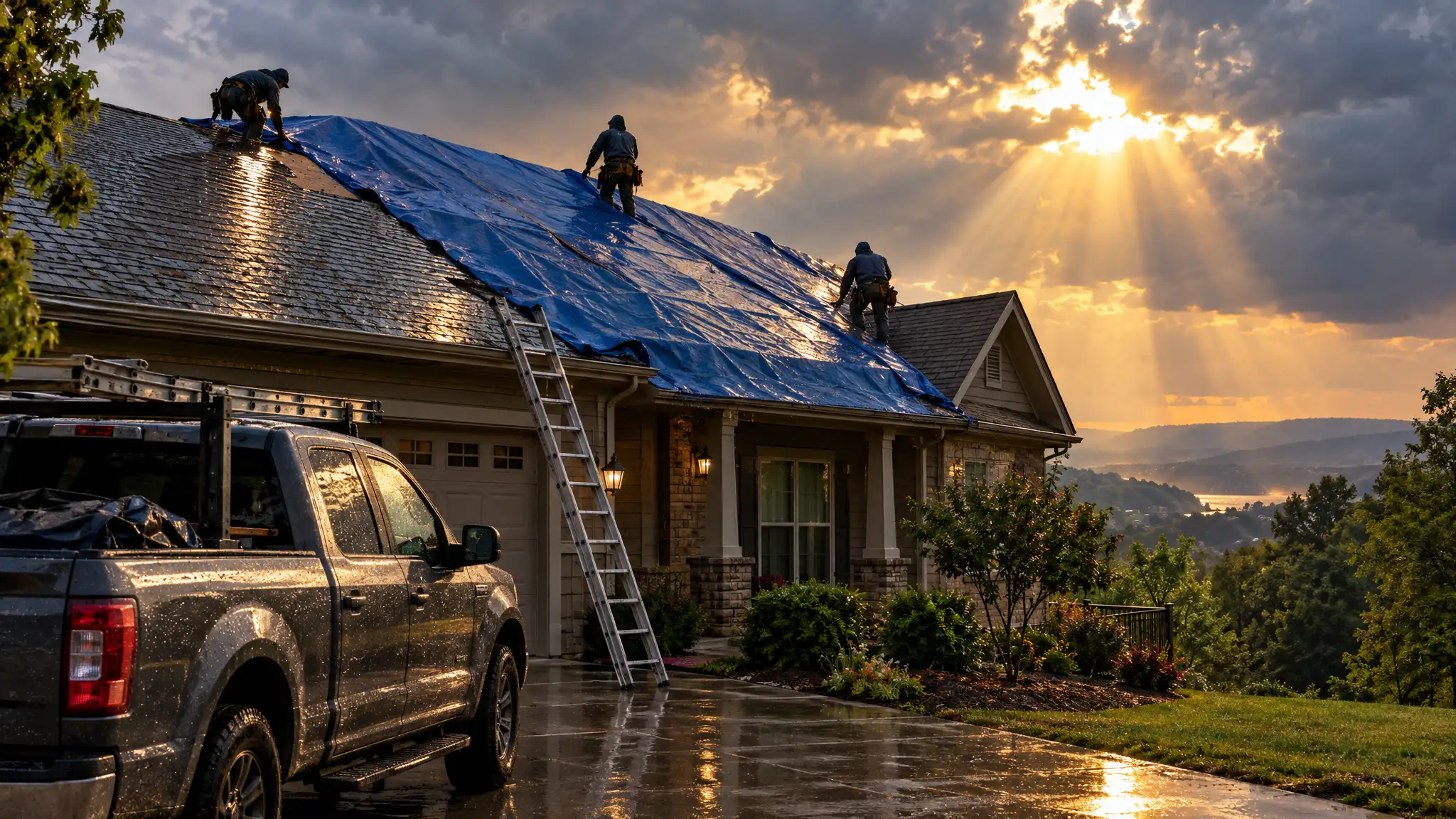
Roof tarping, leak repair, board-up, temporary repairs, fallen trees, debris removal, sagging roofs and ceiling water containment.
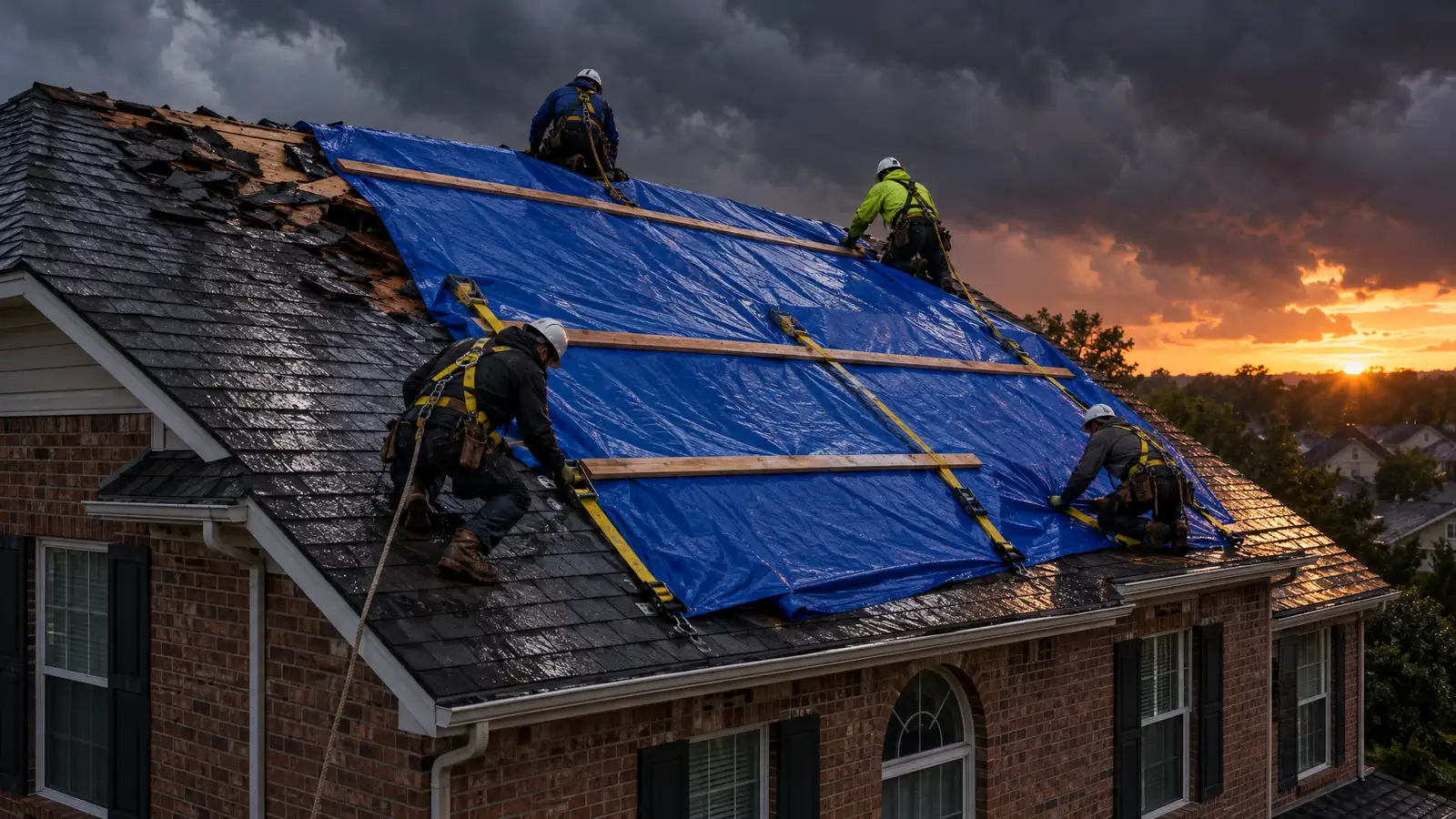 A-01Emergency ResponseEmergency Roof TarpingWhen a storm opens your roof, a properly secured tarp keeps water out of the house until the permanent repair can be done.Stage 1: Stop the water
 A-02Emergency ResponseEmergency Roof Leak RepairA leak that is soaking a ceiling or running down a wall needs the water stopped quickly and the source found, not just a bucket under the drip.Stage 1: Stop the water
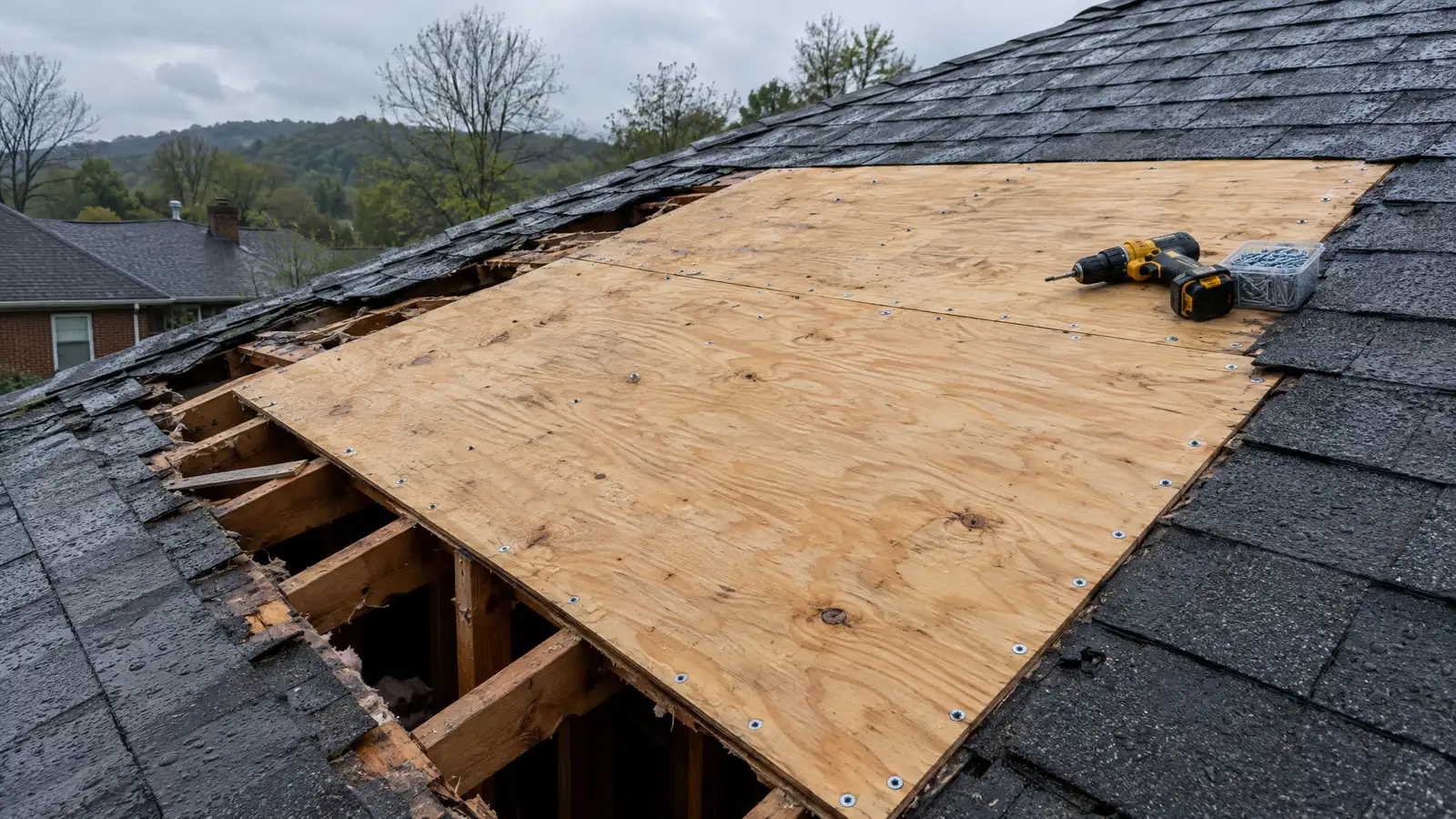 A-03Emergency ResponseEmergency Board-UpWhen a tree, fire or high wind leaves a hole in the roof deck, solid board-up and a covering membrane make the structure weather-tight again.Stage 1: Stop the water
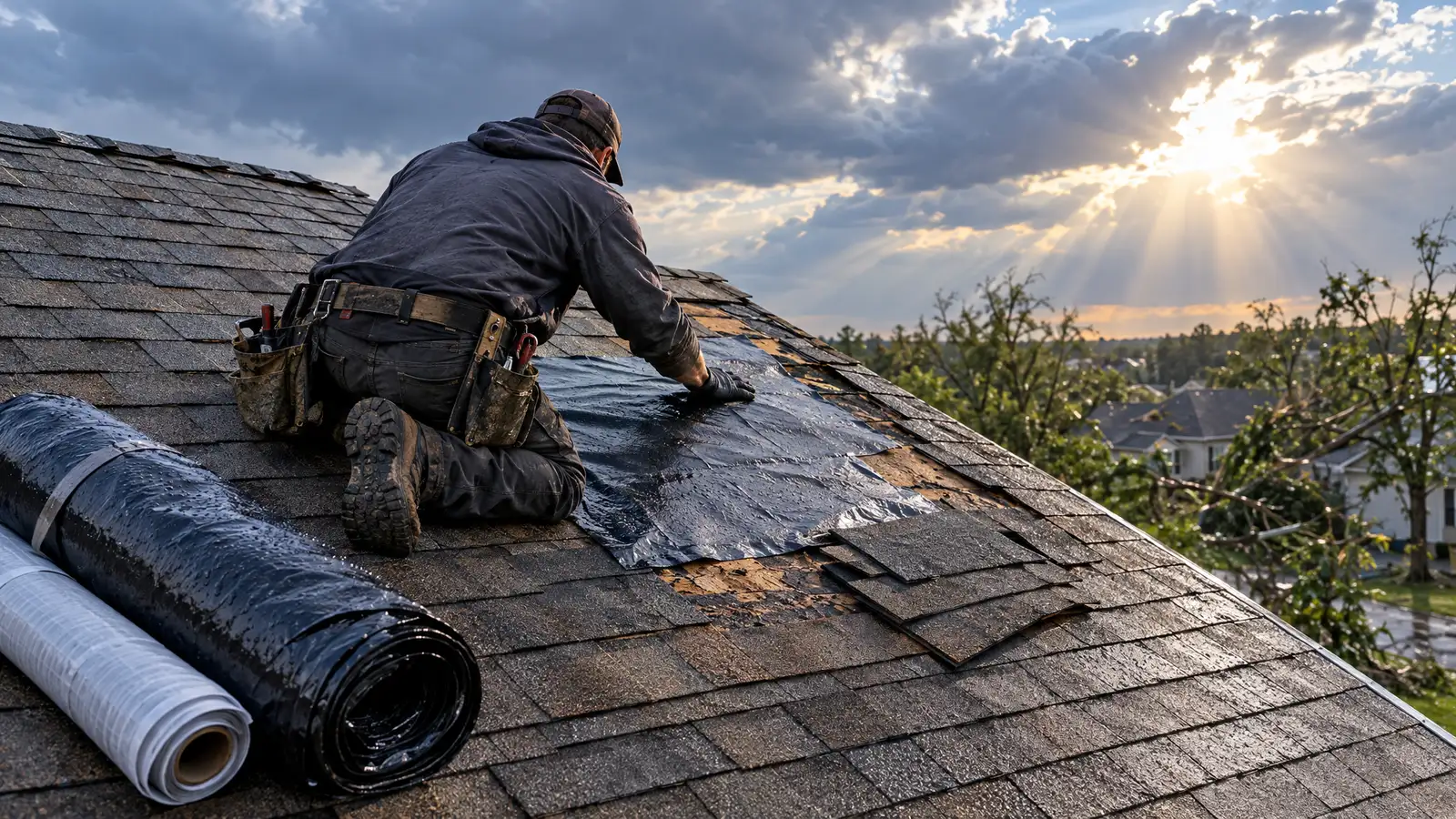 A-04Emergency ResponseTemporary Roof RepairSometimes the right permanent repair needs materials, approvals or dry weather that are not available yet.Stage 2: Make it safe
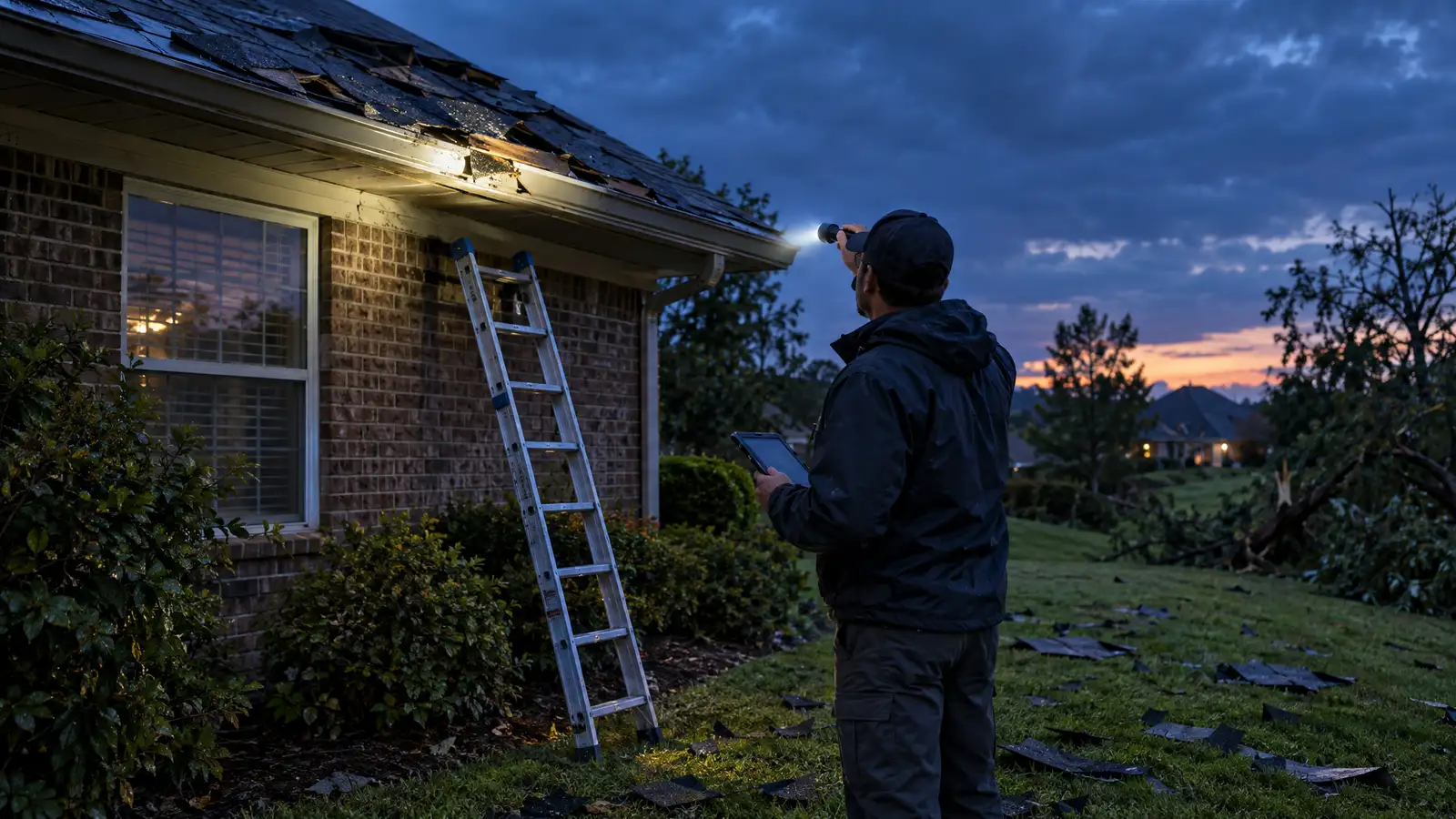 A-05Emergency ResponseEmergency Roof InspectionA fast, careful look at what a storm did to your roof, so you know which damage is urgent and which can wait.Stage 1: Stop the water
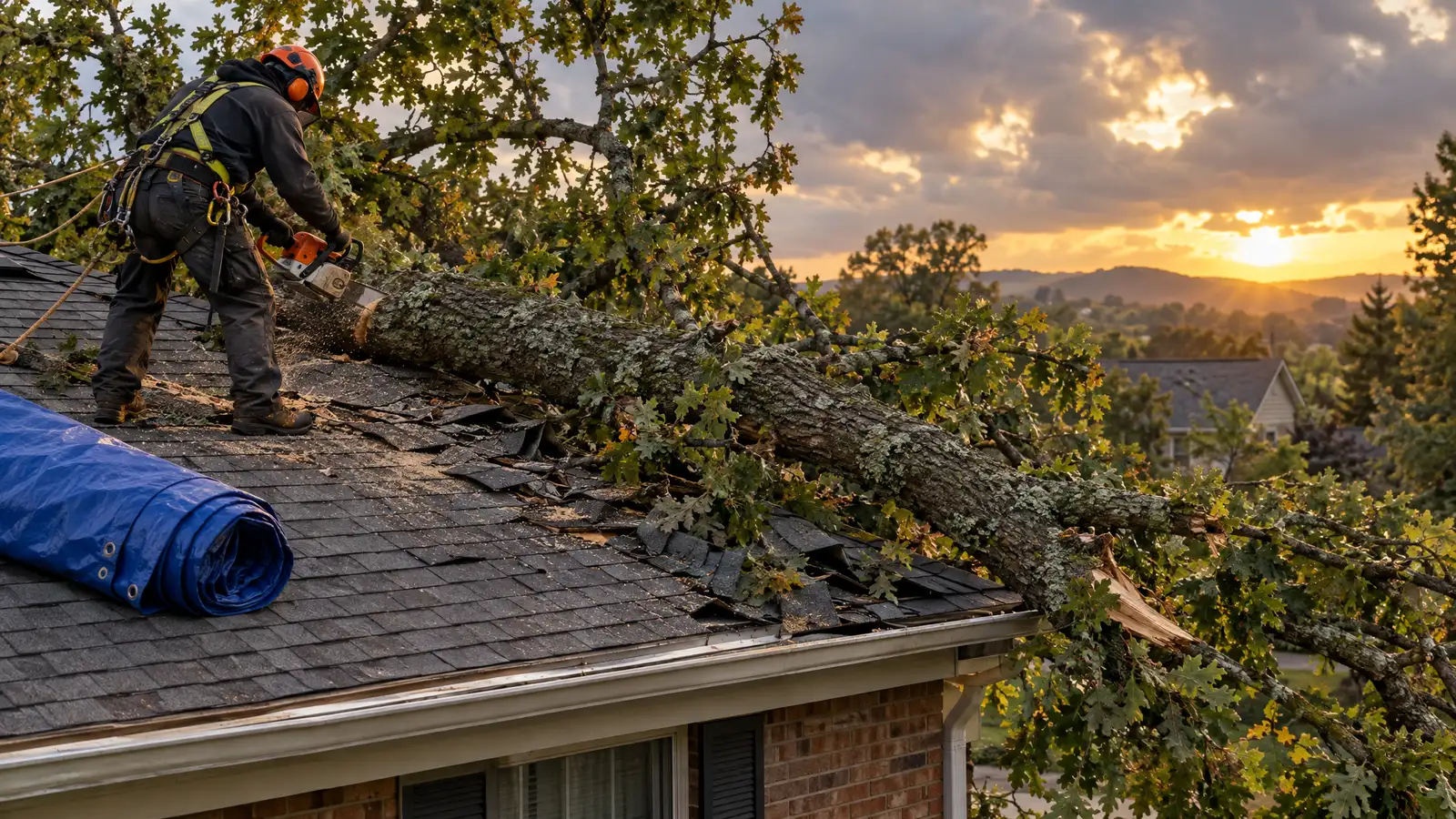 A-06Emergency ResponseFallen Tree on RoofWhen a tree or large limb lands on your home, the weight, the broken framing and the open roof all need careful, coordinated handling.Stage 1: Stop the water
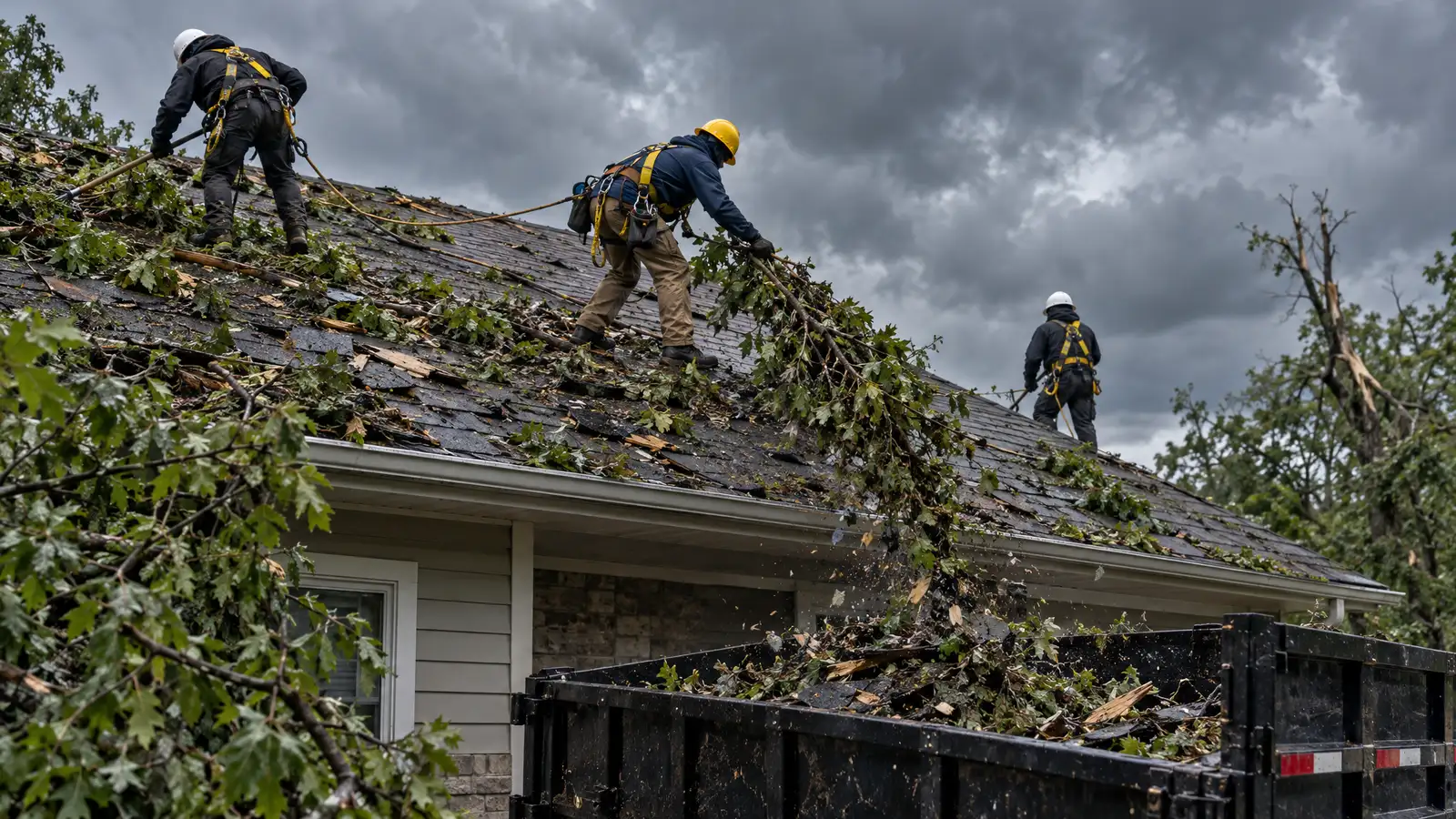 A-07Emergency ResponseStorm Debris RemovalLimbs, leaves and broken material left on a roof hold water, hide damage and add weight.Stage 1: Stop the water
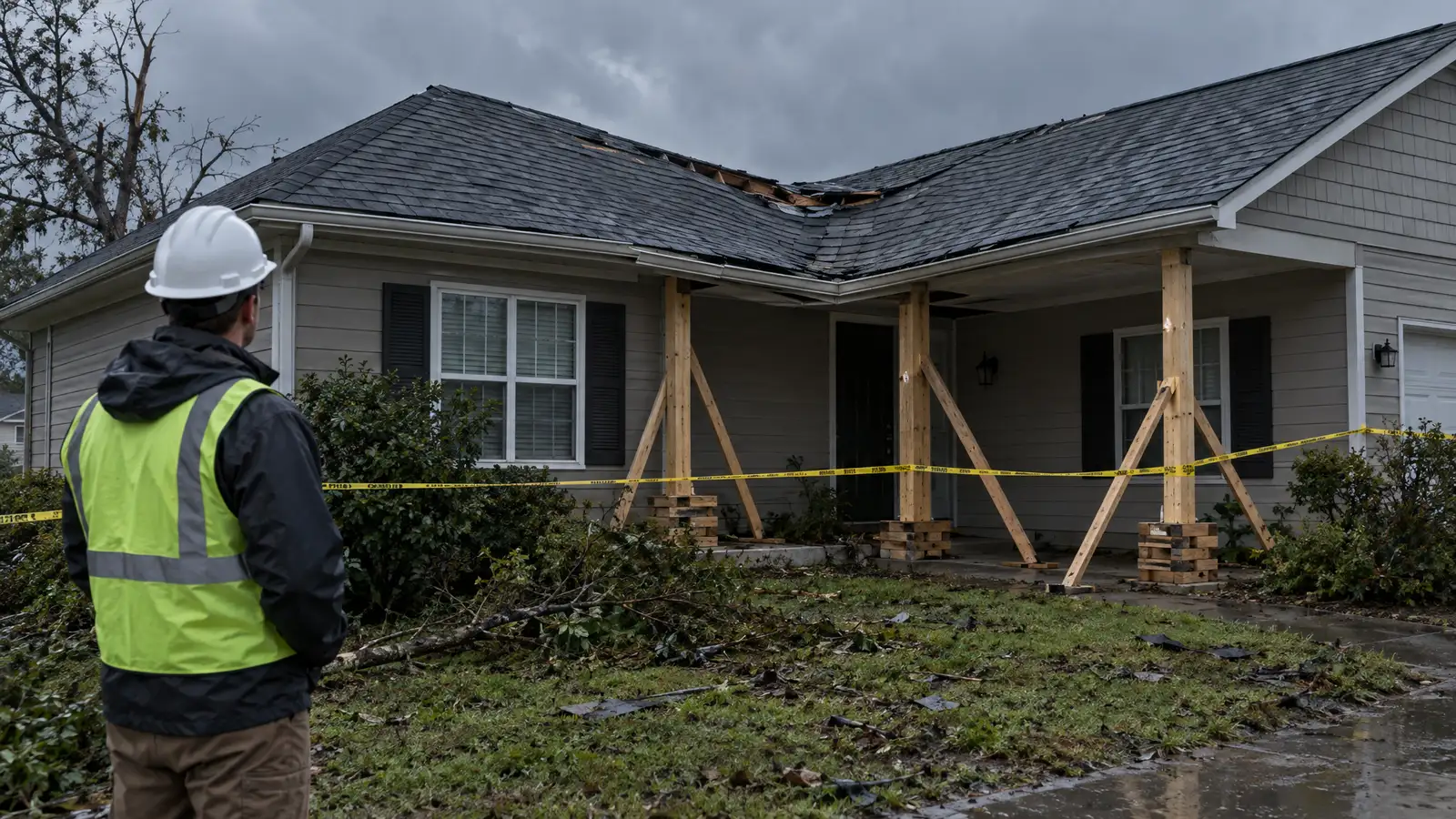 A-08Emergency ResponseSagging or Collapsed RoofA roof that is drooping, cracking or partly down is carrying more than it was built for.Stage 2: Make it safe
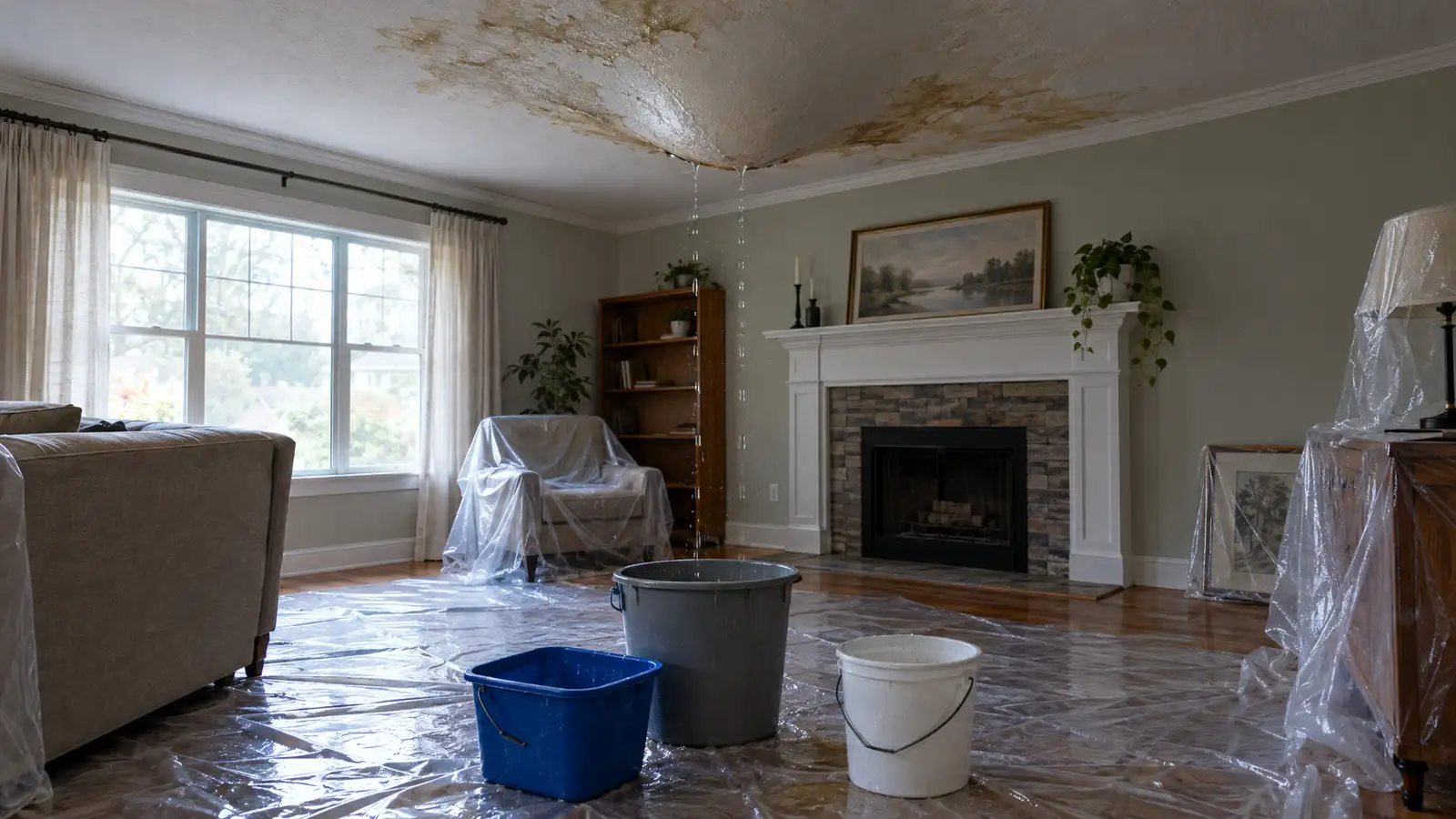 A-09Emergency ResponseCeiling Water ContainmentA bulging, dripping ceiling can fail suddenly.Stage 1: Stop the water
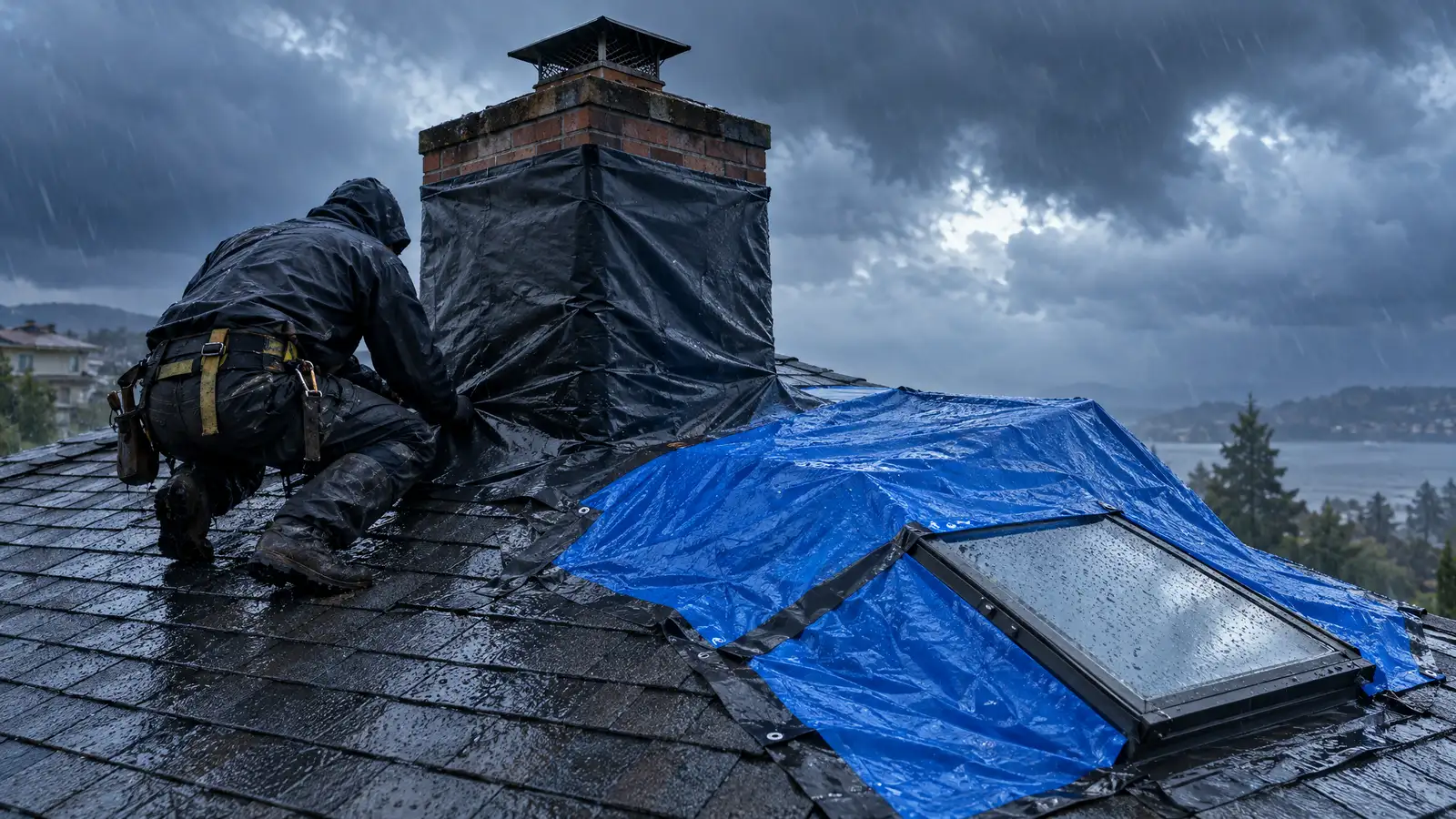 A-10Emergency ResponseSkylight and Chimney LeaksSkylights and chimneys are the most common storm leak points after missing shingles.Stage 1: Stop the water
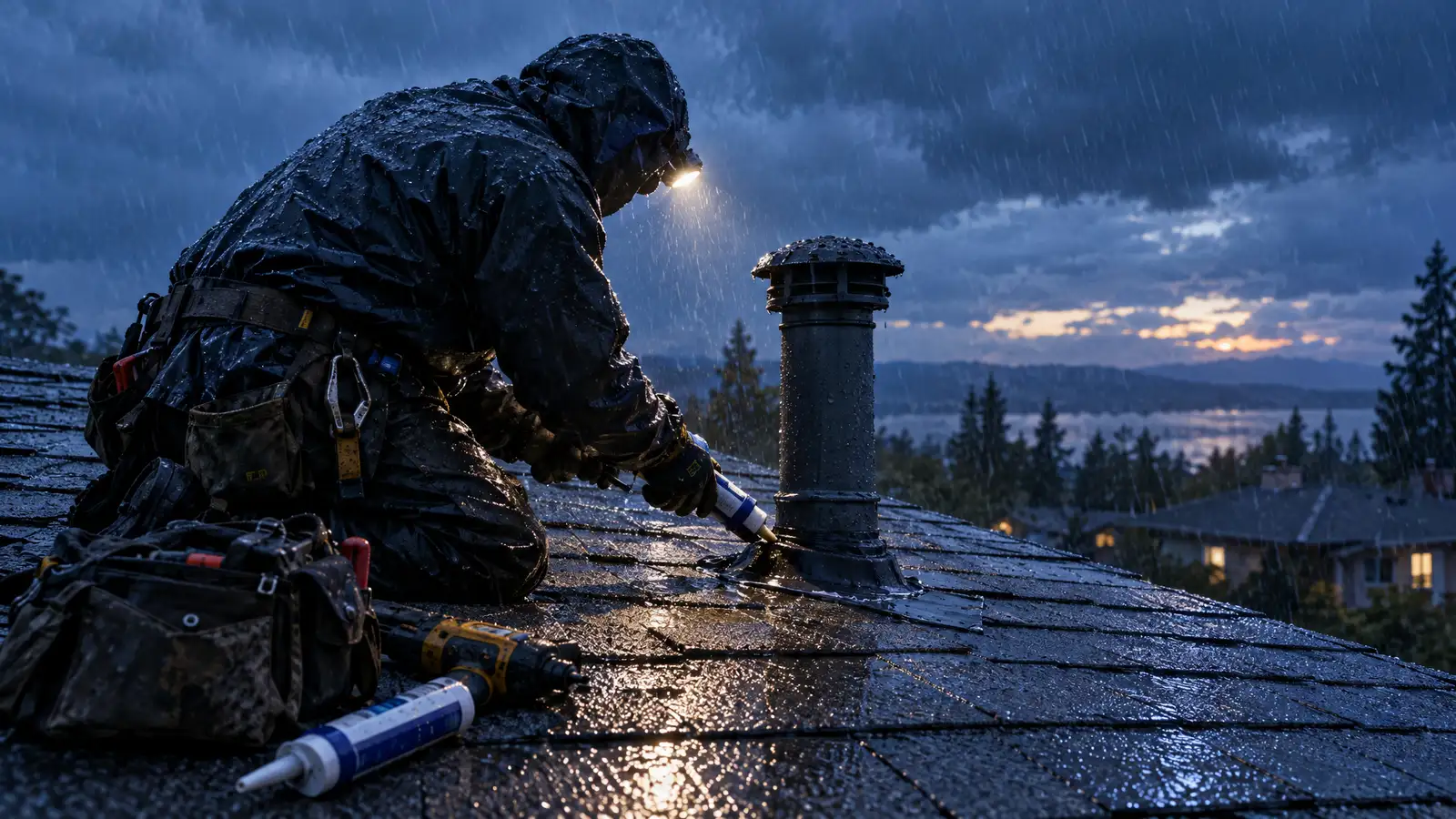
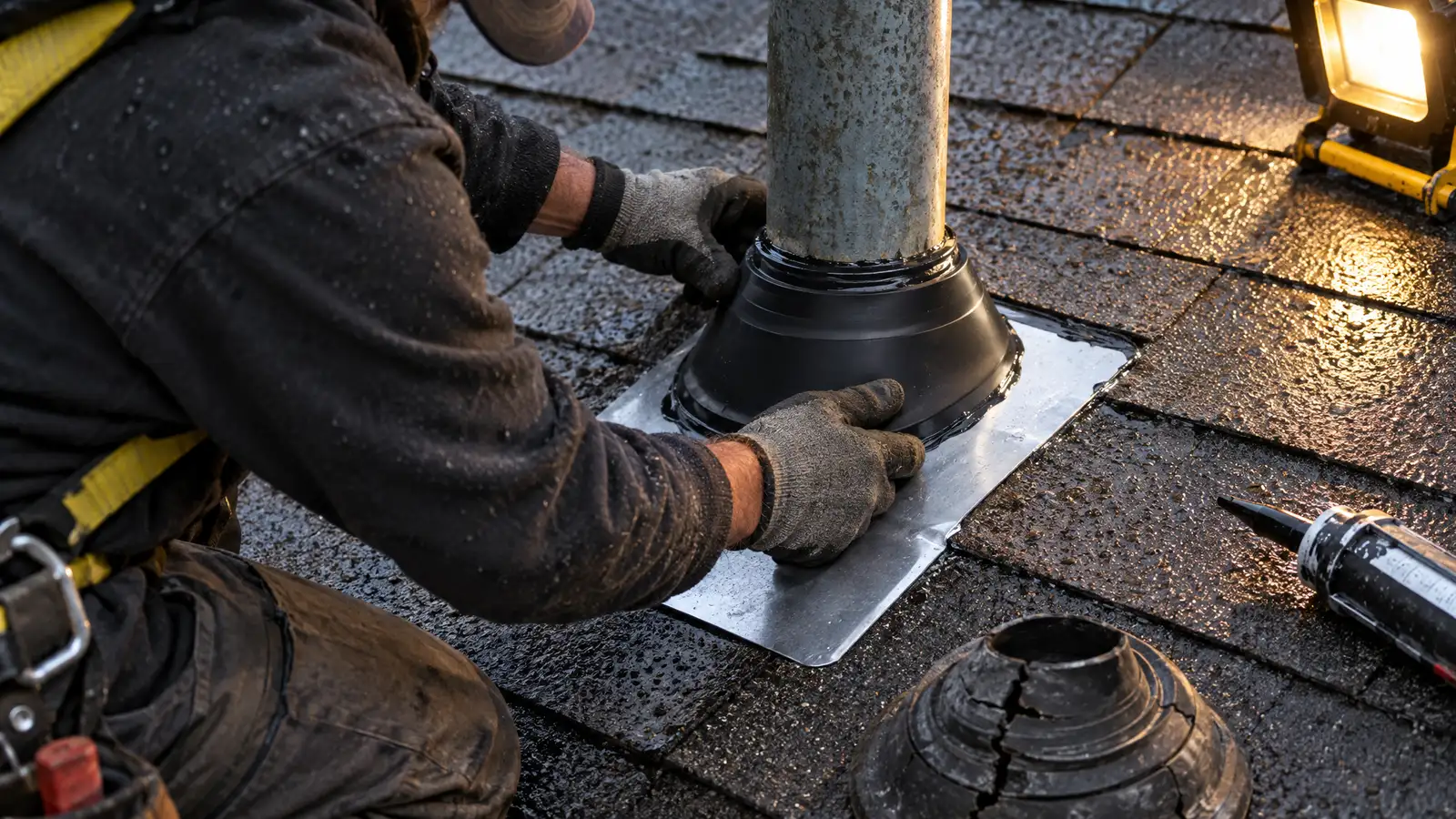 A-11Emergency ResponseVent and Pipe Boot RepairCracked pipe boots and damaged roof vents let water run straight down into the house.Stage 1: Stop the water
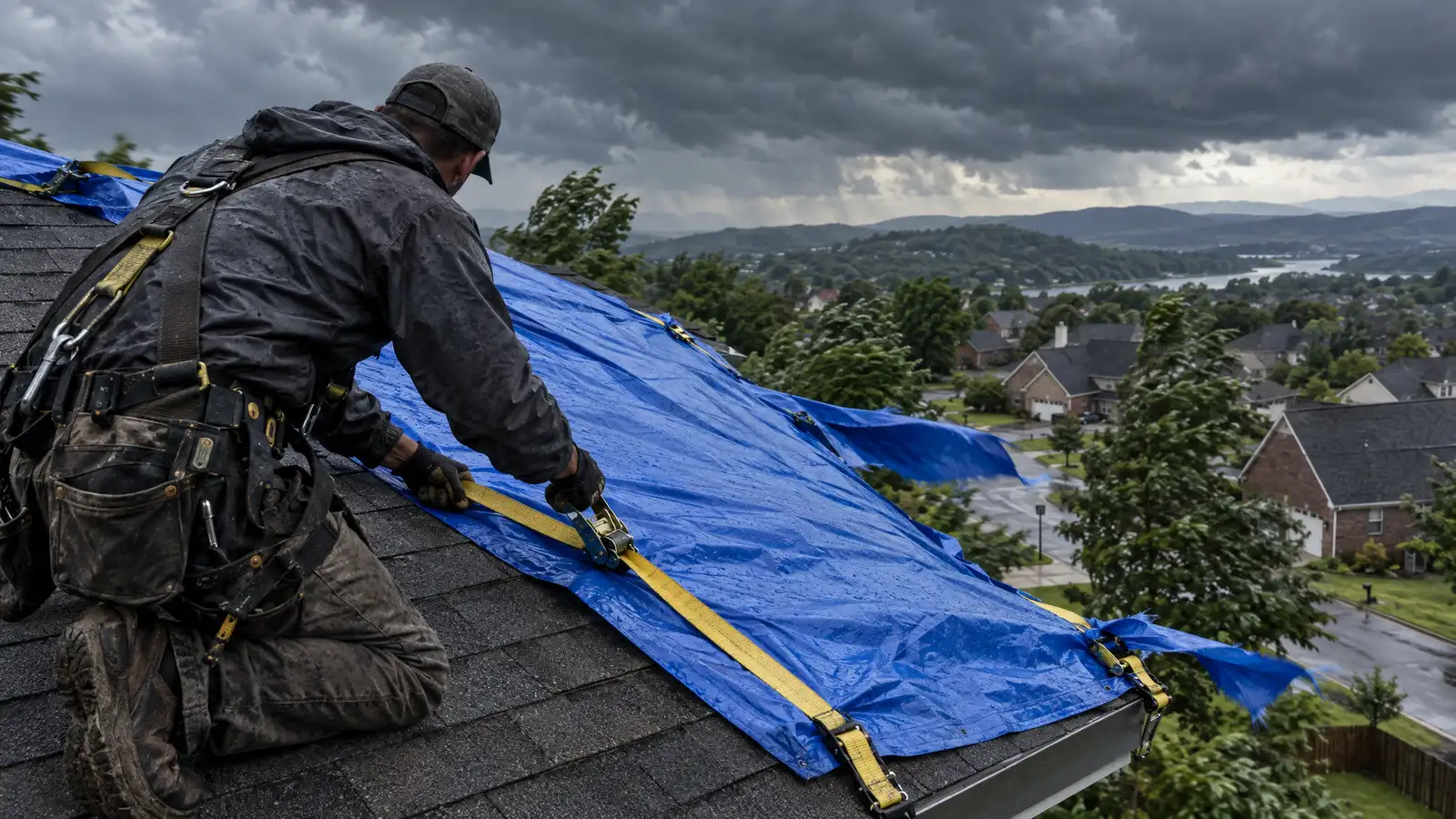 A-12Emergency ResponseTarp Checks and MaintenanceA tarp that was tight last week may be flapping today.Stage 1: Stop the water
Hail, wind, tornado, lightning and ice damage repairs, missing shingles, ridge caps, flashing, gutters and fascia, and post-storm inspections.
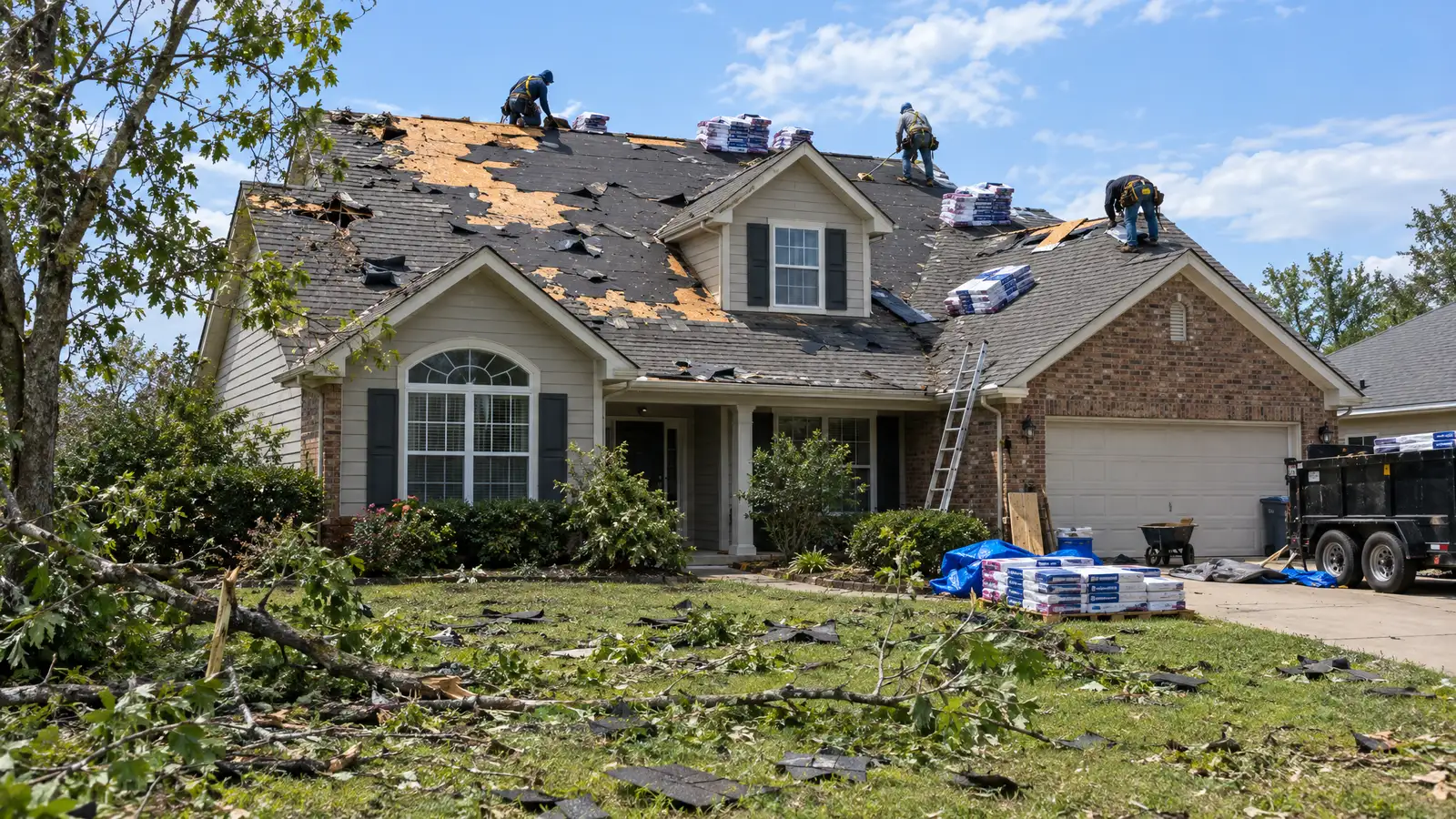 B-01Storm DamageStorm Damage Roof RepairHail, wind, limbs and driven rain damage roofs in different ways.Stage 3: Repair it
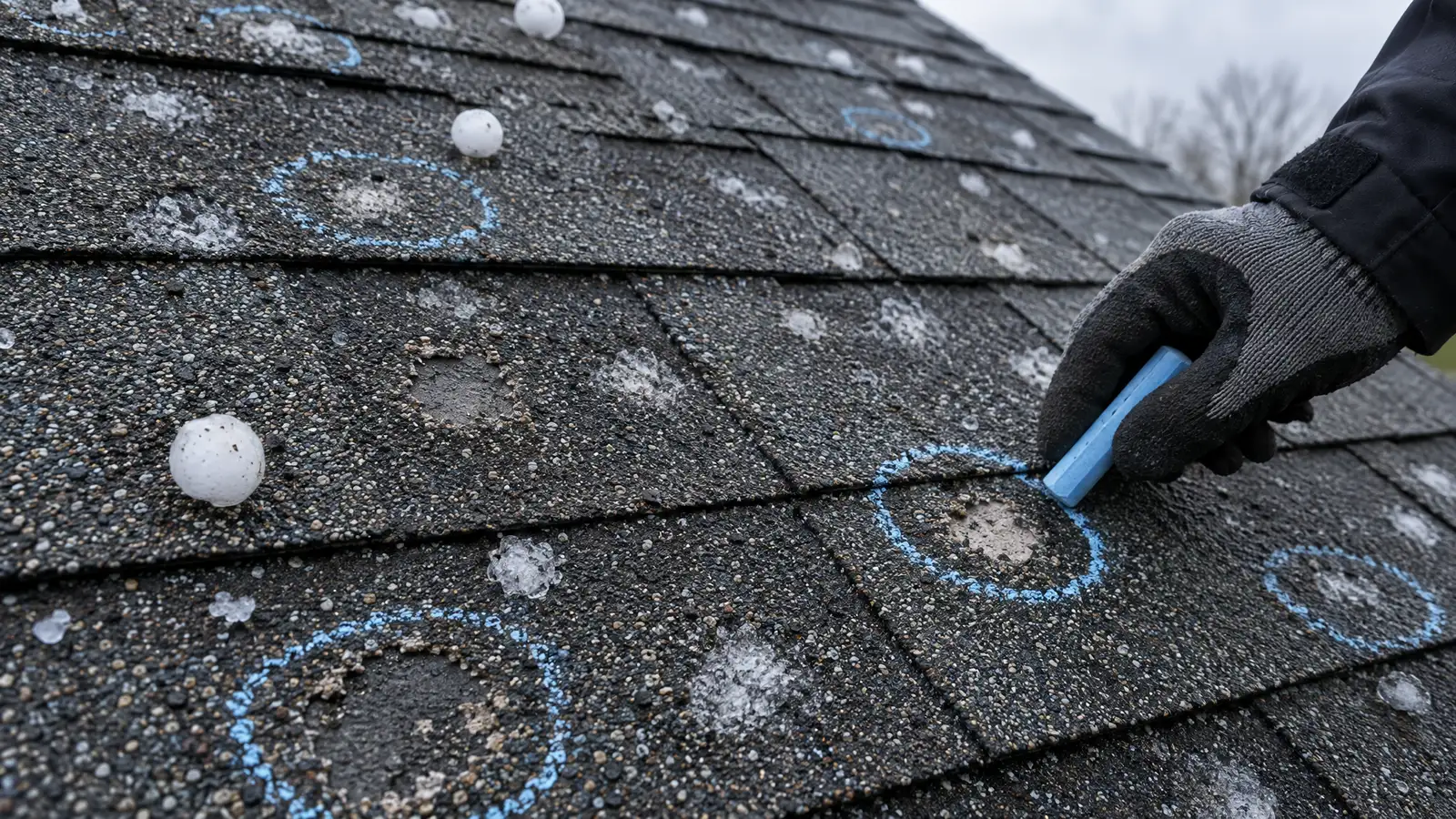 B-02Storm DamageHail Damage RepairHail leaves round bruises, cracked mats and bare spots that shorten a roof’s life even when nothing leaks yet.Stage 3: Repair it
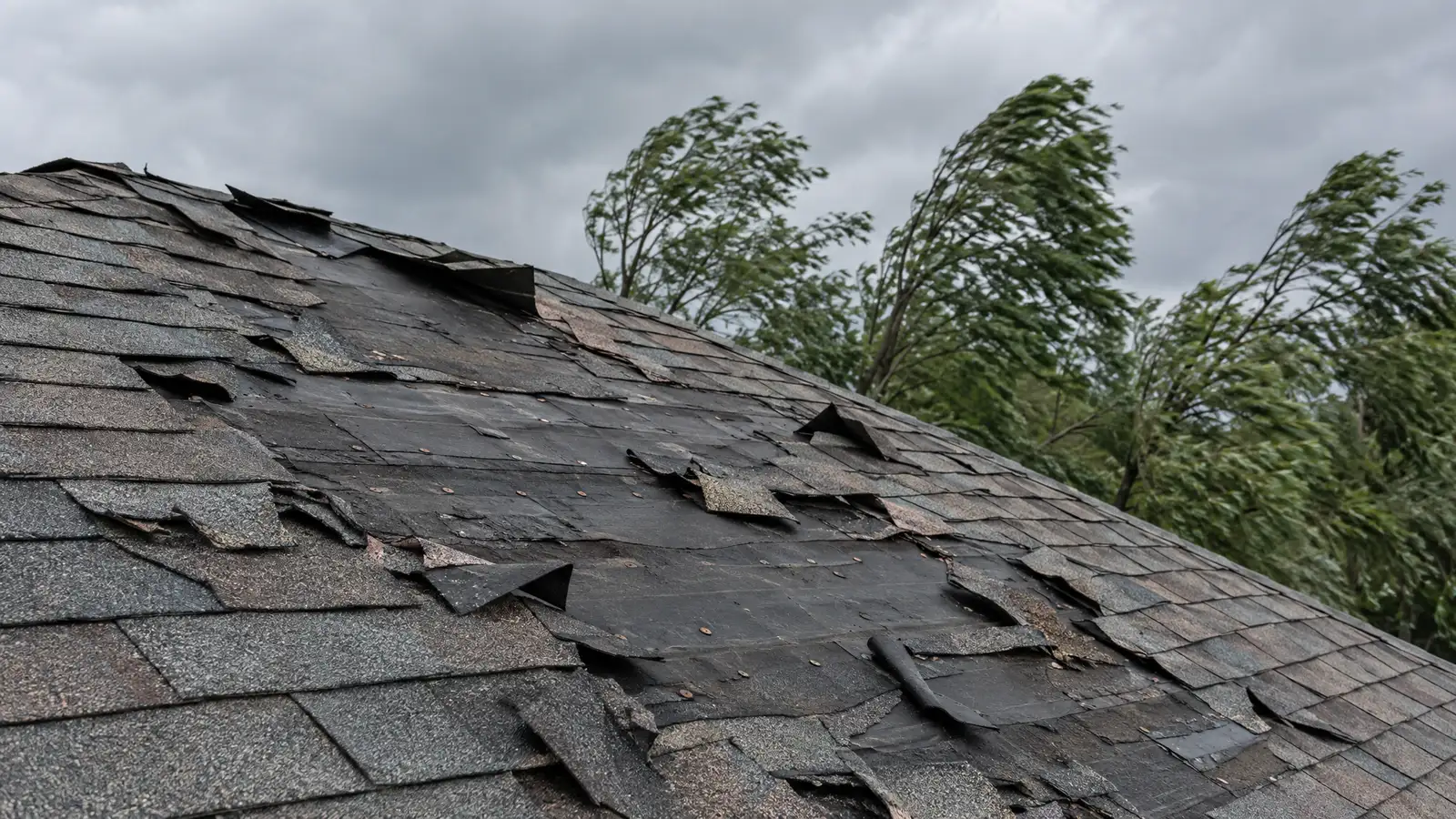 B-03Storm DamageWind Damage RepairWind lifts shingles at the edges and ridges first, then tears them away.Stage 3: Repair it
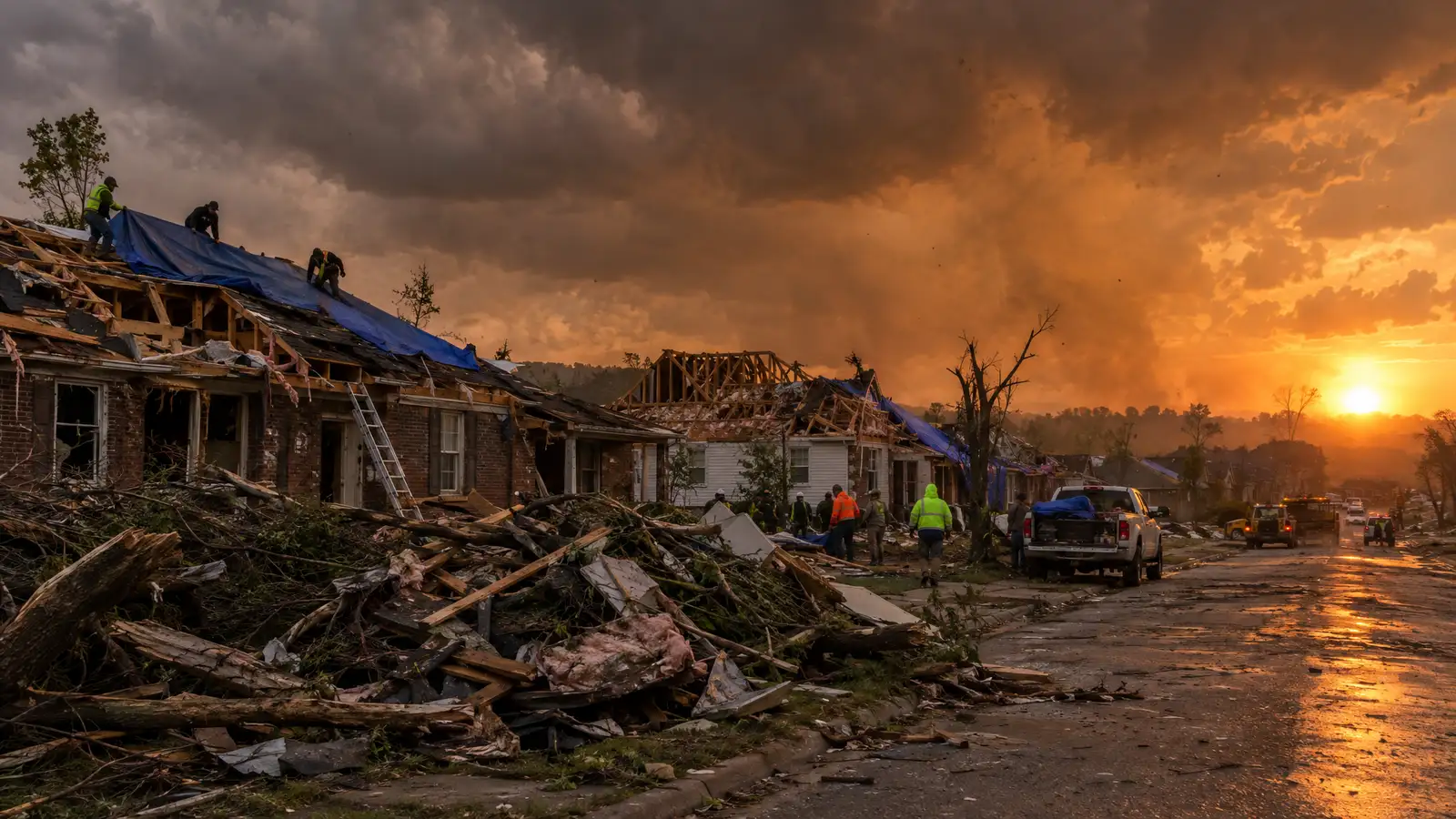 B-04Storm DamageTornado Damage RoofingTornado damage can range from missing shingles to a destroyed roof structure.Stage 2: Make it safe
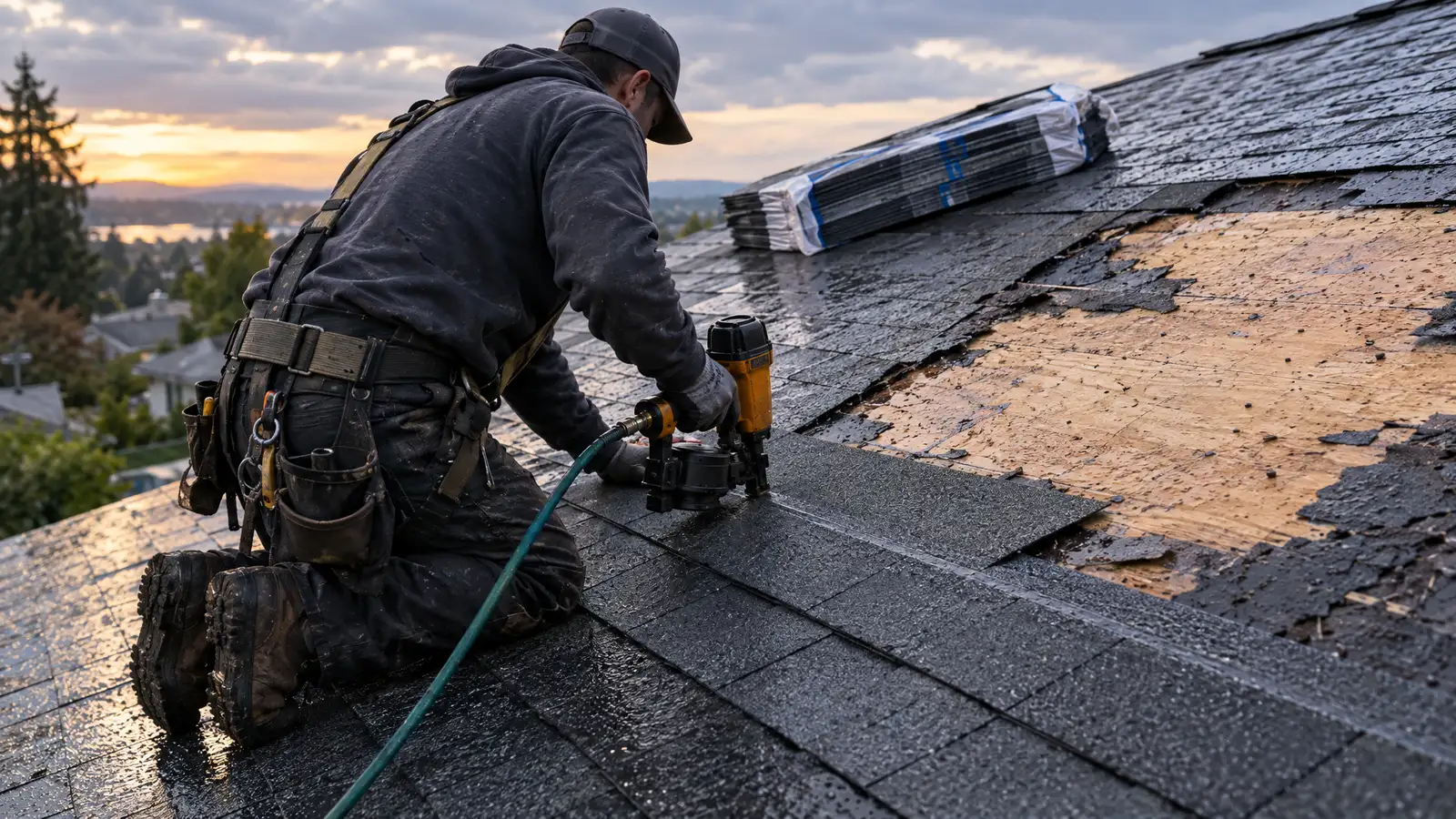 B-05Storm DamageMissing Shingle ReplacementA few missing shingles expose the underlayment and let water in.Stage 3: Repair it
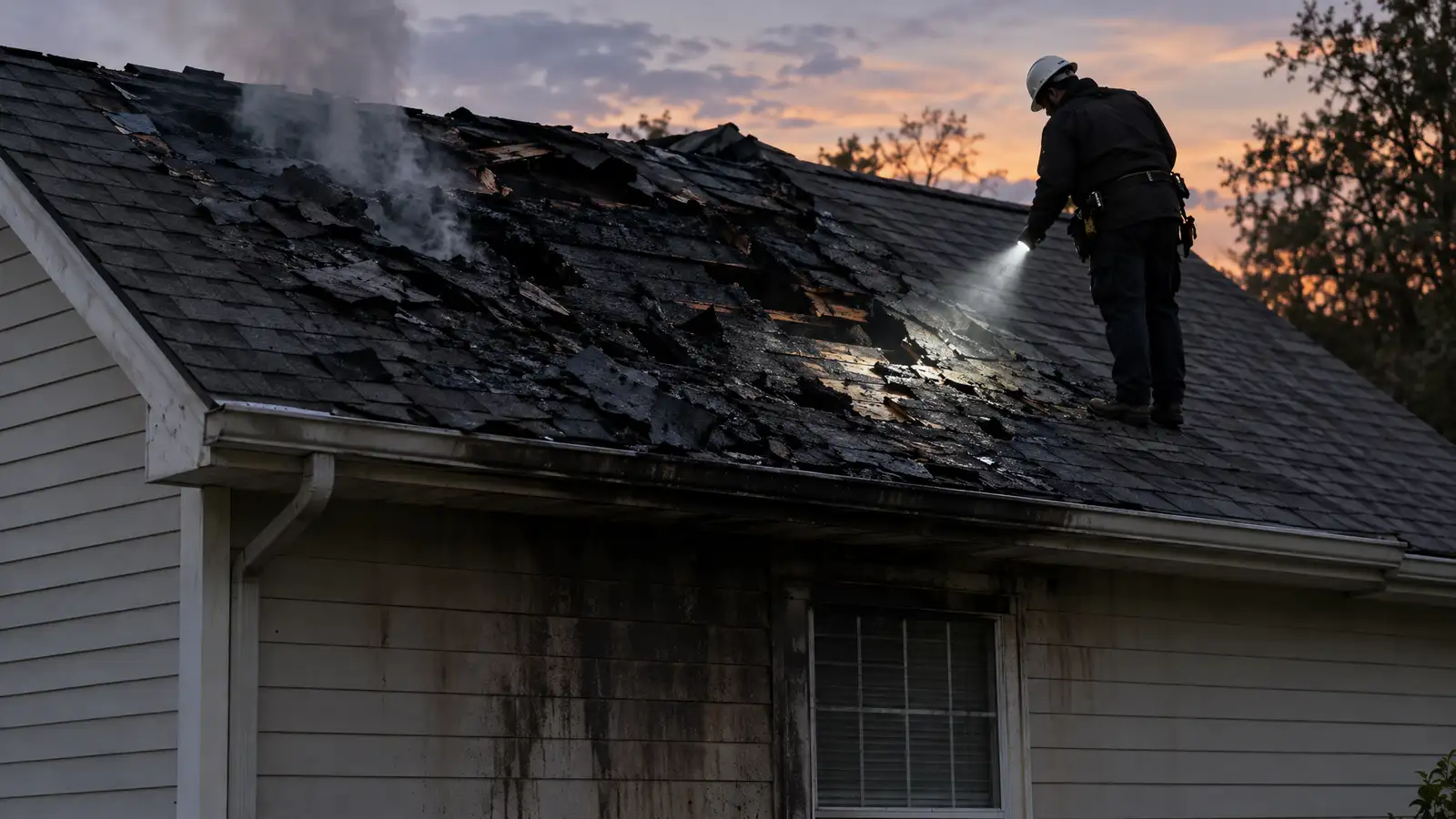 B-06Storm DamageLightning and Fire DamageLightning strikes and fires can char shingles, weaken decking and leave hidden damage.Stage 2: Make it safe
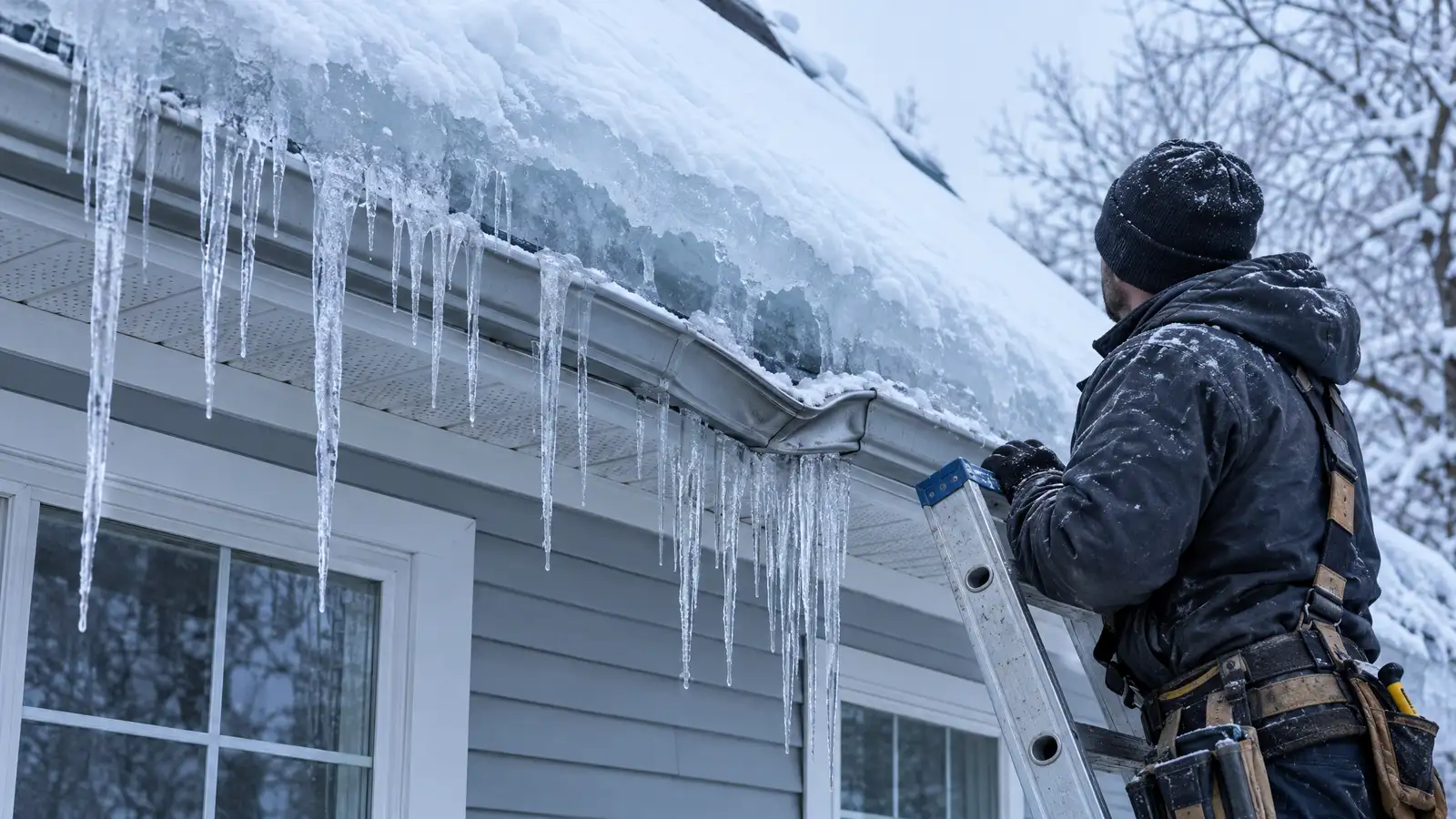 B-07Storm DamageIce and Snow DamageHeavy snow and ice dams can lift shingles, back water under roofing and damage gutters.Stage 3: Repair it
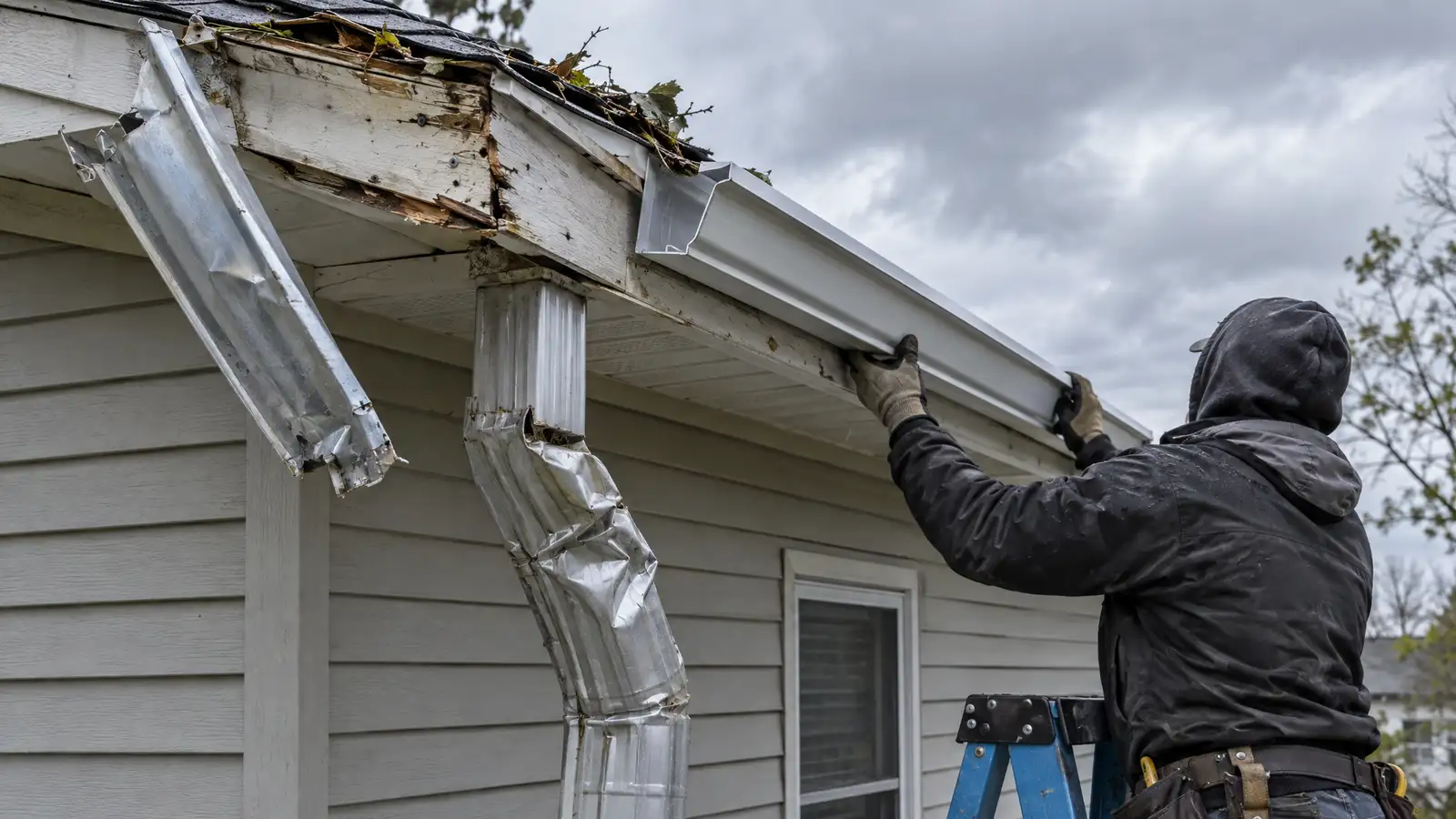 B-08Storm DamageGutter and Fascia RepairGutters and fascia take hail, limbs and ice first.Stage 3: Repair it
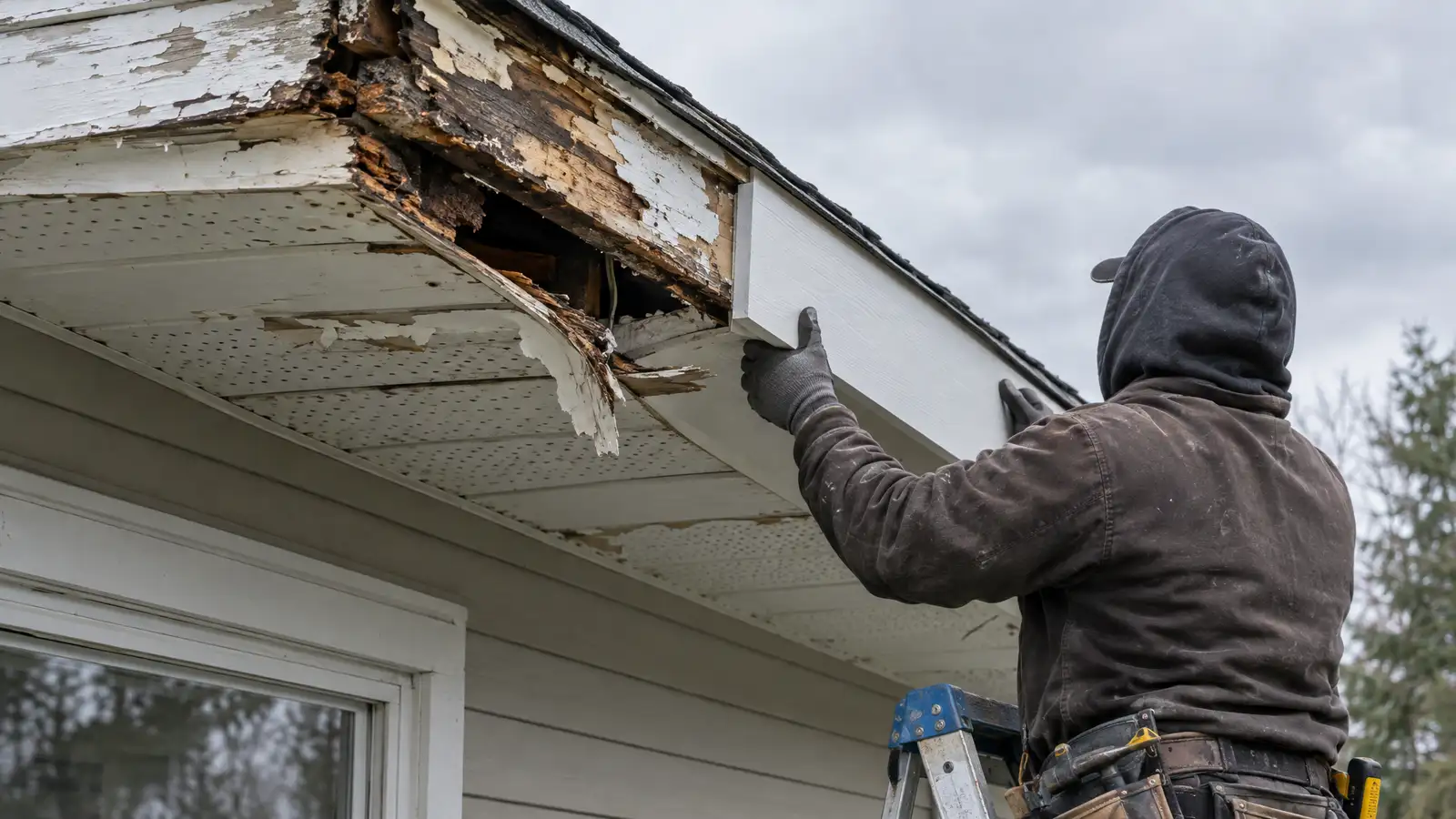 B-09Storm DamageSoffit and Fascia RepairStorms tear soffit panels and crack fascia boards, opening the attic to rain, wind and wildlife.Stage 3: Repair it
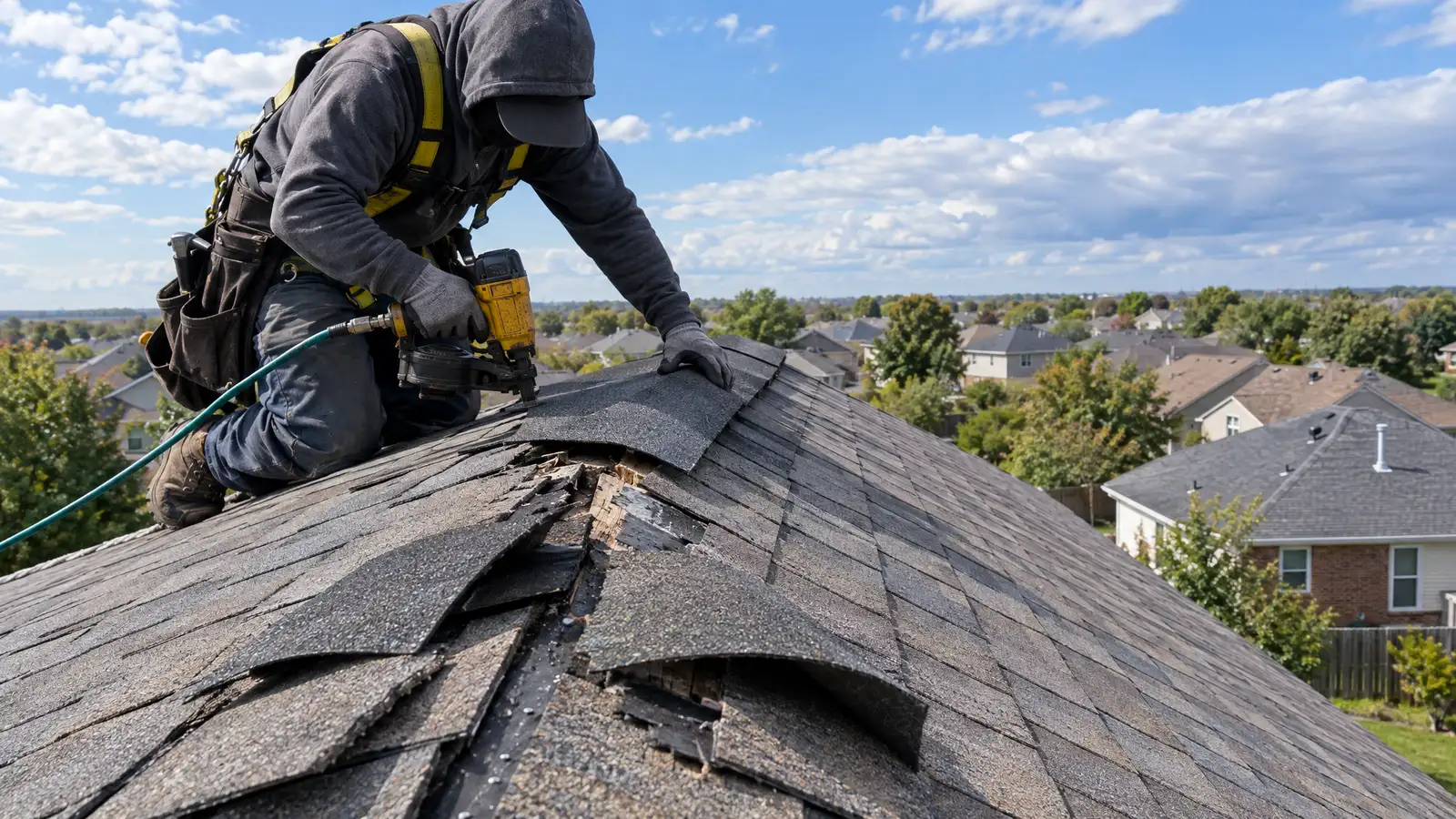 B-10Storm DamageRidge Cap and Hip RepairRidges and hips take the full force of the wind.Stage 3: Repair it
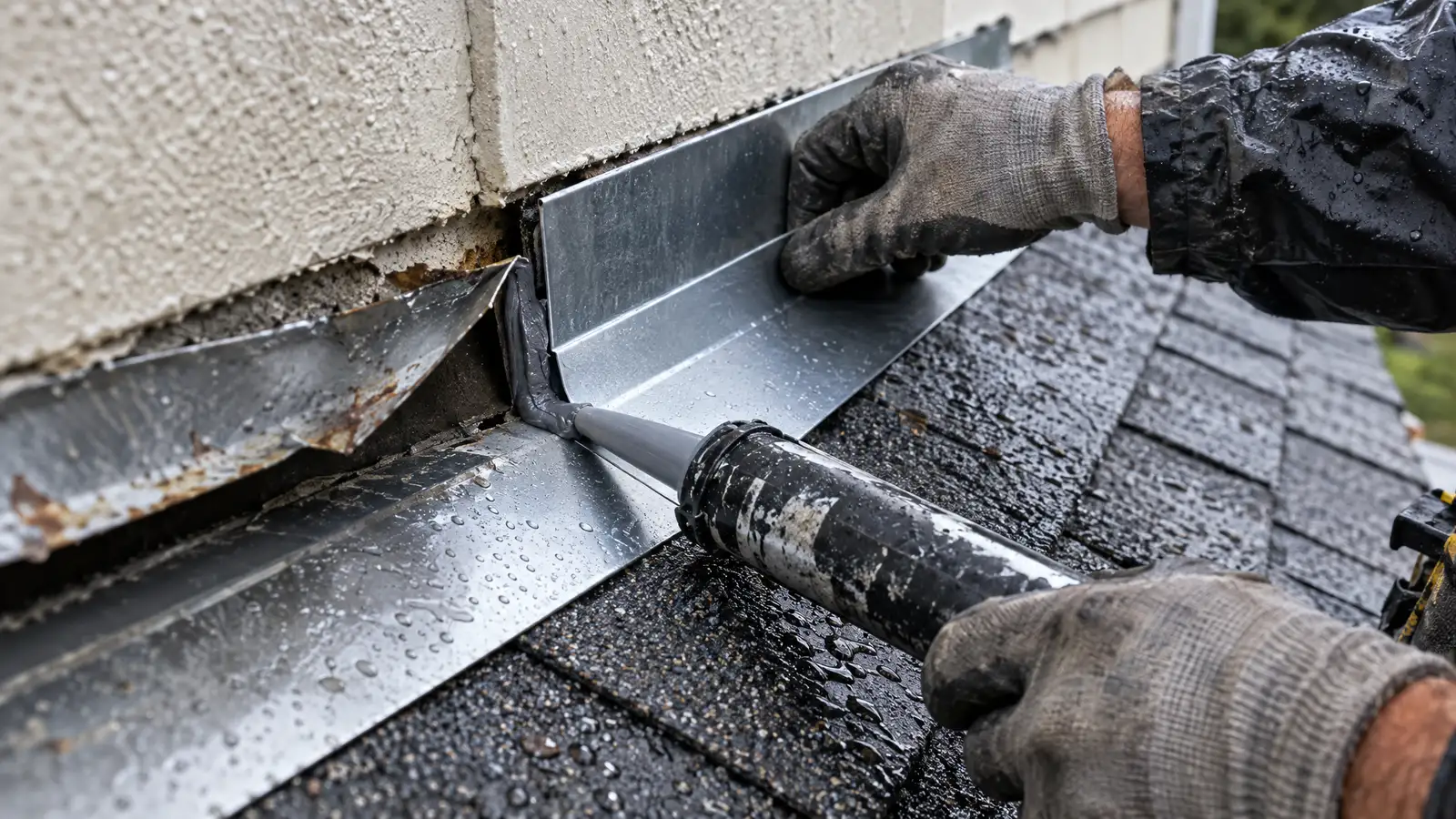 B-11Storm DamageFlashing RepairFlashing seals every joint on a roof.Stage 3: Repair it
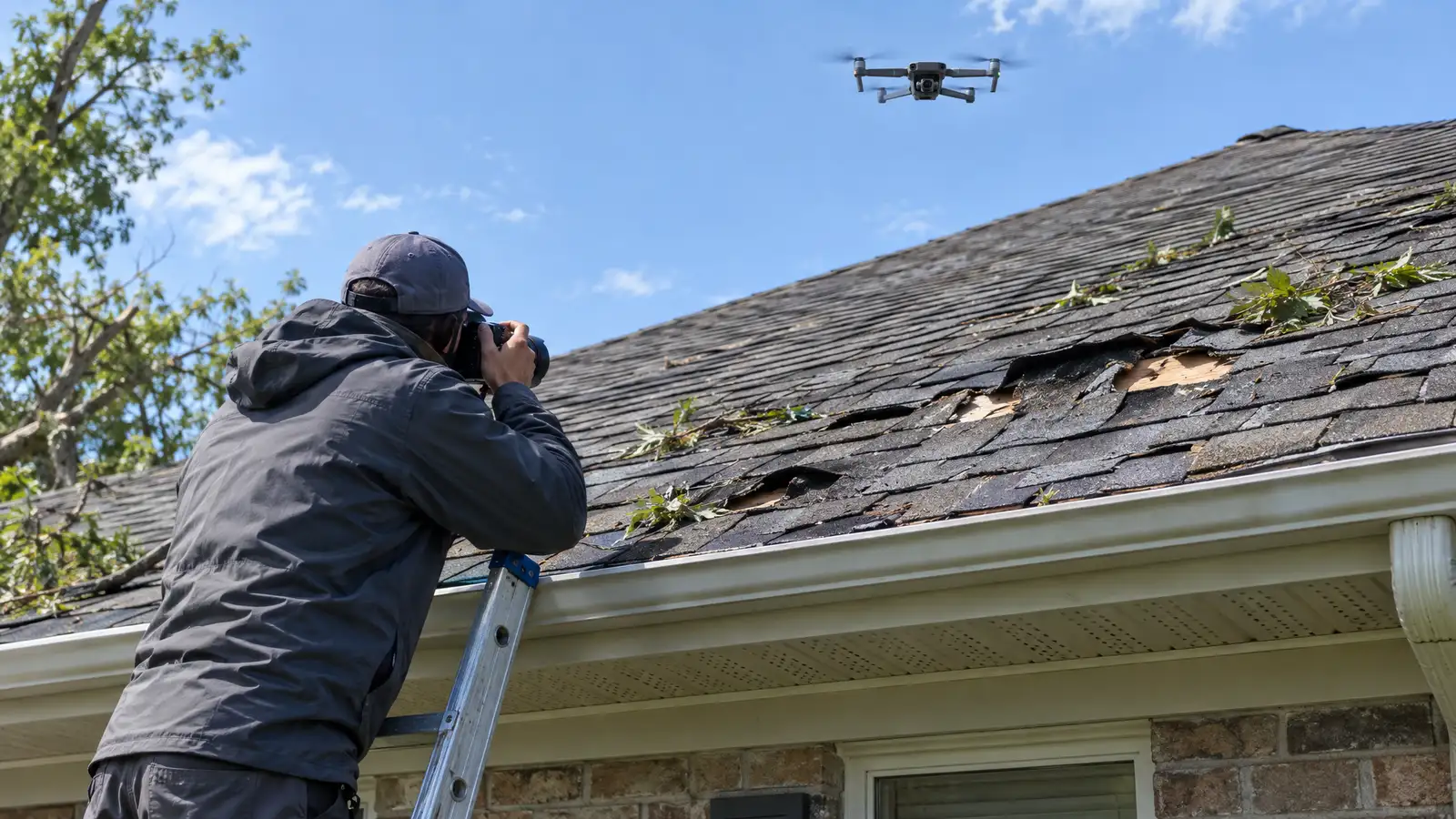 B-12Storm DamagePost-Storm Roof InspectionMany storm damages are invisible from the ground.Stage 1: Stop the water
Roof deck and sheathing, rafters and trusses, valleys, chimneys, skylights, shingle, metal, tile and flat roof repairs, and attic water damage sources.
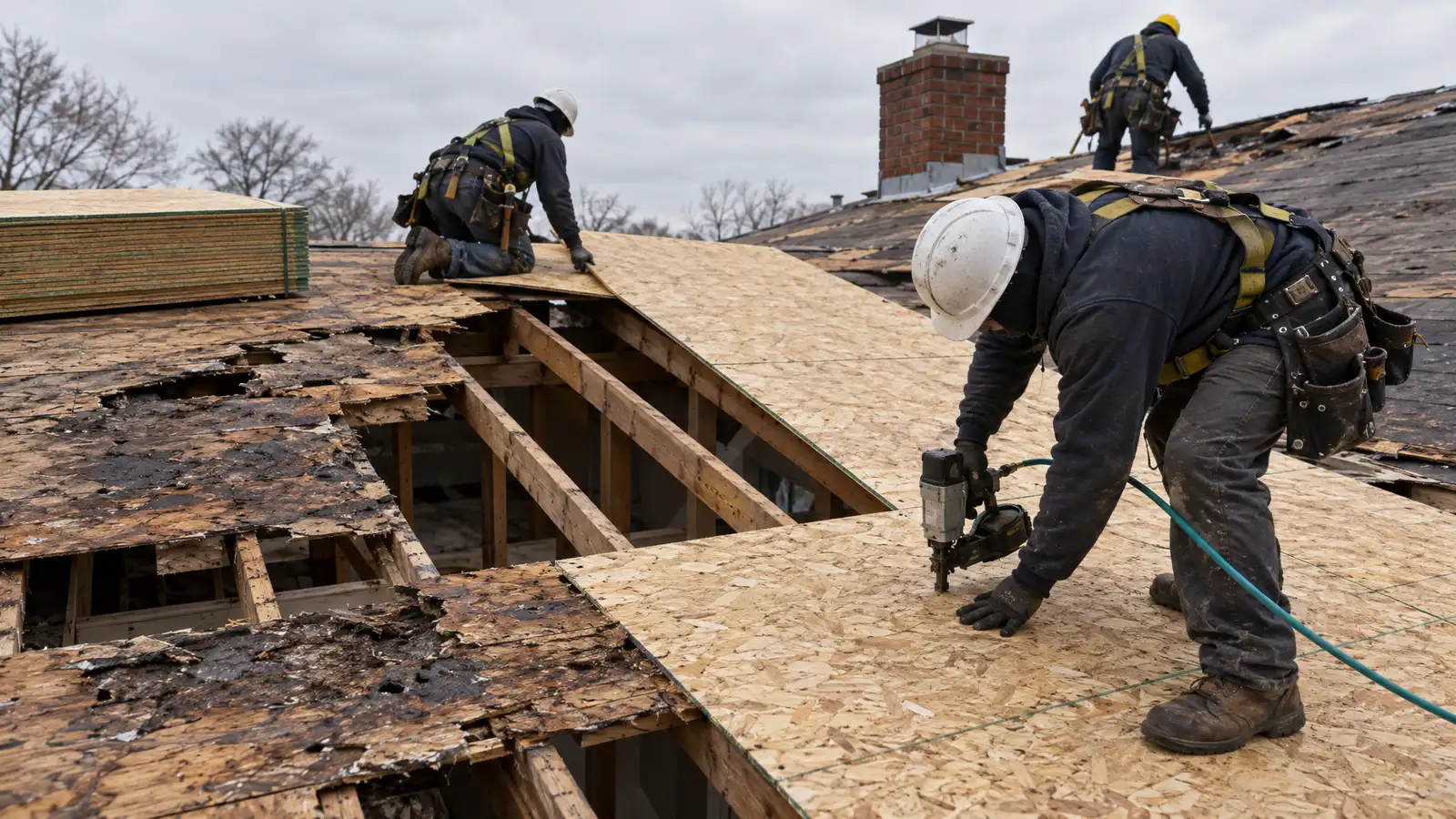 C-01RepairsRoof Deck and Sheathing RepairRoofing is only as sound as the deck beneath it.Stage 3: Repair it
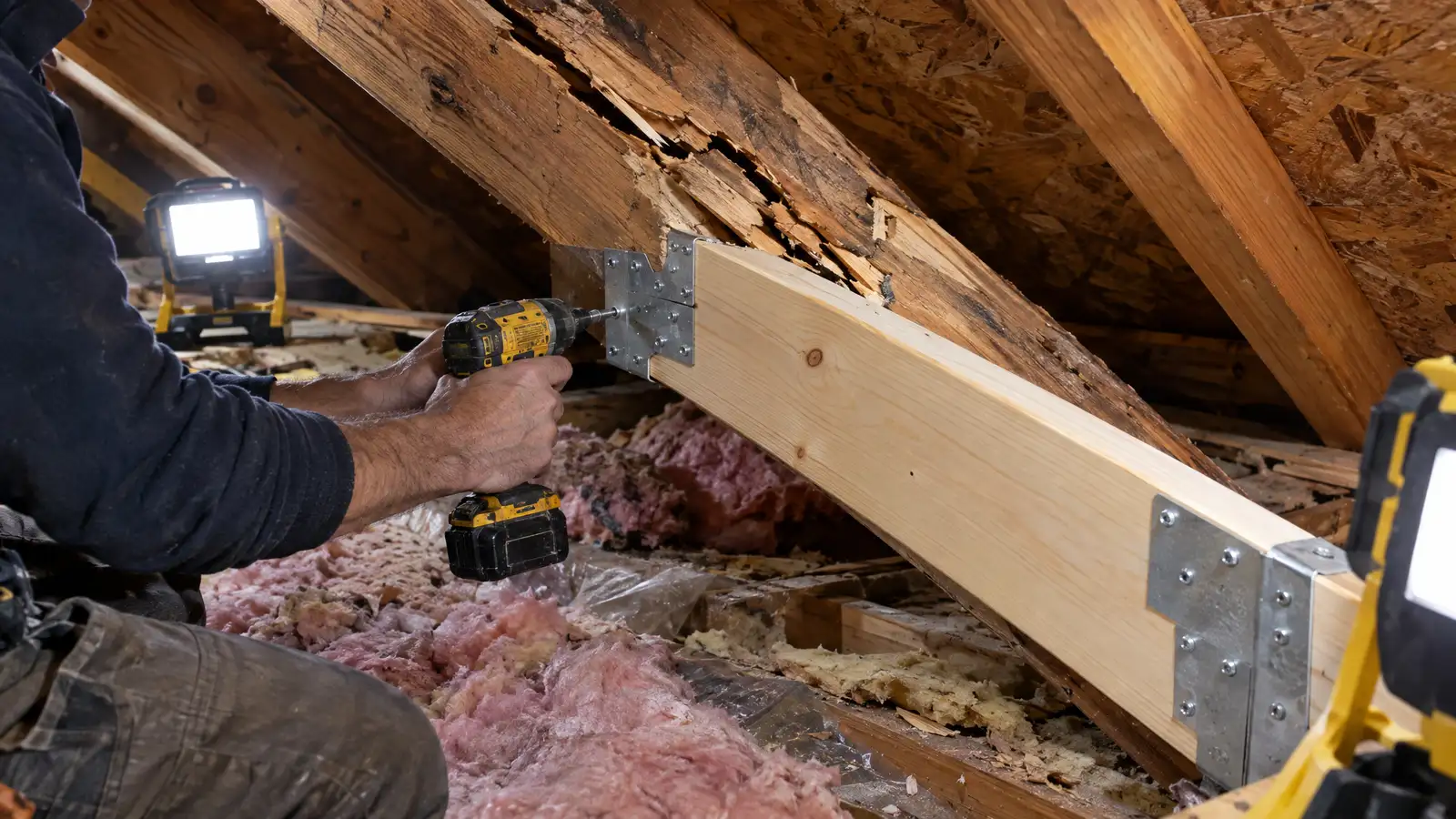 C-02RepairsRafter and Truss RepairCracked rafters, broken truss members and displaced framing carry the whole roof.Stage 2: Make it safe
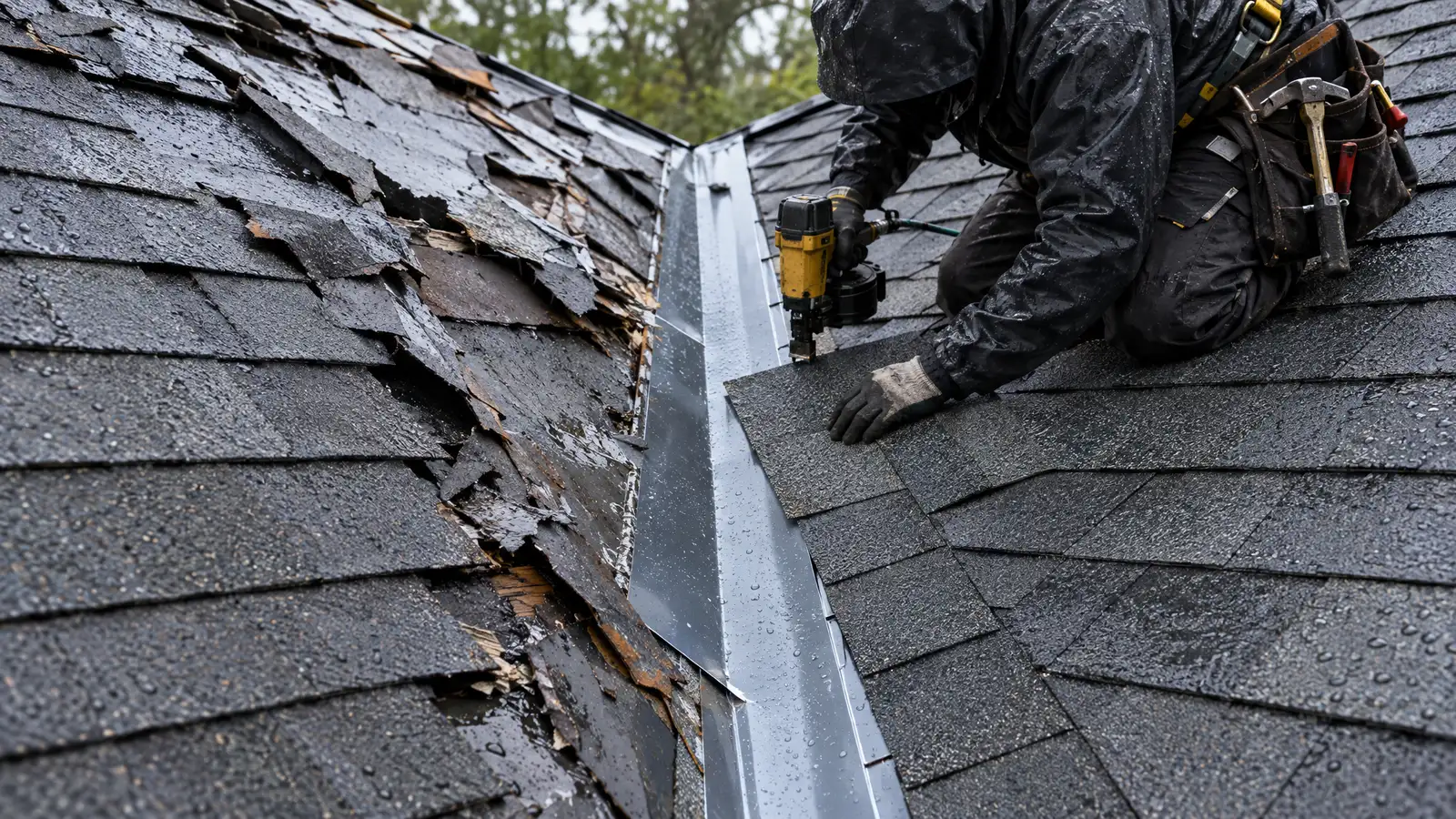 C-03RepairsRoof Valley RepairValleys carry the flow of two roof slopes.Stage 3: Repair it
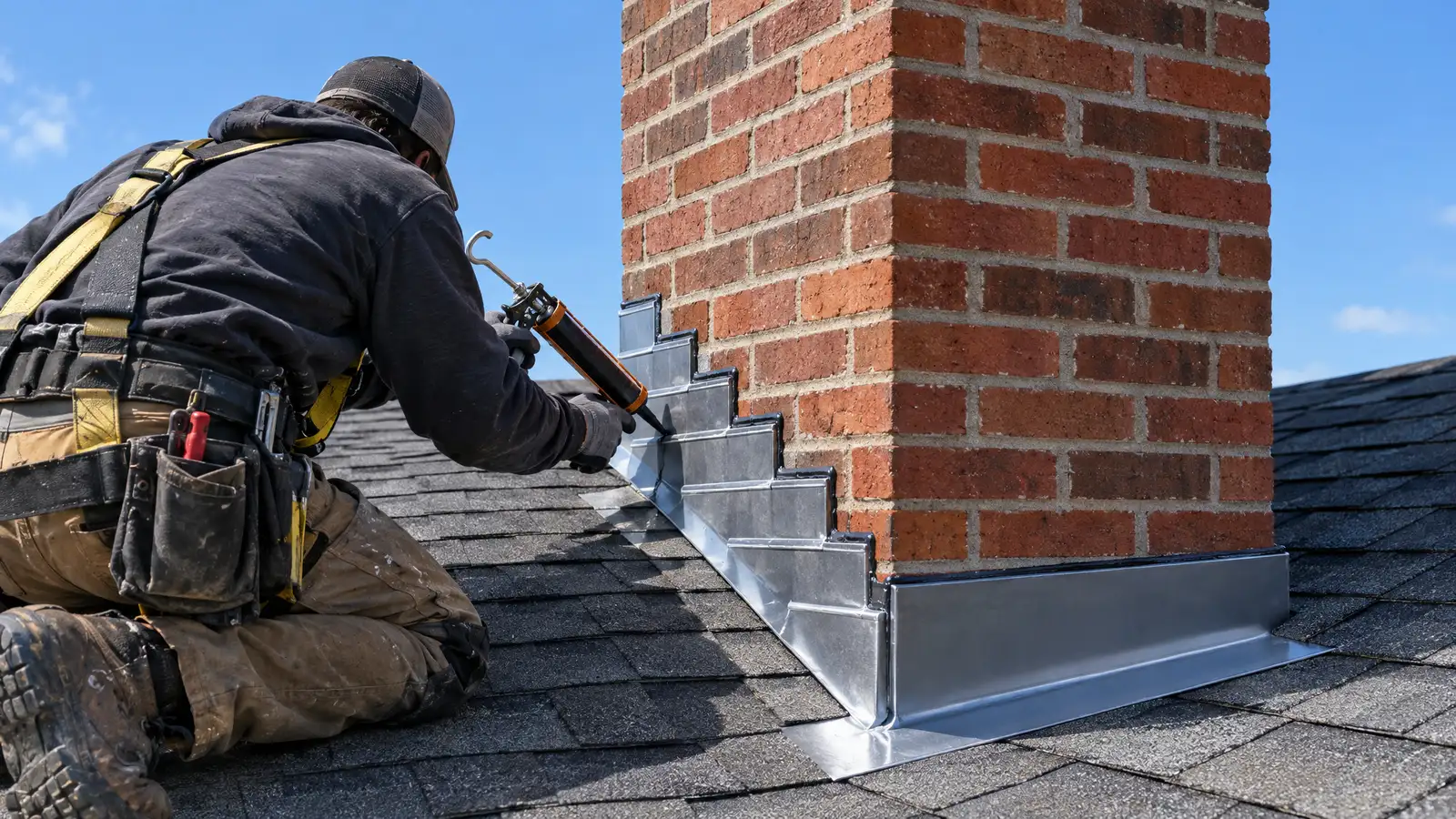 C-04RepairsChimney Flashing RepairChimneys leak where the roof meets the brick.Stage 3: Repair it
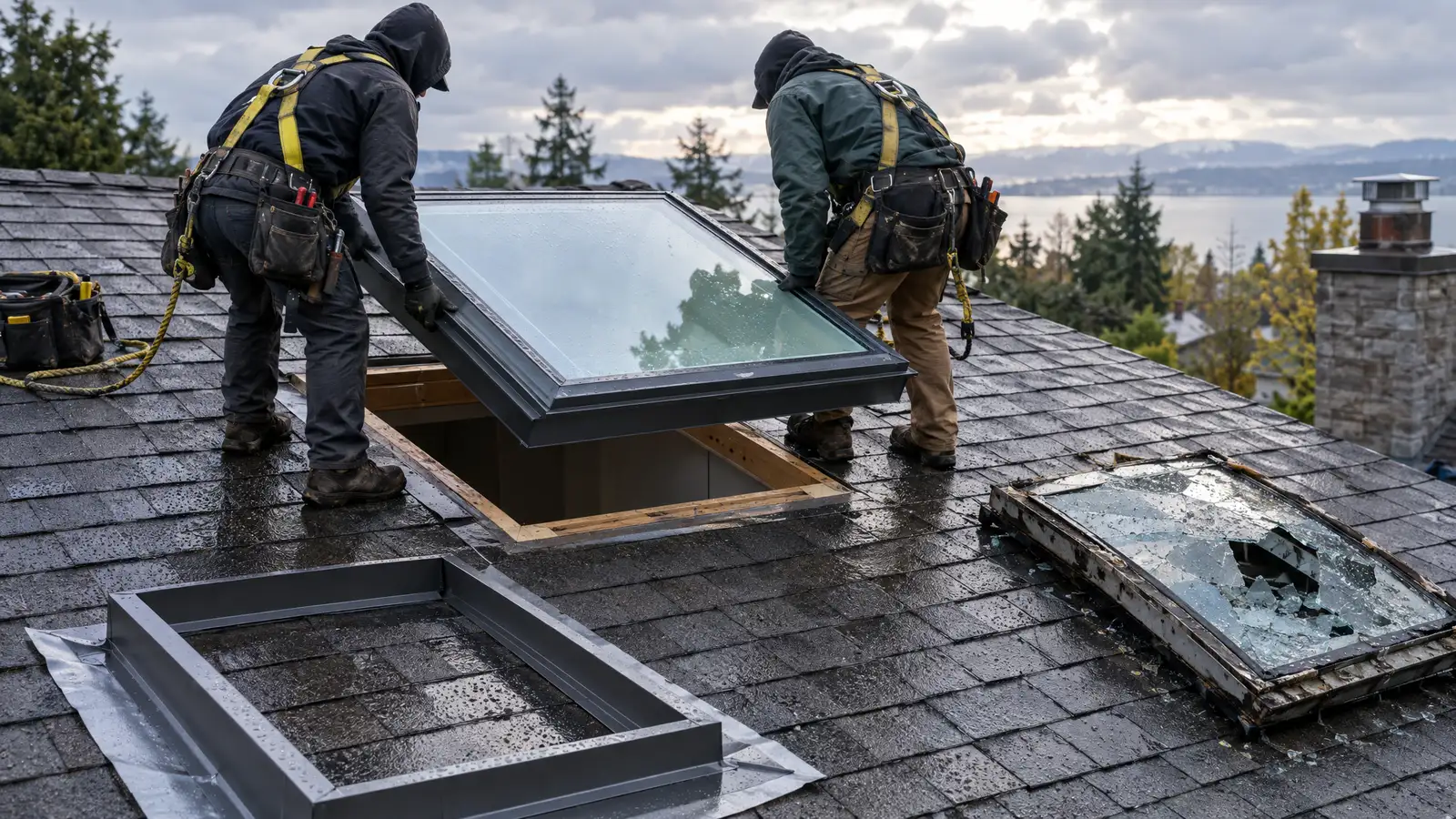 C-05RepairsSkylight ReplacementHail and debris crack skylights, and storms loosen their frames.Stage 3: Repair it
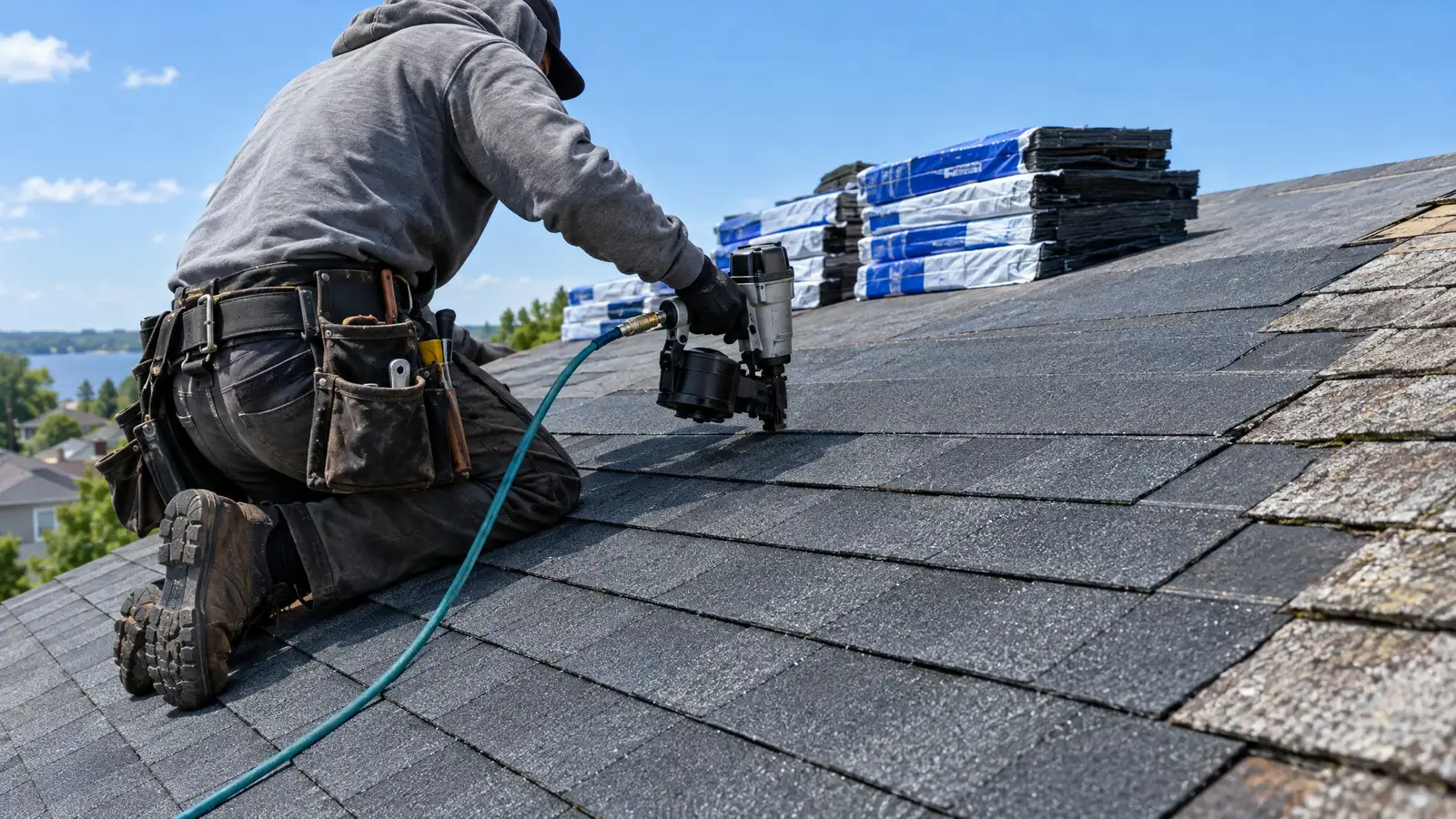 C-06RepairsShingle Roof RepairAsphalt shingles are the most common roof, and the most common to be damaged.Stage 3: Repair it
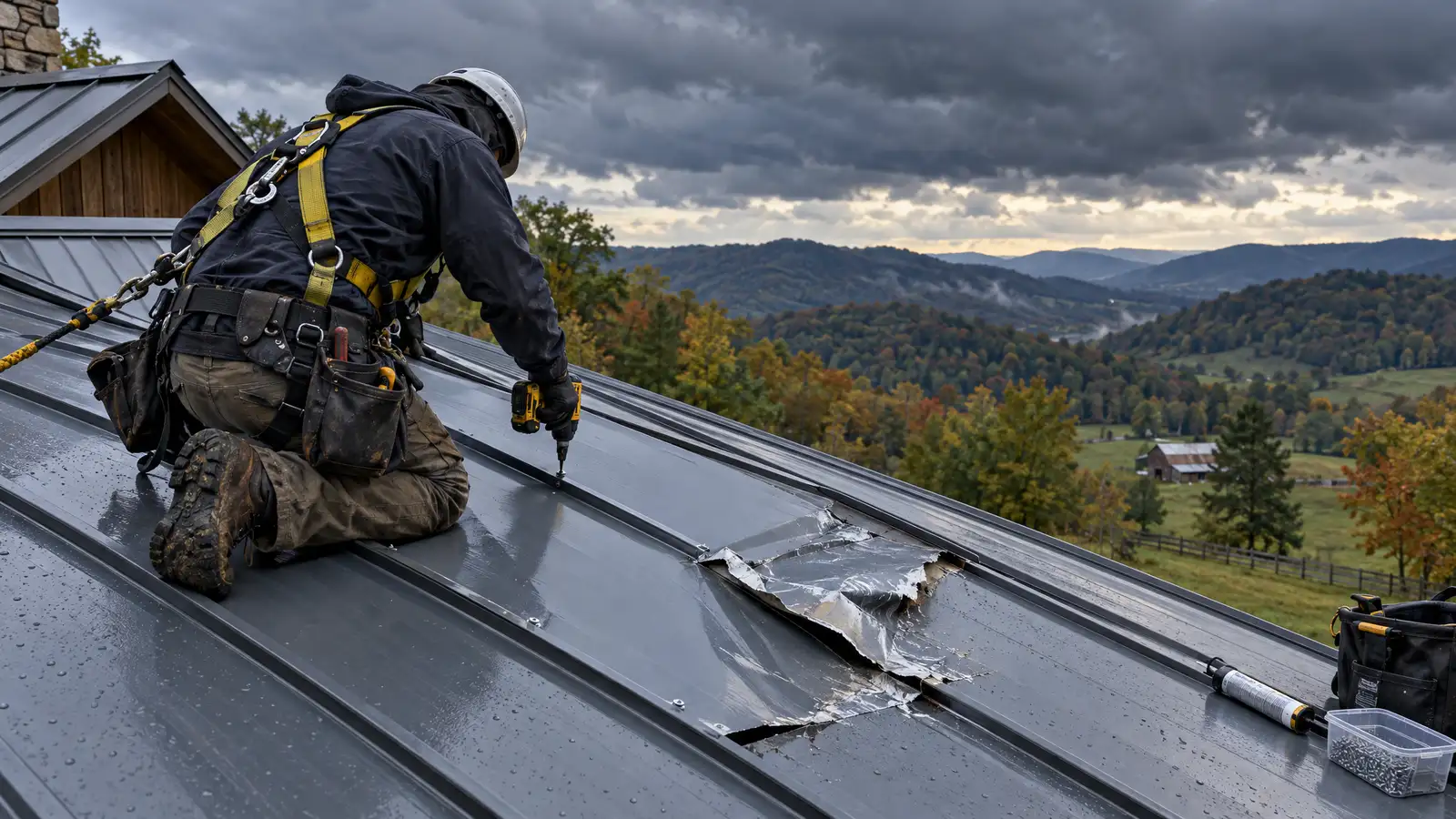 C-07RepairsMetal Roof Storm RepairMetal roofs are tough, but wind can peel panels and hail can dent them.Stage 3: Repair it
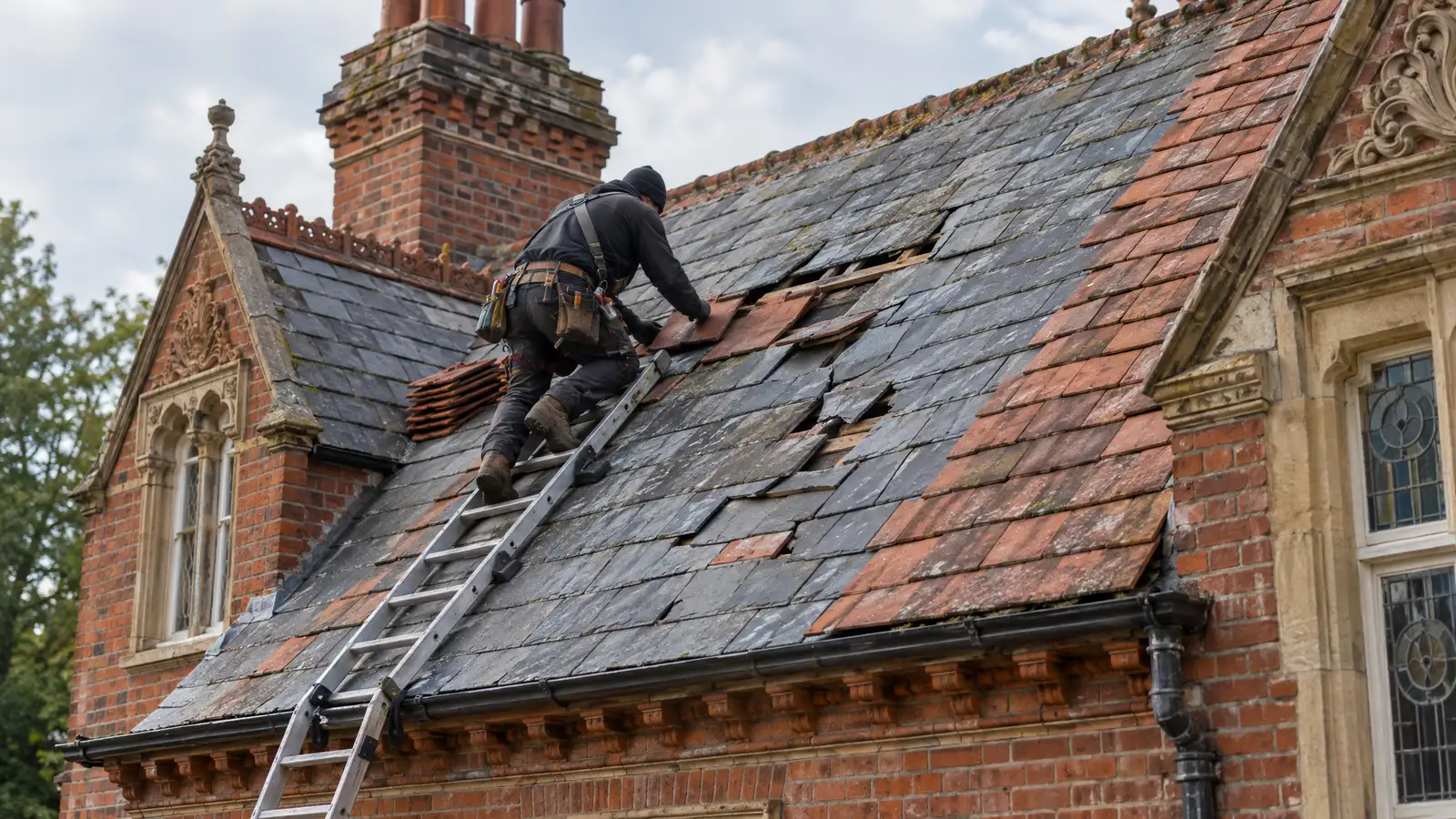 C-08RepairsTile and Slate RepairSlate and clay tile roofs are beautiful and heavy, and easy to damage by walking on them.Stage 3: Repair it
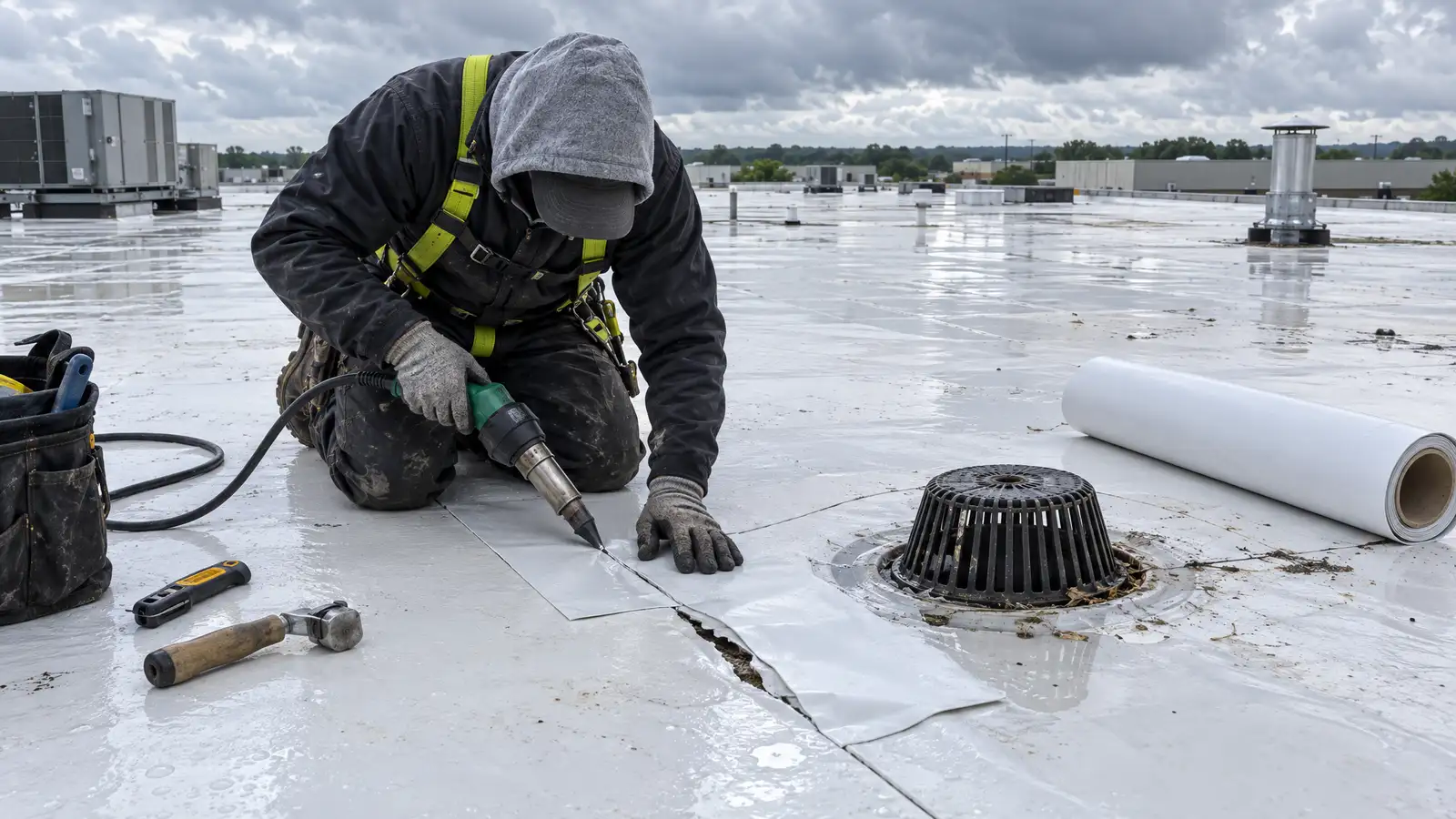 C-09RepairsFlat Roof Storm RepairFlat and low-slope roofs hold water, and storms tear membranes, open seams and block drains.Stage 3: Repair it
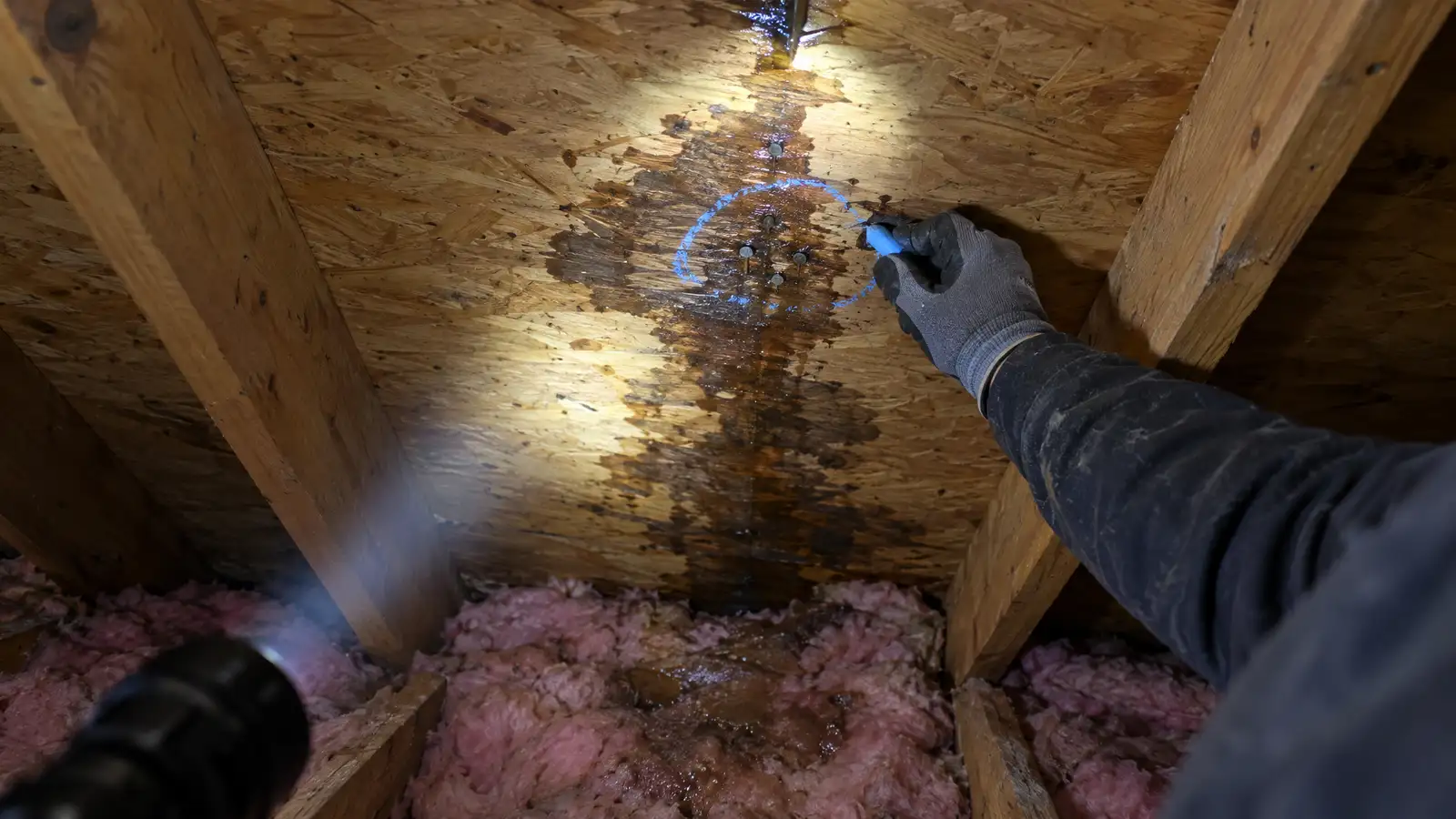 C-10RepairsAttic Water: Fix the SourceWet insulation, stained decking and mold in the attic point to a leak above.Stage 2: Make it safe
Emergency tarping and repair for flat, metal and membrane roofs, apartments and HOAs, churches and schools, warehouses and industrial buildings.
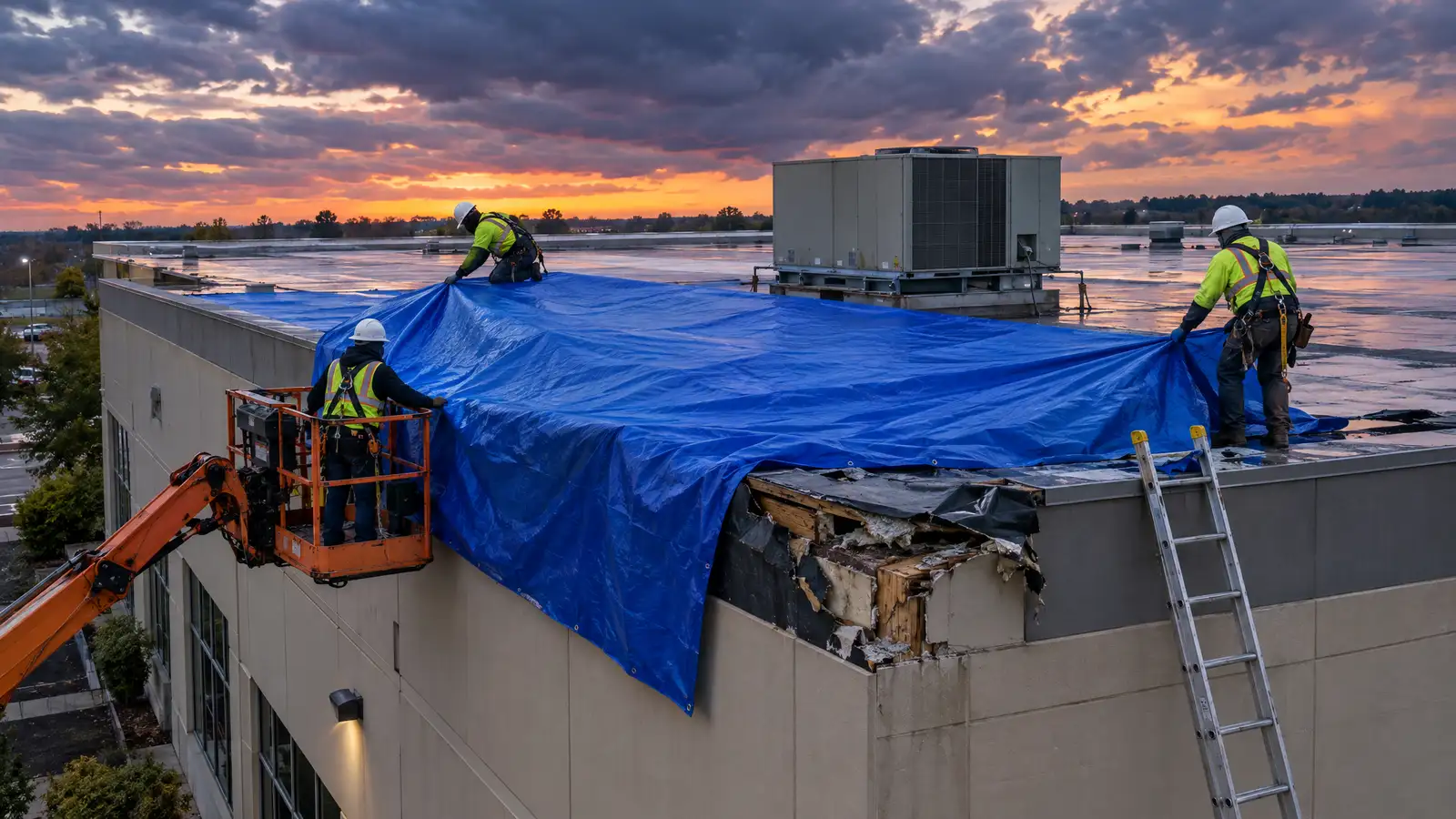 D-01CommercialCommercial Emergency TarpingA storm that opens a commercial roof threatens inventory, equipment and staff.Stage 1: Stop the water
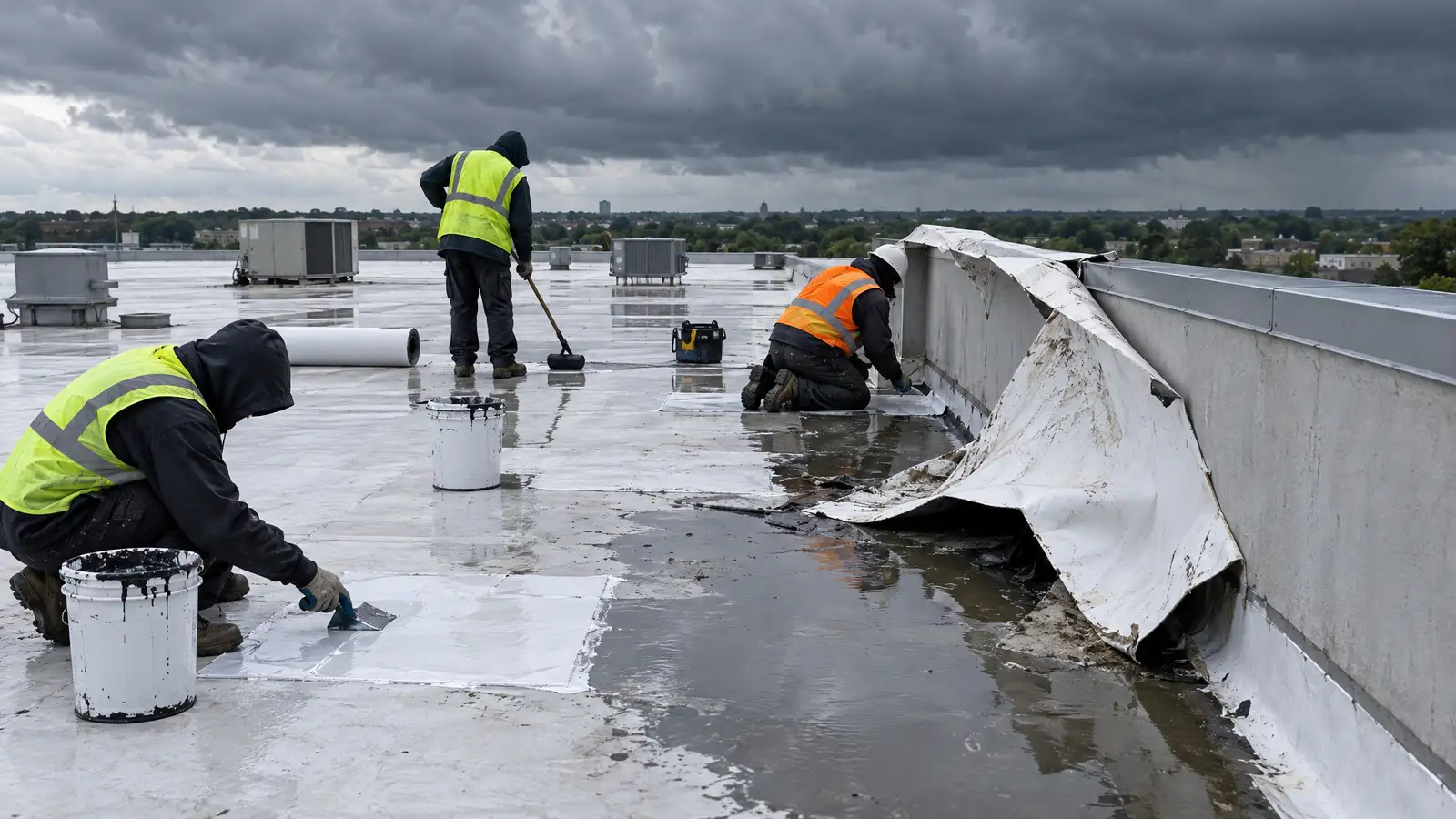 D-02CommercialCommercial Flat Roof RepairStorms rip membranes, flood roofs and open seams.Stage 2: Make it safe
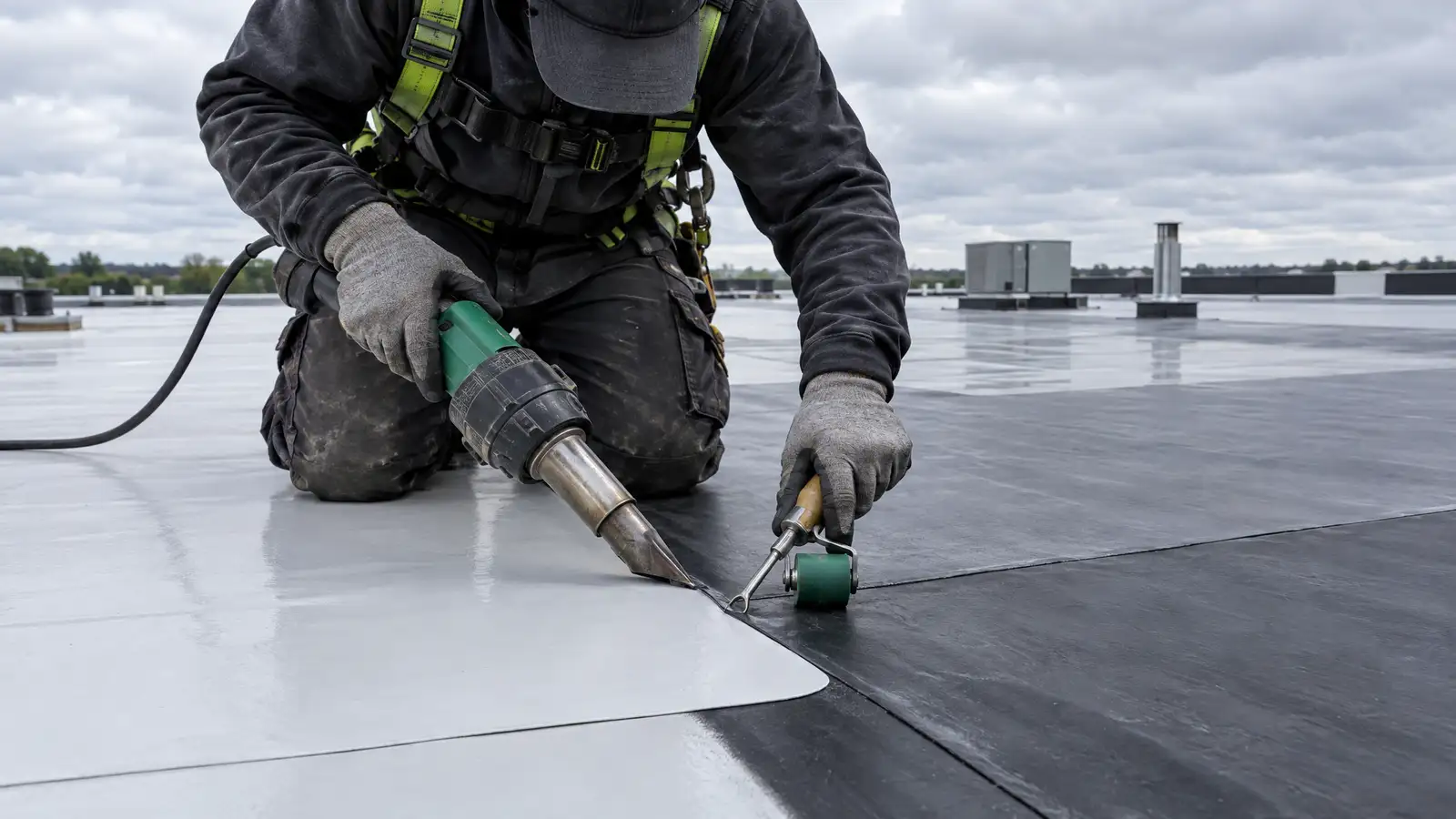 D-03CommercialTPO and EPDM Emergency RepairSingle-ply membranes fail at seams, flashings and punctures.Stage 2: Make it safe
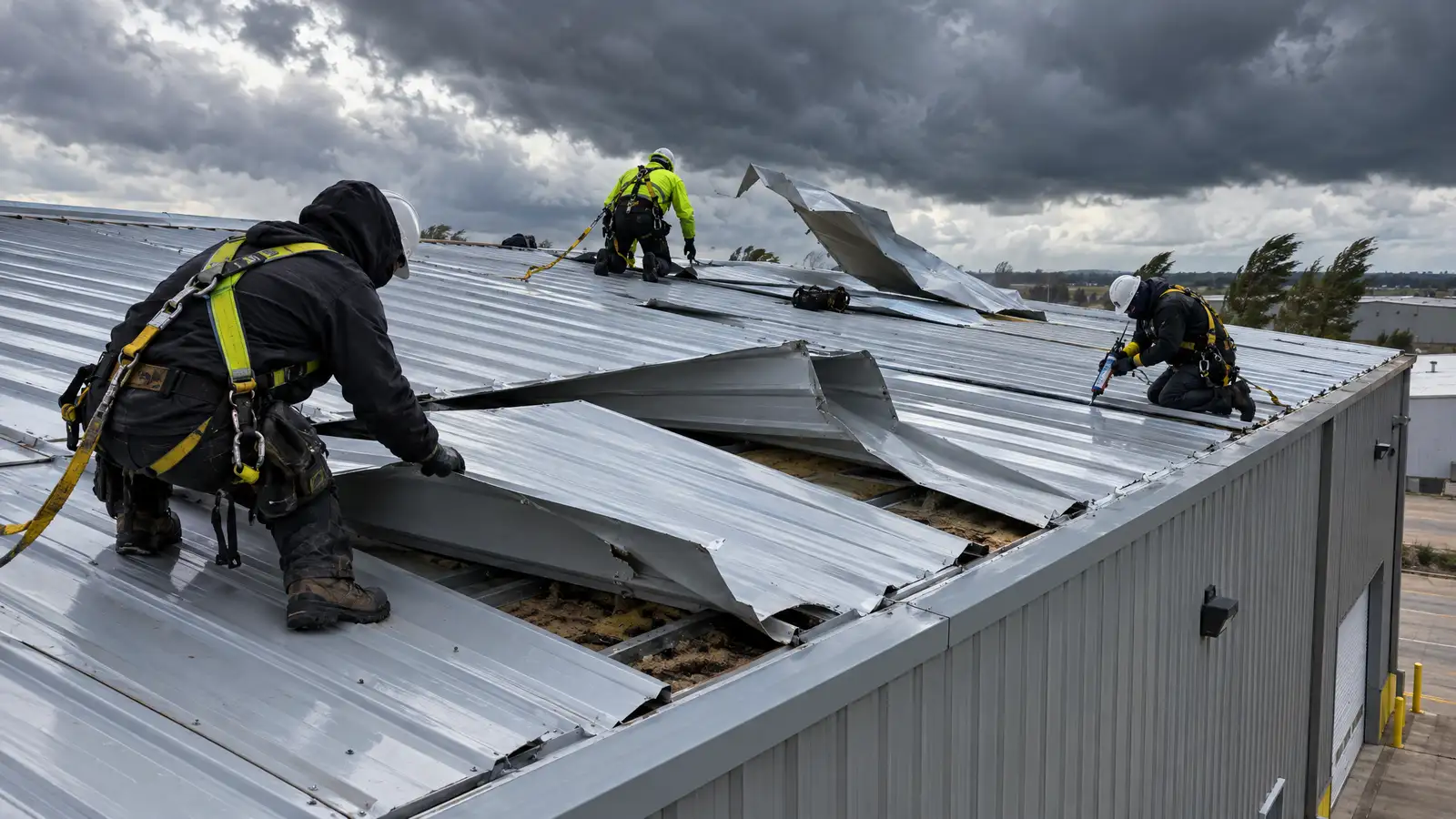 D-04CommercialCommercial Metal Roof RepairWind peels metal roof panels and trim.Stage 2: Make it safe
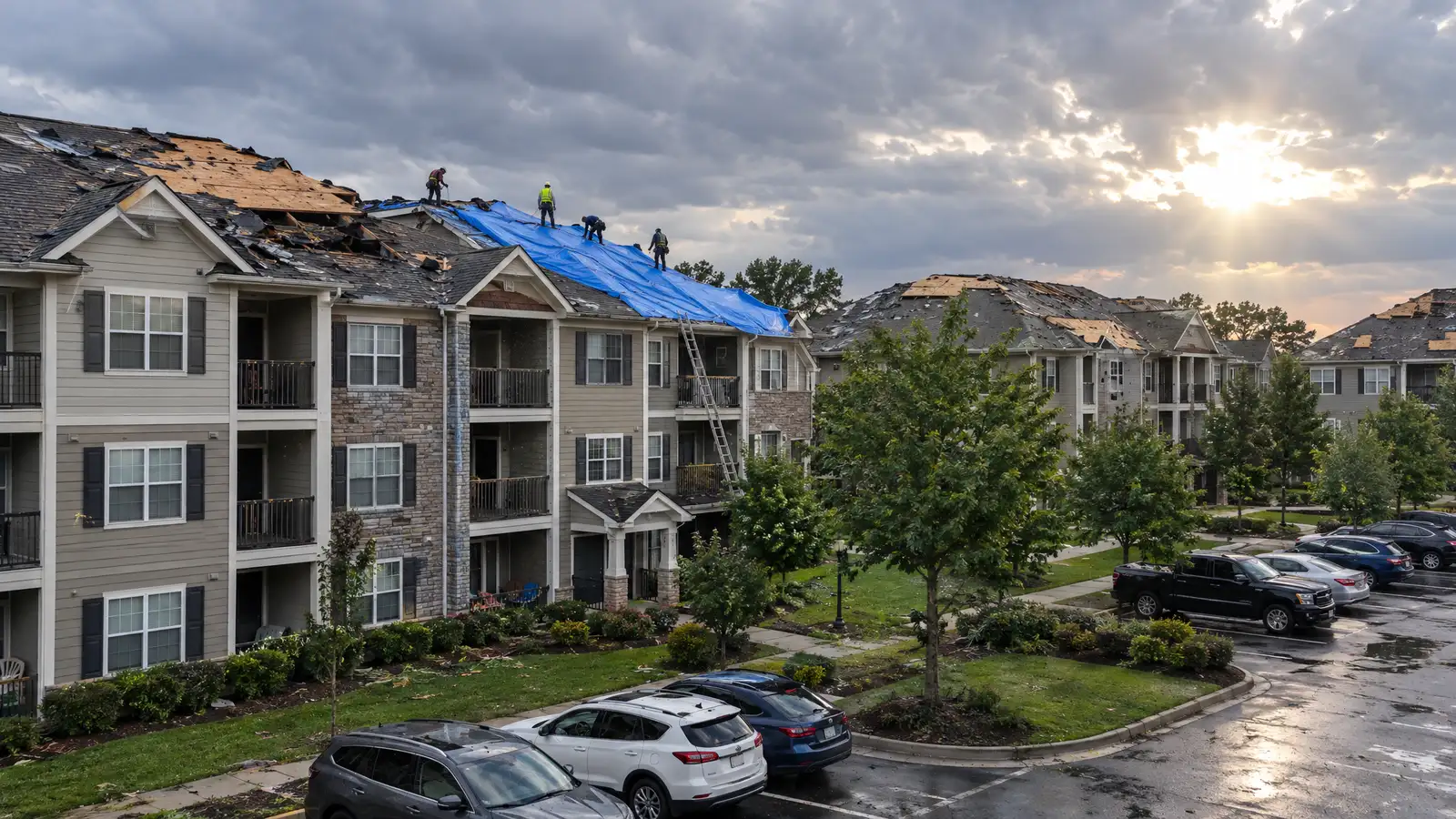 D-05CommercialApartment and HOA EmergenciesA storm can damage dozens of roofs at once on a managed property.Stage 2: Make it safe
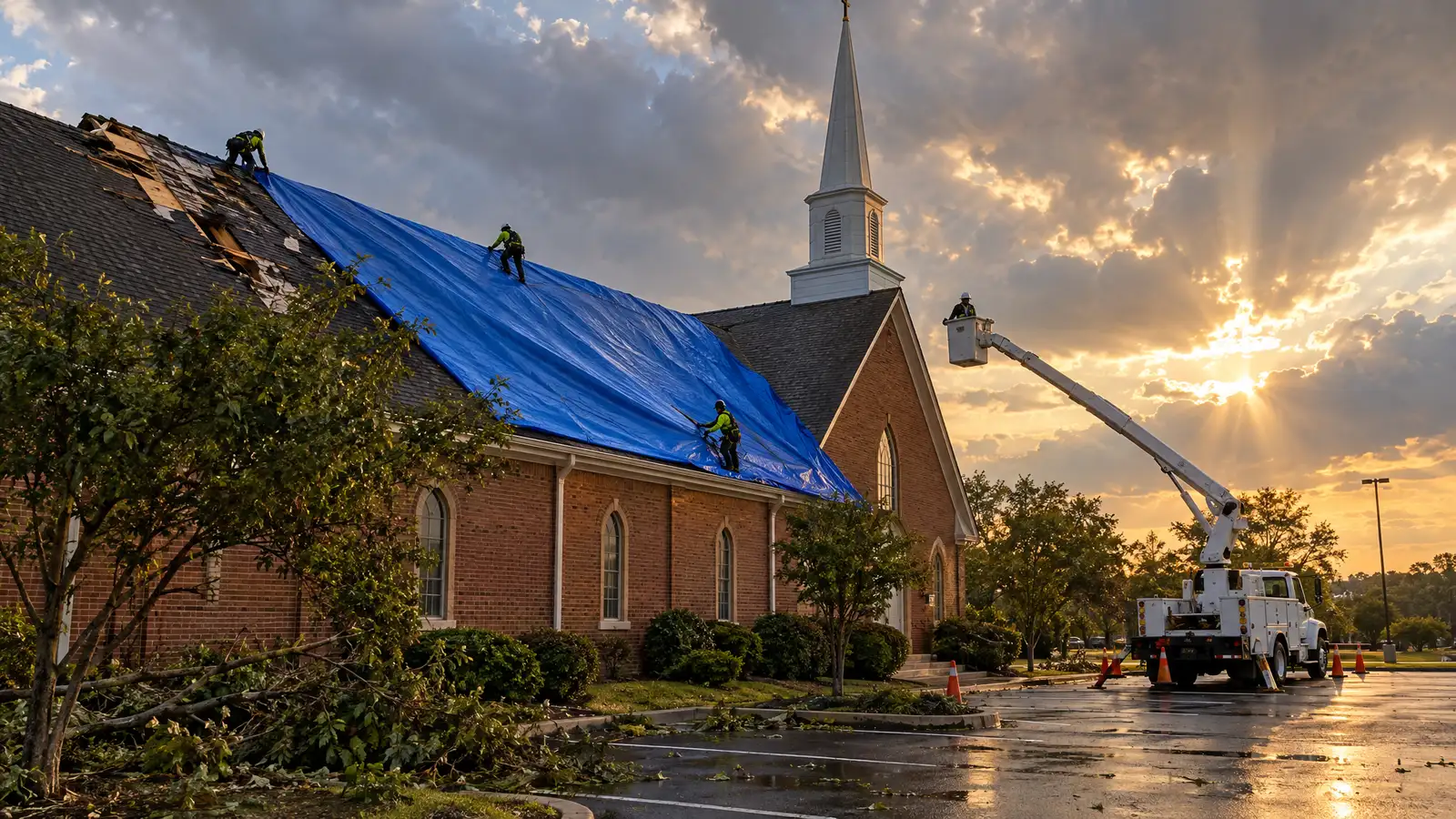 D-06CommercialChurch and School EmergenciesSteep sanctuary roofs, flat gym roofs and old school buildings all need careful emergency work, planned around the people who use them.Stage 2: Make it safe
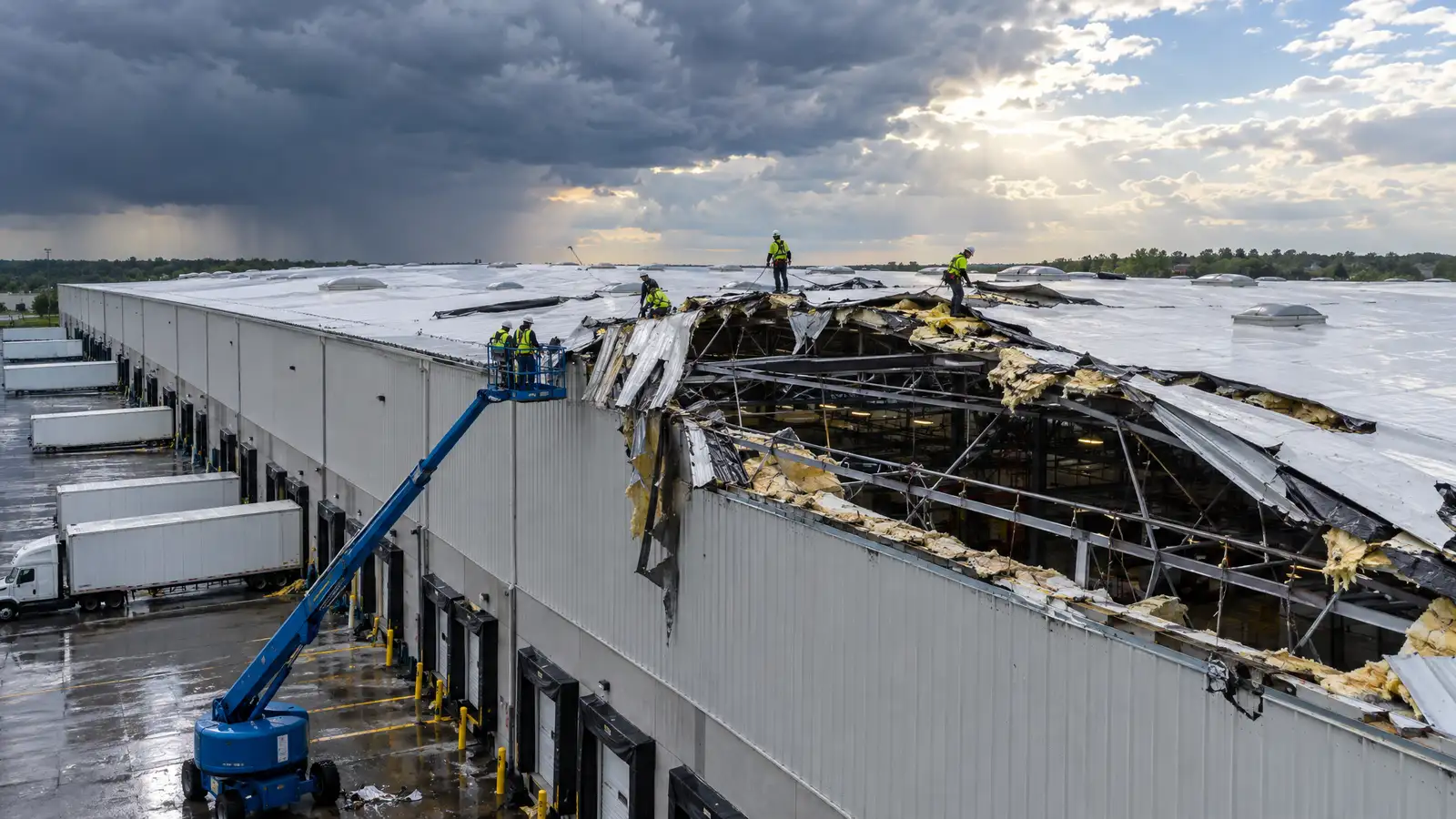 D-07CommercialWarehouse and Industrial RoofsLarge roofs over stock, machinery and docks cannot wait.Stage 2: Make it safe
Claim documentation, adjuster meetings, emergency and full roof replacement, repair or replace assessments, permits and project management.
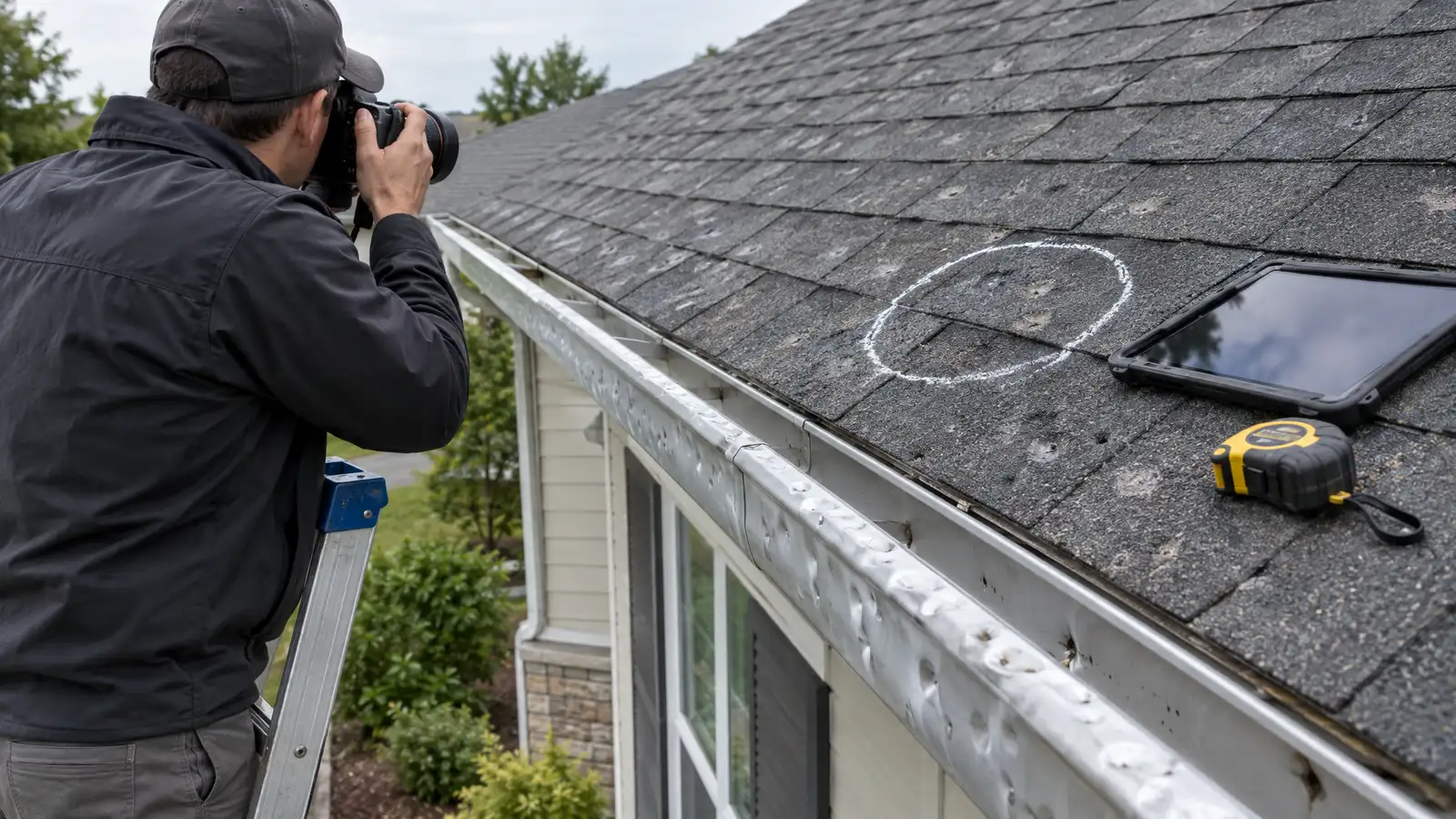 E-01Claims and RecoveryClaim Roof DocumentationA clear record of storm damage, with dated photos, marked impacts and plain descriptions, makes every later conversation easier.Stage 1: Stop the water
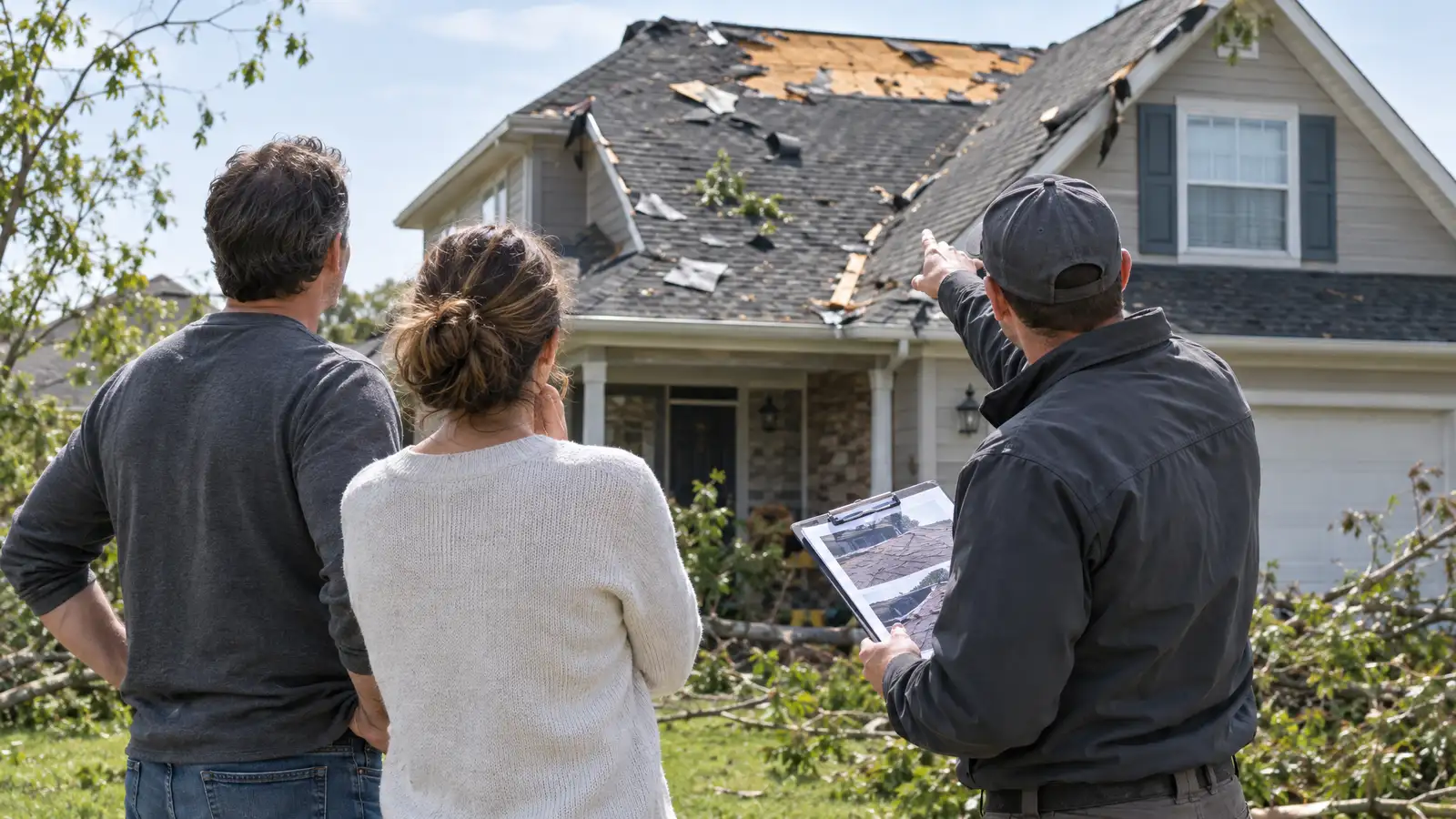 E-02Claims and RecoveryClaim Support and Adjuster MeetingsWe can meet your adjuster on the roof, show our findings and answer roofing questions.Stage 1: Stop the water
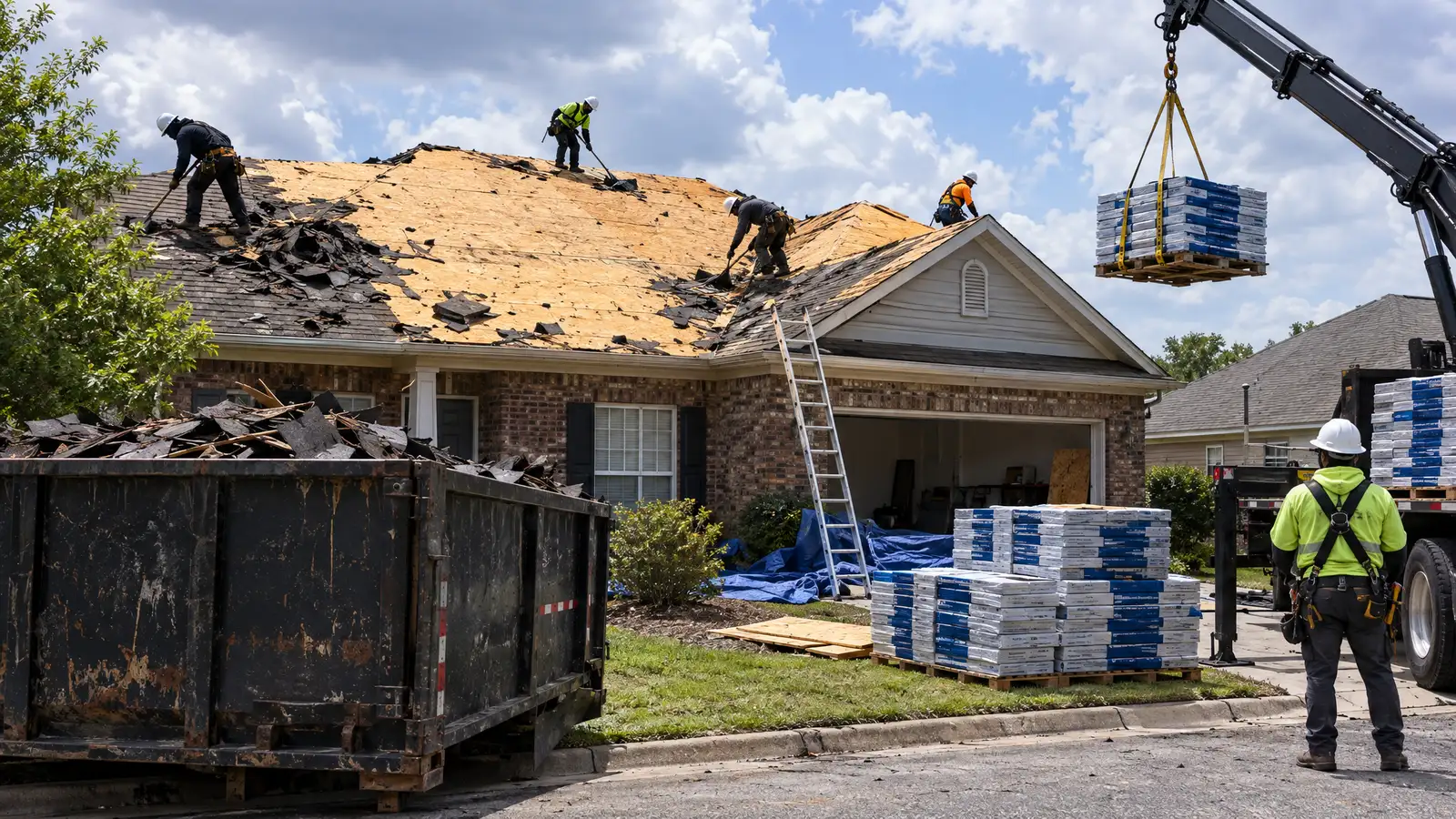 E-03Claims and RecoveryEmergency Roof ReplacementSome storms destroy a roof.Stage 4: Rebuild
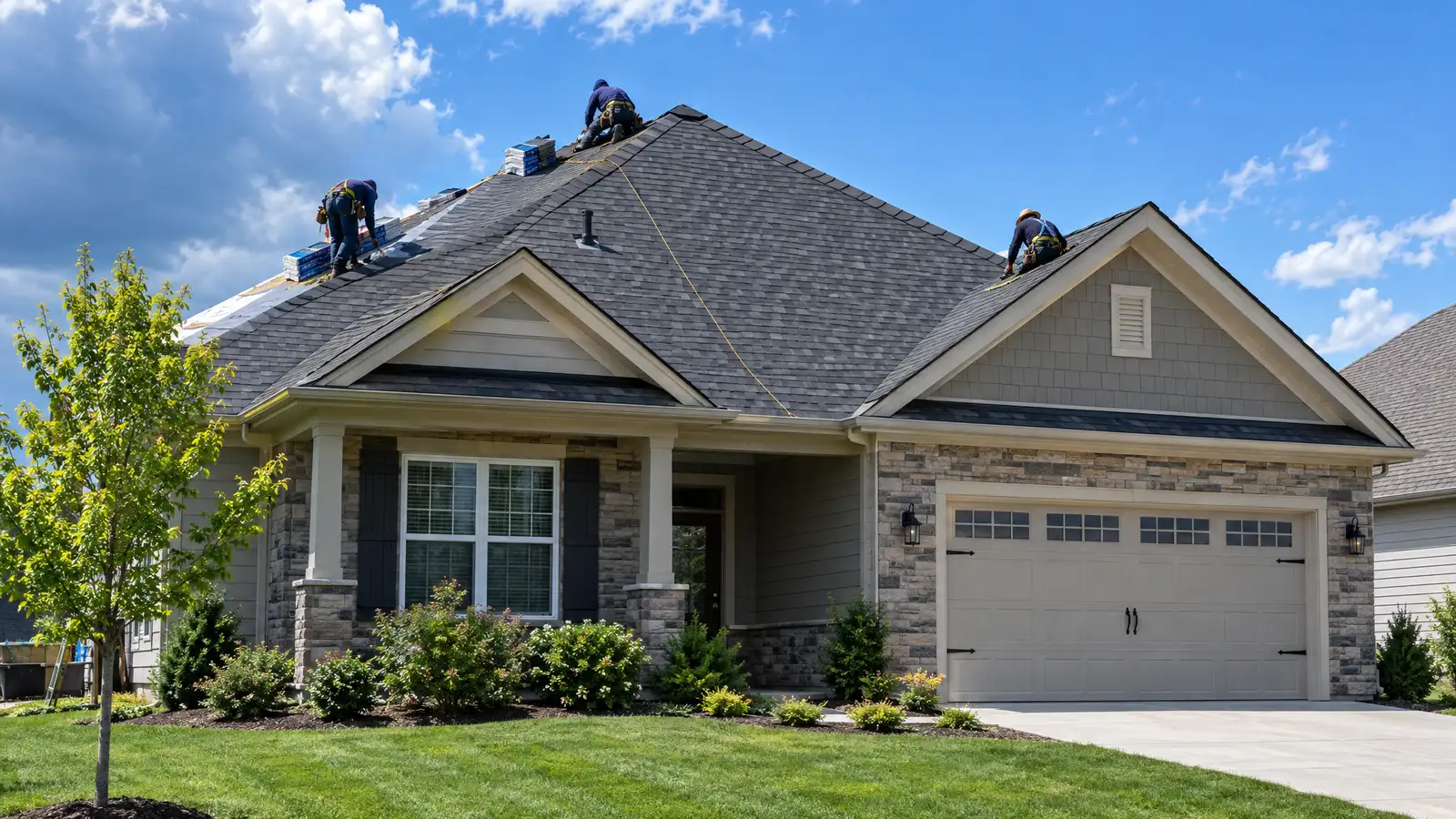 E-04Claims and RecoveryFull Roof ReplacementWhen hail or wind has damaged every slope, a full replacement is often the right answer.Stage 4: Rebuild
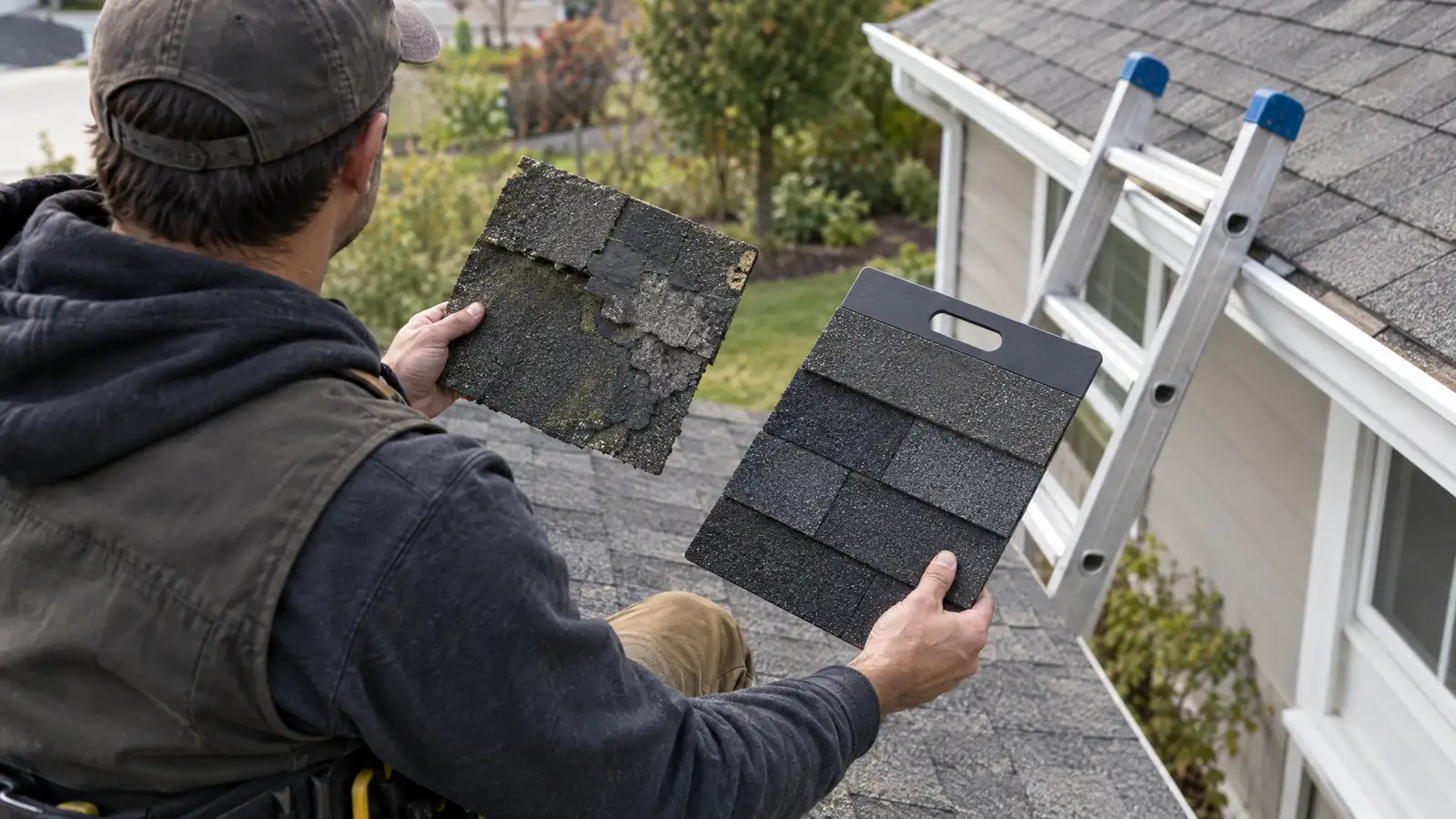 E-05Claims and RecoveryRepair or Replace AssessmentWhether to repair or replace depends on age, extent and condition.Stage 1: Stop the water
 E-06Claims and RecoveryPermits and Code UpgradesRebuilding after a storm can trigger permit and code requirements.Stage 3: Repair it
 E-07Claims and RecoveryStorm Recovery Project ManagementAfter a big storm, a property owner juggles insurers, contractors and schedules.Stage 4: Rebuild
Every service page shows a stage badge so you know where it fits between the storm and the finished roof.
Tarps, board-up and emergency seals go on first, so rain stops entering the building and the interior is protected while everything else is planned.
Debris is cleared, damaged areas are braced and temporary repairs make the roof and the building safe to work on and live under.
Shingles, flashing, decking and details are repaired or replaced, matched as closely as practical and sealed so the roof sheds water properly again.
When repair will not make sense, the roof is replaced: planned, permitted, documented and built to last, with the options explained first.
Tell us what happened and where you see water. We will explain the safest next step and how we can cover and repair the roof.
Send the form or call. Say what the storm did, where you see water and whether anyone is in danger, and we will explain the safest next step and how we can help protect the roof.
Prefer to talk? Call us(615) 410-9749