Emergency Roof Tarping in Nashville and Middle Tennessee
When a storm opens your roof, a properly secured tarp keeps water out of the house until the permanent repair can be done.
- Emergency Response
- Cover it before the next rain
- Middle Tennessee
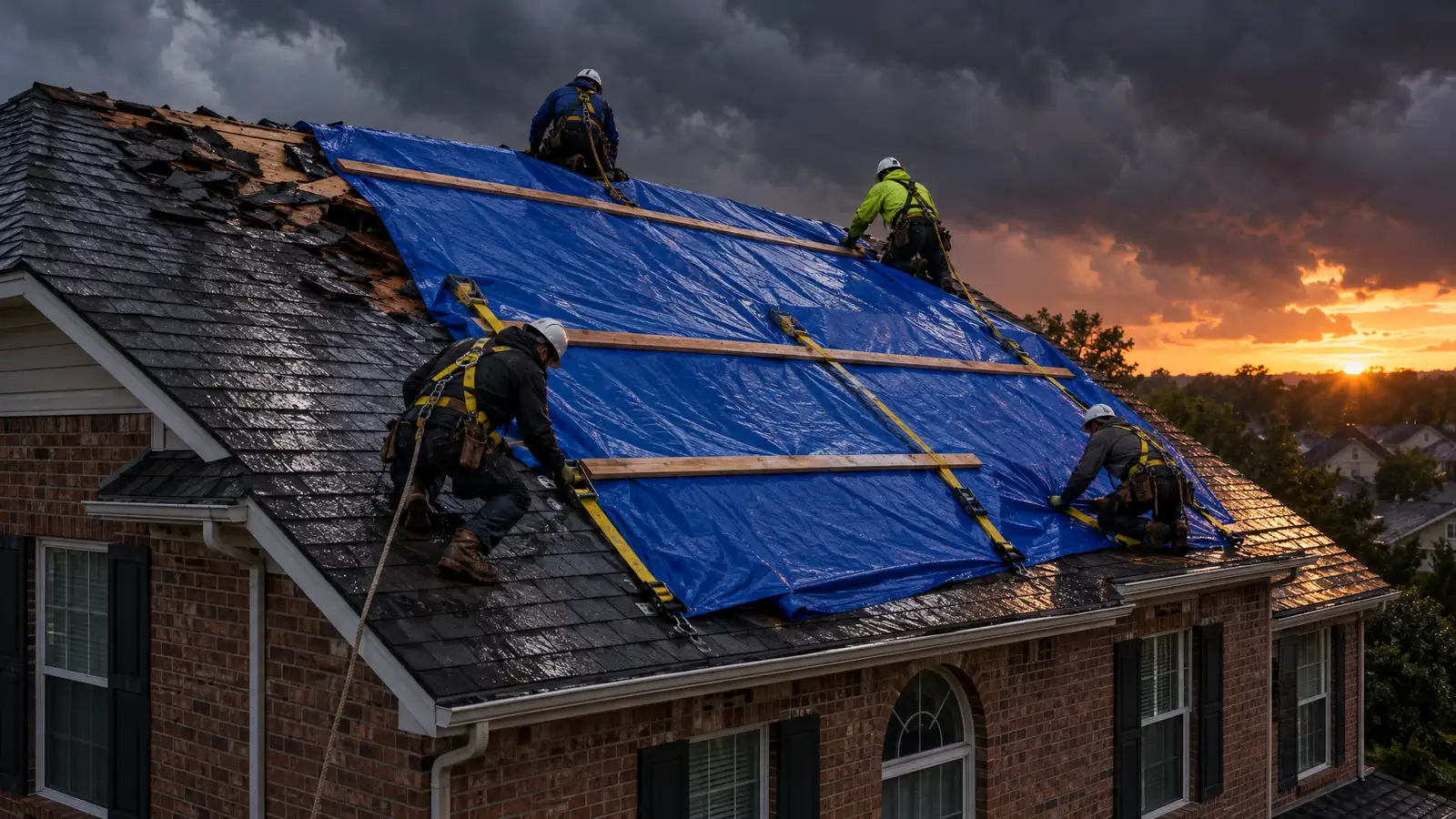
Emergency Roof Tarping, explained.
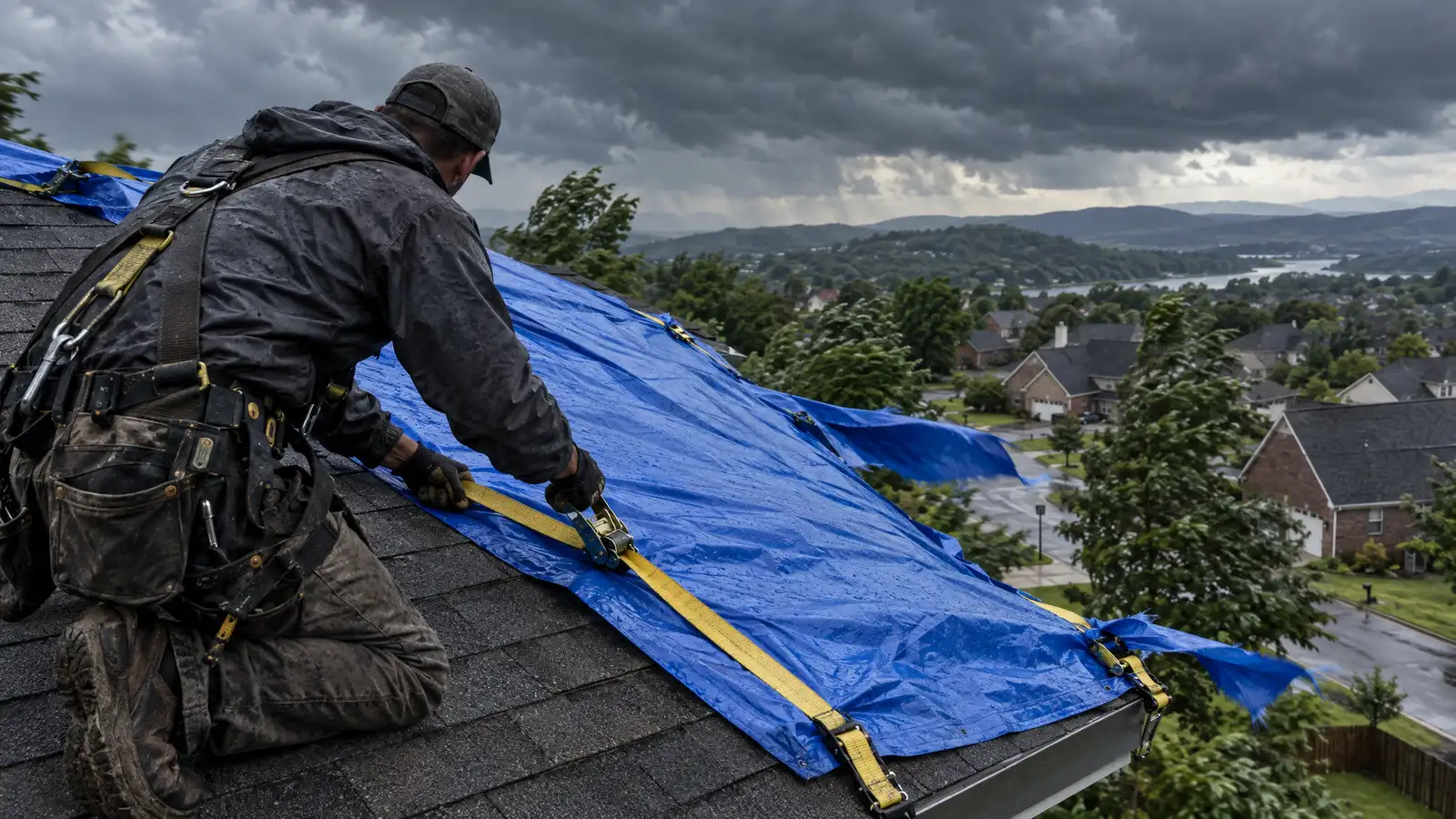
A roof tarp is not a blanket thrown over a hole. A tarp that is only weighted down or nailed at the edges will flap, tear and let water run underneath it. A good one is cut to size, laid up and over the ridge where possible, and fastened to wood battens so the wind cannot get beneath it.
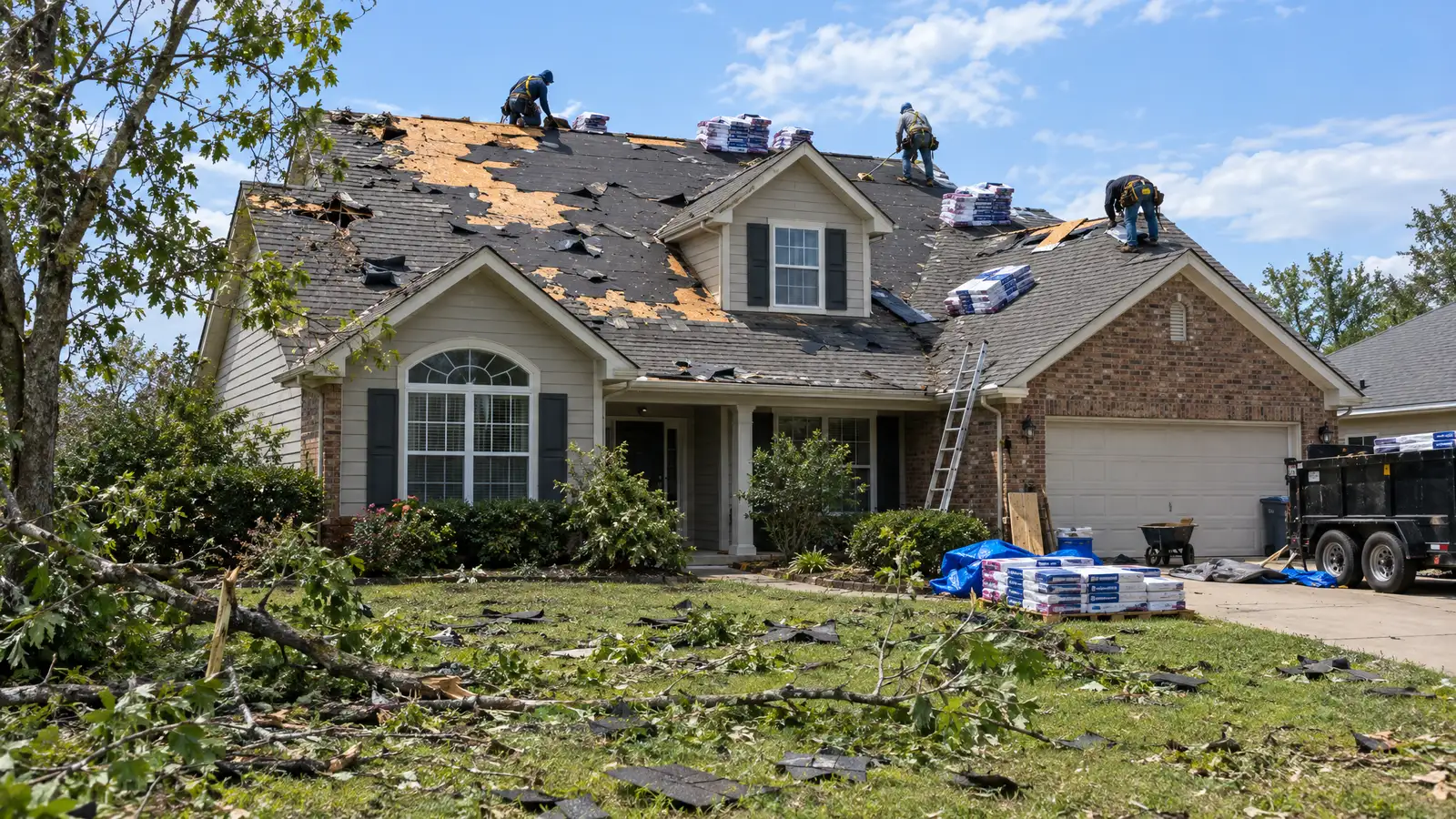
We tarp roofs after hail, wind, falling trees, fire and lightning. The goal is simple: stop water from reaching the decking, the insulation and your ceilings, so a bad night does not become a month of interior repairs.
Signs you need this
- Shingles are missing or torn and the deck is showing
- A tree, limb or debris has opened the roof
- You see water coming in or a new ceiling stain
- Rain is in the forecast before a repair can be done
A good fit, and what to know.
We would rather you hear the limits from us than discover them later.
A good fit when
- You have an open section of roof and no way to cover it
- You need to protect the interior while repairs are arranged
- You are waiting on an insurance process before a full repair
Worth knowing
- A tarp is temporary and does not replace a repair
- Very steep or unsafe roofs may need special equipment or a different approach
Why do it this way.
Water stays outside
A well-fastened tarp keeps rain off the decking and out of the attic and rooms below.
Built for wind
Battens, straps and ridge overlap are what keep a tarp on in the next gust.
A paper trail
Photographs of the damage and the tarp help when you talk with your insurer.
Time to decide
Once the roof is covered you can take your time choosing the permanent repair.
From first call to finished work.
A clear sequence for every job.
- 01
Assess and stay safe
We look at the roof from the ground first, check for hazards such as sagging areas and lines, and decide how to get up and work safely.
- 02
Clear and prepare
Loose debris and sharp edges that could tear the tarp are removed from the area to be covered.
- 03
Lay and fasten
The tarp goes on with enough overlap to shed water, run up and over the ridge when we can, and is fastened to battens, not just nails through the fabric.
- 04
Check and document
We check the edges and corners, photograph the finished work and tell you what to watch for until the permanent repair is done.
Services that go together.
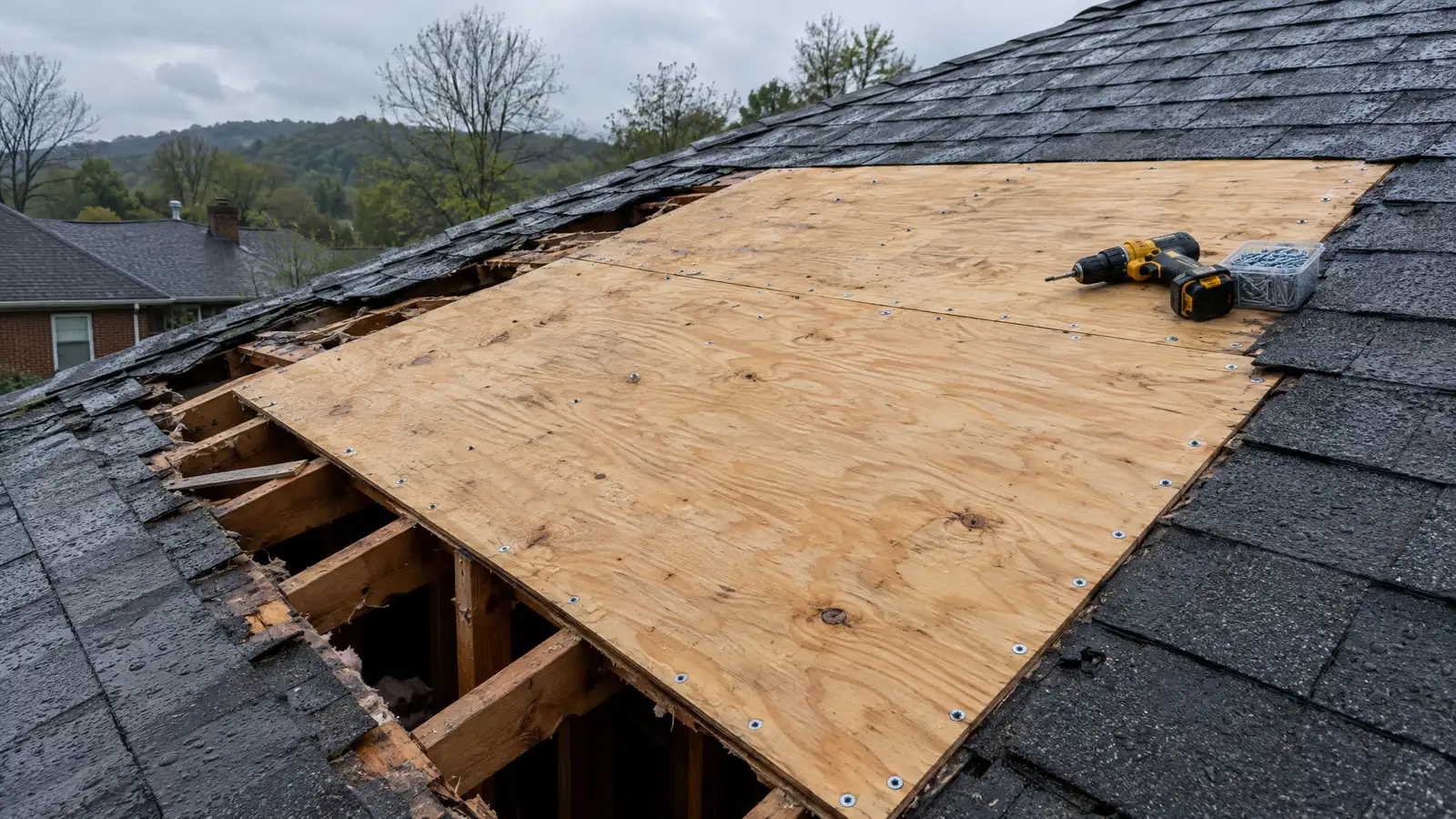 A-03Emergency ResponseEmergency Board-UpWhen a tree, fire or high wind leaves a hole in the roof deck, solid board-up and a covering membrane make the structure weather-tight again.Stage 1: Stop the water
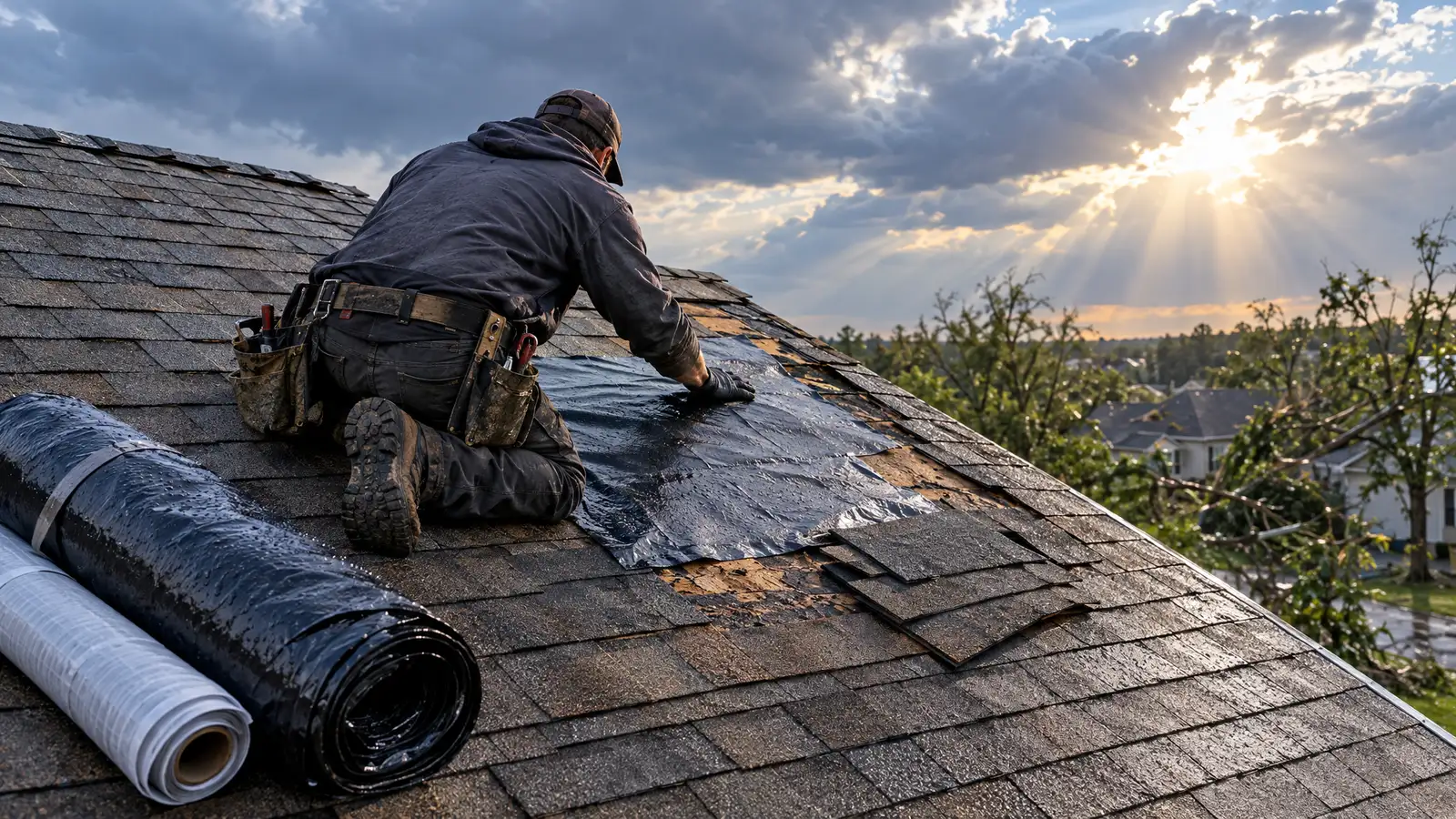 A-04Emergency ResponseTemporary Roof RepairSometimes the right permanent repair needs materials, approvals or dry weather that are not available yet.Stage 2: Make it safe
 A-12Emergency ResponseTarp Checks and MaintenanceA tarp that was tight last week may be flapping today.Stage 1: Stop the water
 B-01Storm DamageStorm Damage Roof RepairHail, wind, limbs and driven rain damage roofs in different ways.Stage 3: Repair it
Read more on this topic.
How Emergency Roof Tarping WorksWhat a proper tarp job involves, and why a good one stays on.2 min read How Long Can a Roof Tarp Stay On?A tarp is a stop-gap. Here is how to think about its time limit.2 min read 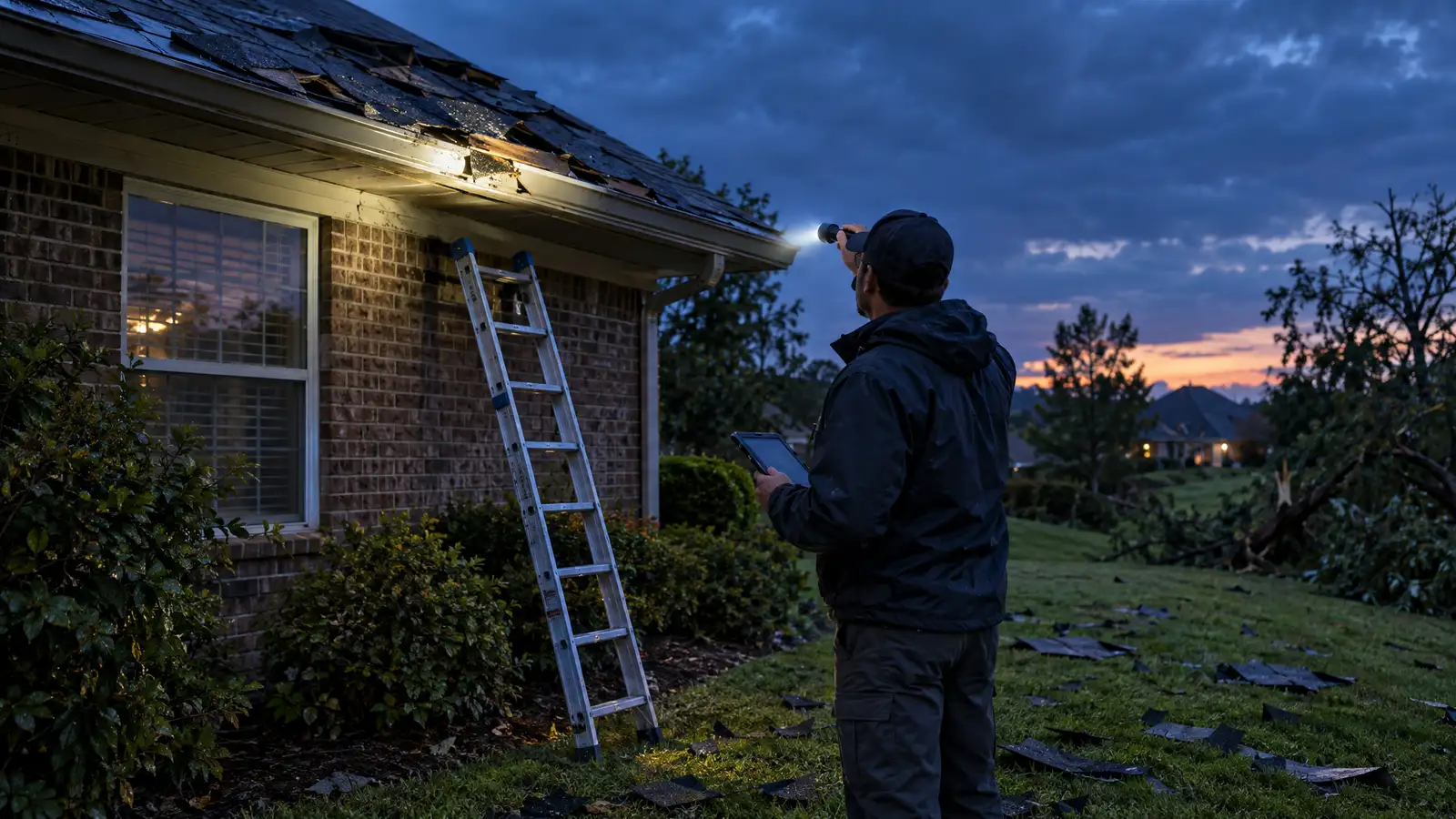 What Counts as a Roof Emergency?How to tell a roof problem that can wait from one that cannot.2 min read
Emergency Roof Tarping FAQ.
Will a tarp stop every leak?
A properly installed tarp stops most water entry from the covered area. It is a temporary measure, and we tell you what it does and does not protect.
Can you tarp in the rain?
Safety comes first. If conditions are unsafe we explain the risk, and we protect the opening in the safest way available.
How long can a tarp stay on?
A tarp is meant to be short term. We explain how long it is reasonable to leave yours and what to check in the meantime.
Emergency Roof Tarping across Middle Tennessee.
Pick your city for its page.
Storm hit your roof? Call before the next rain.
Tell us what happened and where you see water. We will explain the safest next step and how we can cover and repair the roof.