The short version
- A tarp is a temporary cover, not a repair
- It must be fastened to wood, not just weighted
- Overlap shed water; edges and ridge matter
- It should be checked regularly
Why tarp at all
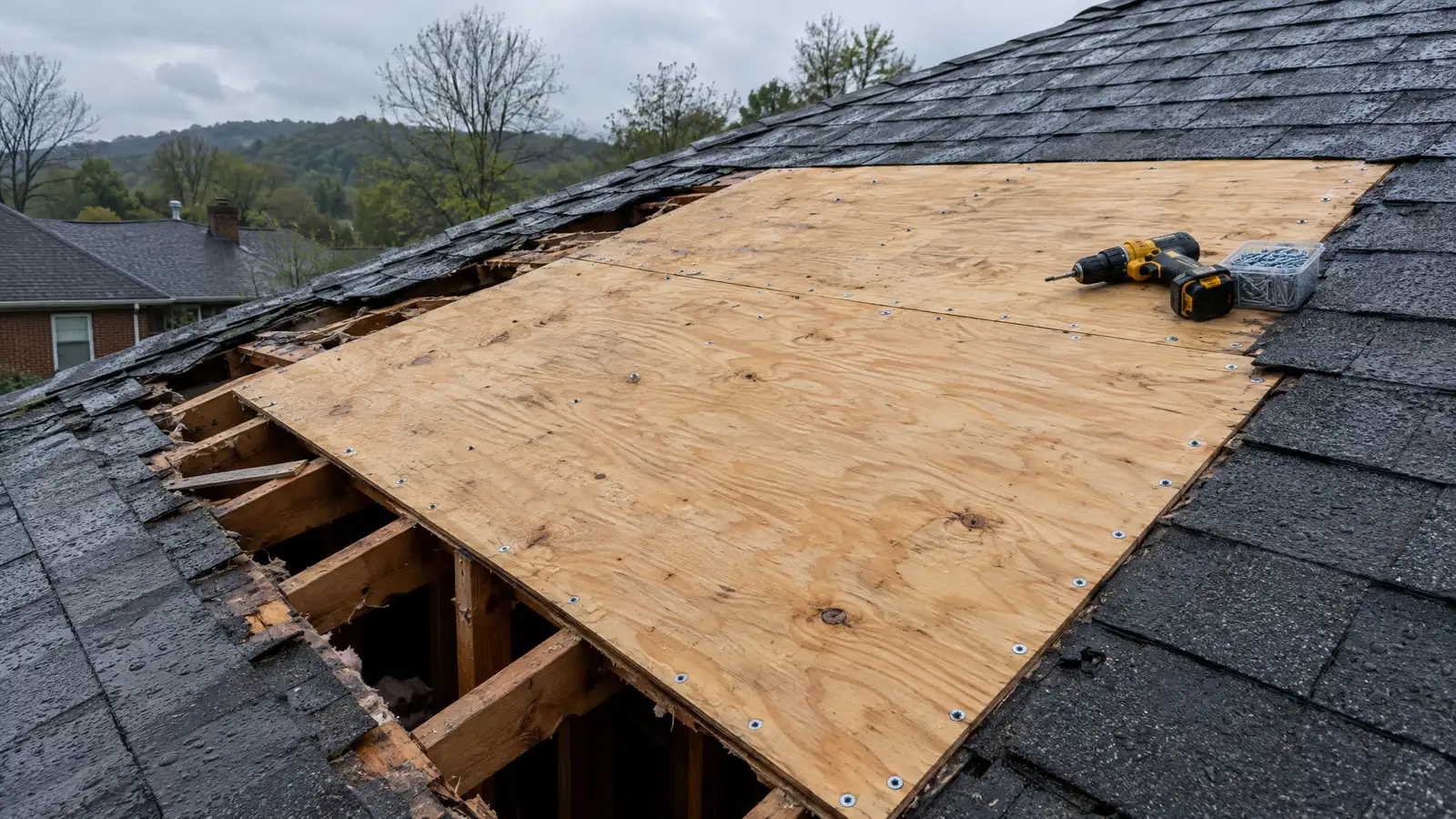
A tarp buys time. When shingles are gone or a hole is open, a cover keeps rain off the deck and out of the house until the permanent repair can be done. It is an inexpensive way to prevent a much larger problem.
It is not intended to be a long-term fix.
How it is installed
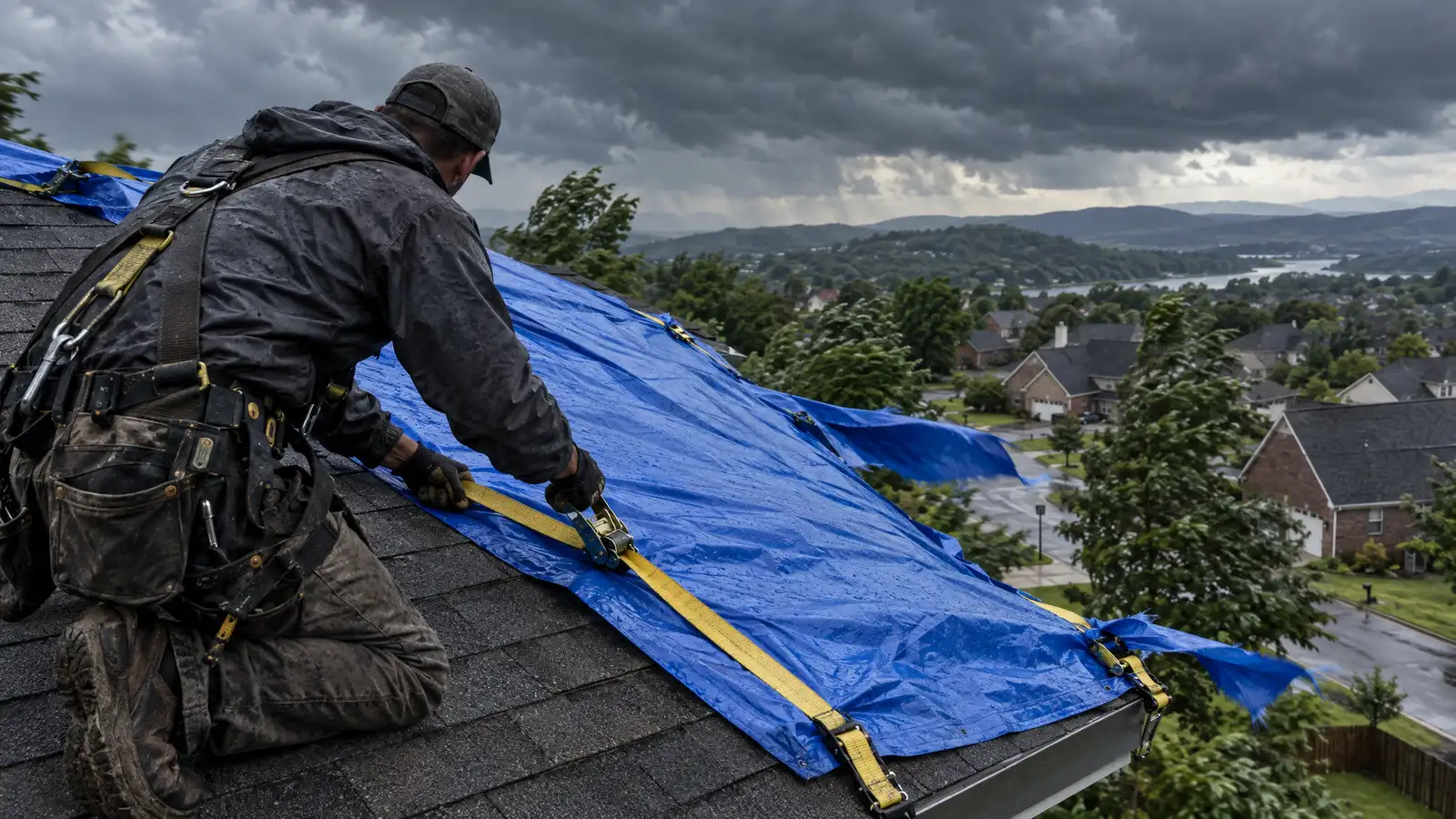
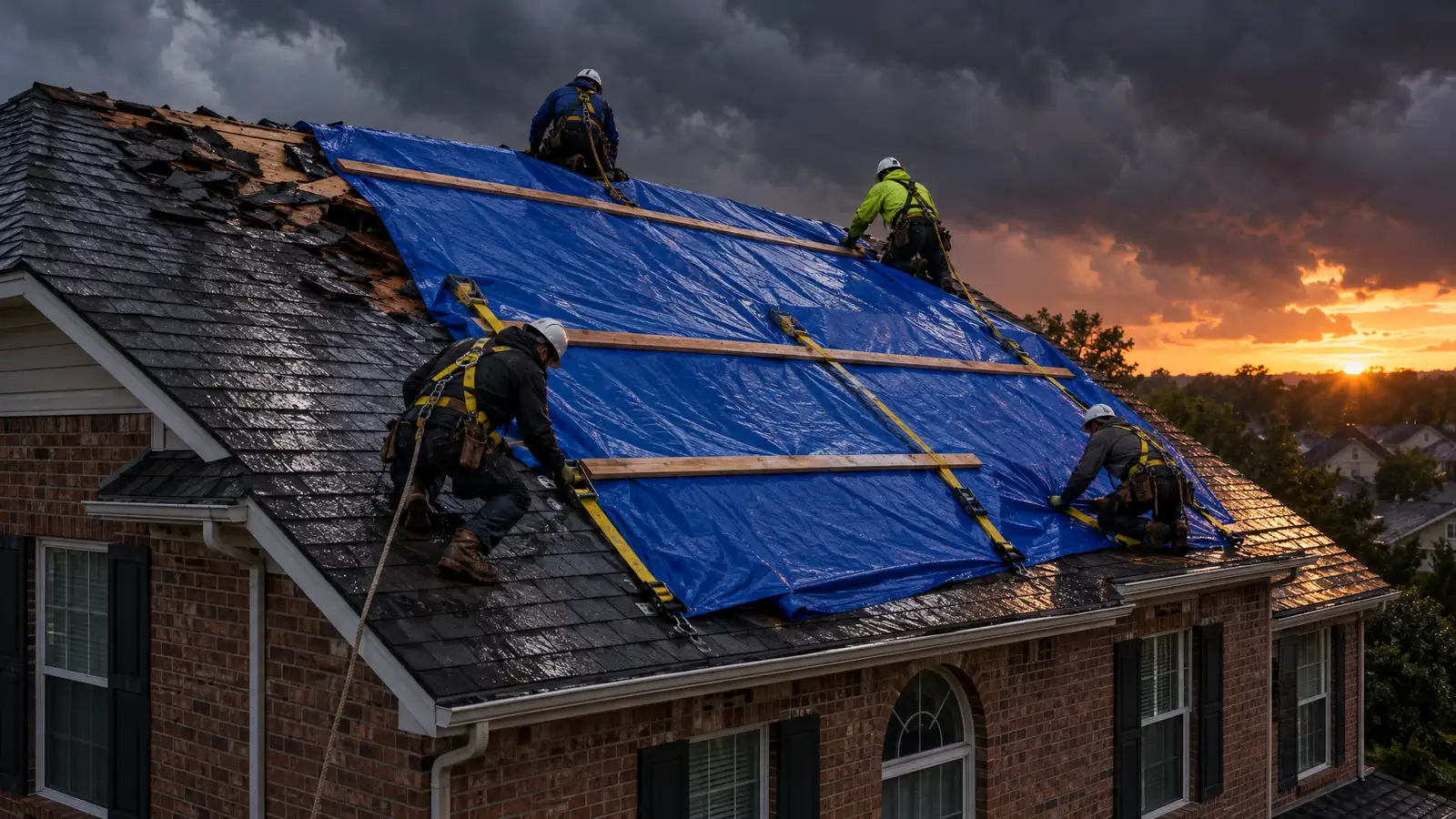
The roof area is cleared of sharp debris, and the tarp is cut to size. It is laid so that water runs over it, ideally up and over the ridge, and secured with wood battens screwed down through the tarp into the roof framing.
Nails through the fabric alone tear in wind.
What makes a tarp fail
Loose edges, pooled water, weak fasteners and exposed corners allow wind to get under the cover. Sun and age also wear tarps. Poor installation can also damage the roof beneath.
A tarp that flaps is already failing.
Checking and removing
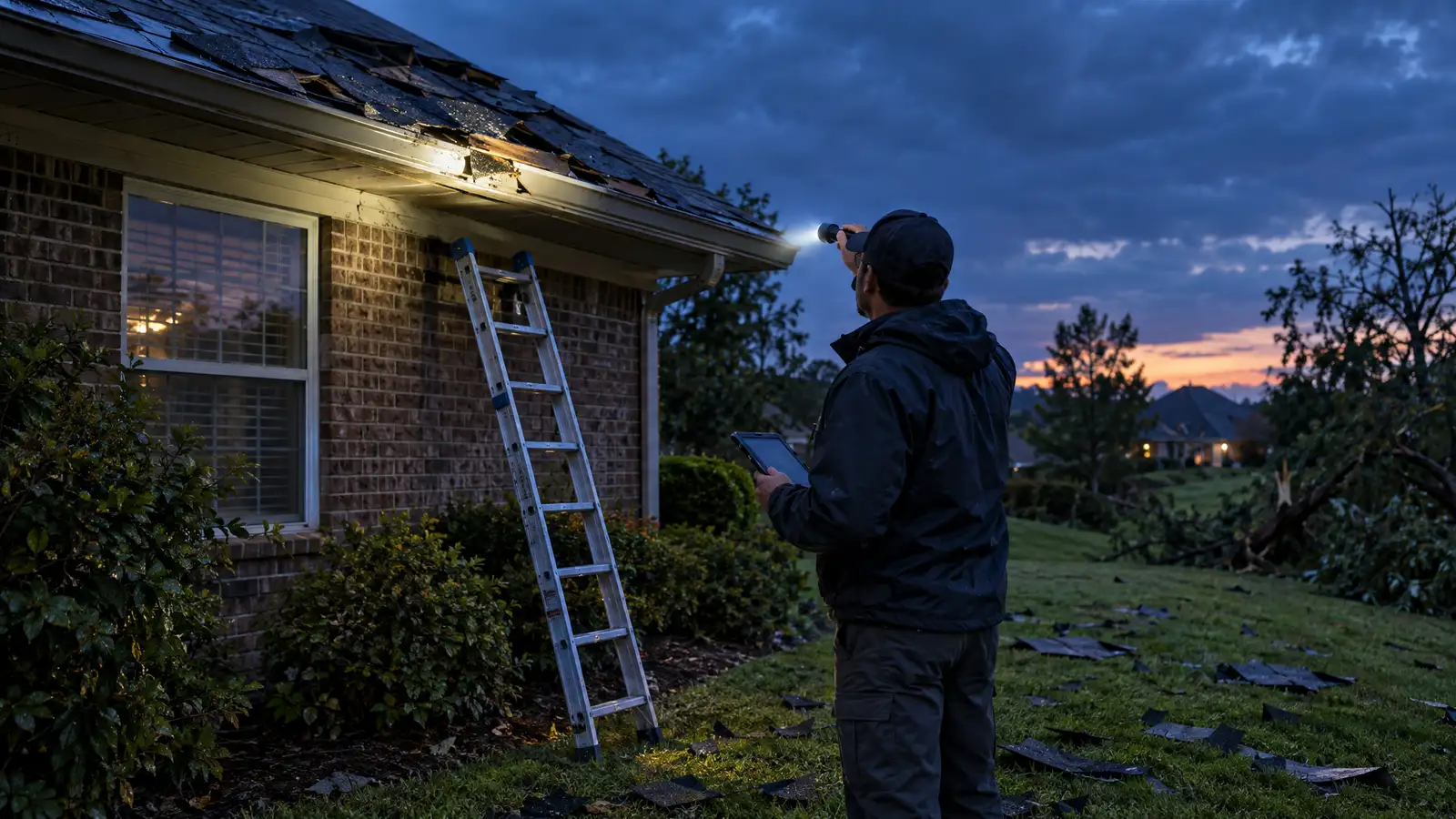
Check a tarp after every storm, from the ground. When the permanent repair is made, the tarp is removed and the roof beneath is inspected again.
If a tarp looks loose, call before the next weather arrives.
General information, not engineering, legal, insurance or safety advice. Roofs, policies and local requirements vary, and every situation should be judged on its own facts. If anyone is in danger, call emergency services first.