The short version
- Protect people and belongings first
- Contain the water where it is safe
- Photograph everything
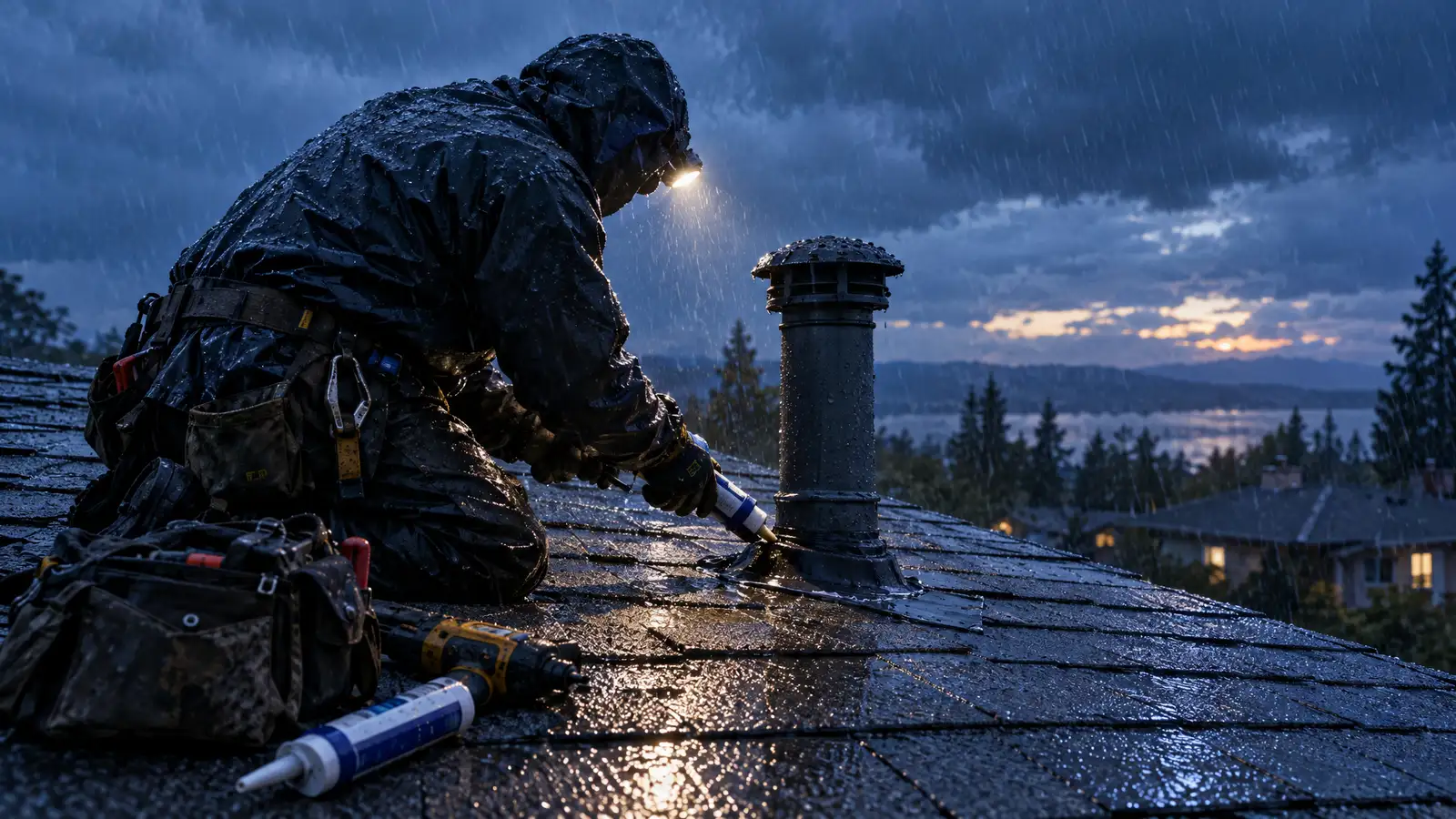
- Stop the source at the roof
Start with safety
Water and electricity are a bad mix. If water is near light fixtures, outlets or the electrical panel, stay away and consider turning off power to that area if you can do it safely. A sagging, bulging ceiling can fall without warning.
Keep people and pets out from under it.
Contain and protect
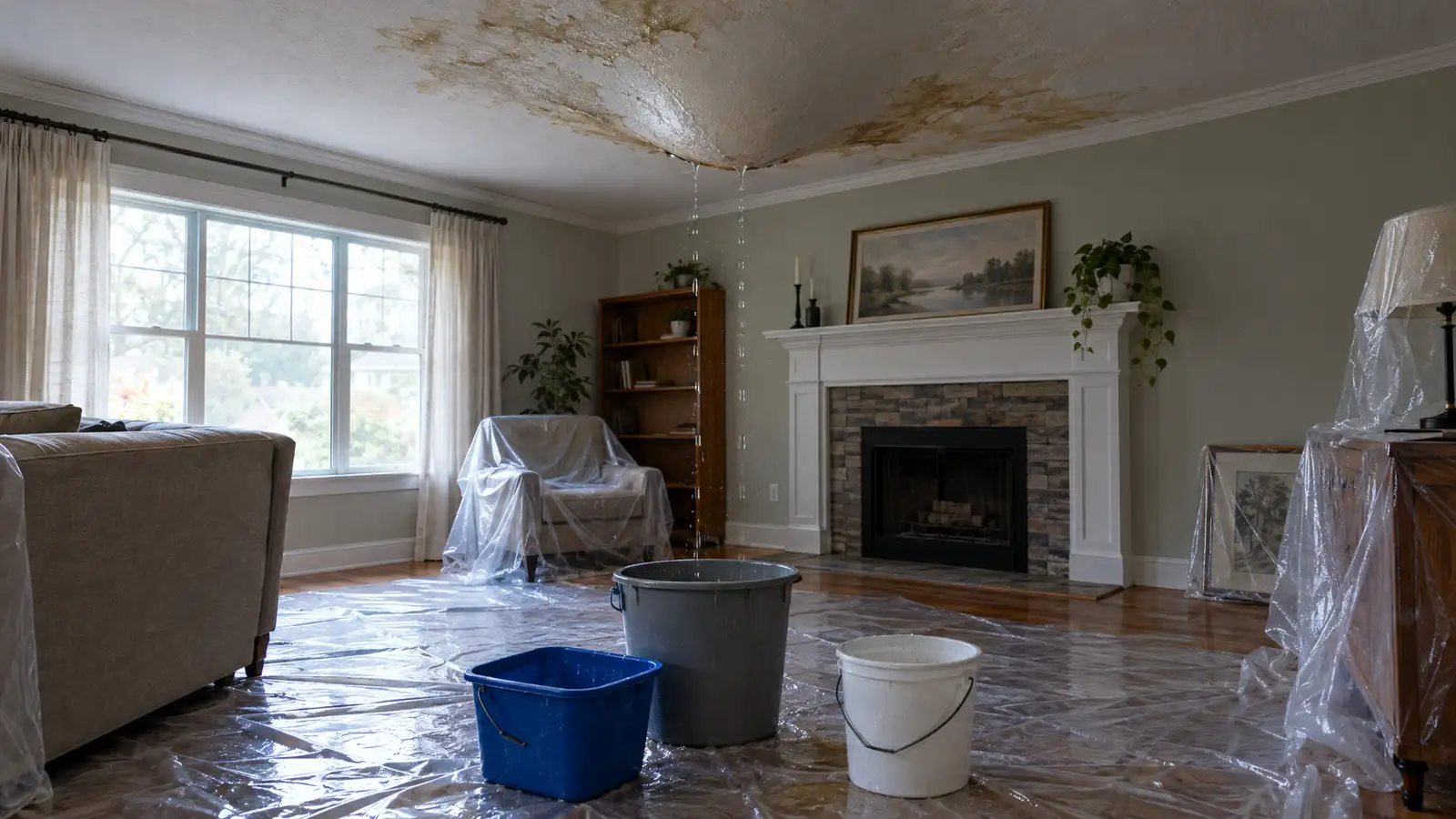
Move furniture and valuables out of the way, lay plastic or towels and place buckets under drips. A small controlled hole in the lowest part of a bulging ceiling can release water in a safe place, but only if there is no electrical hazard.
Moving quickly limits how much has to be replaced later.
Document
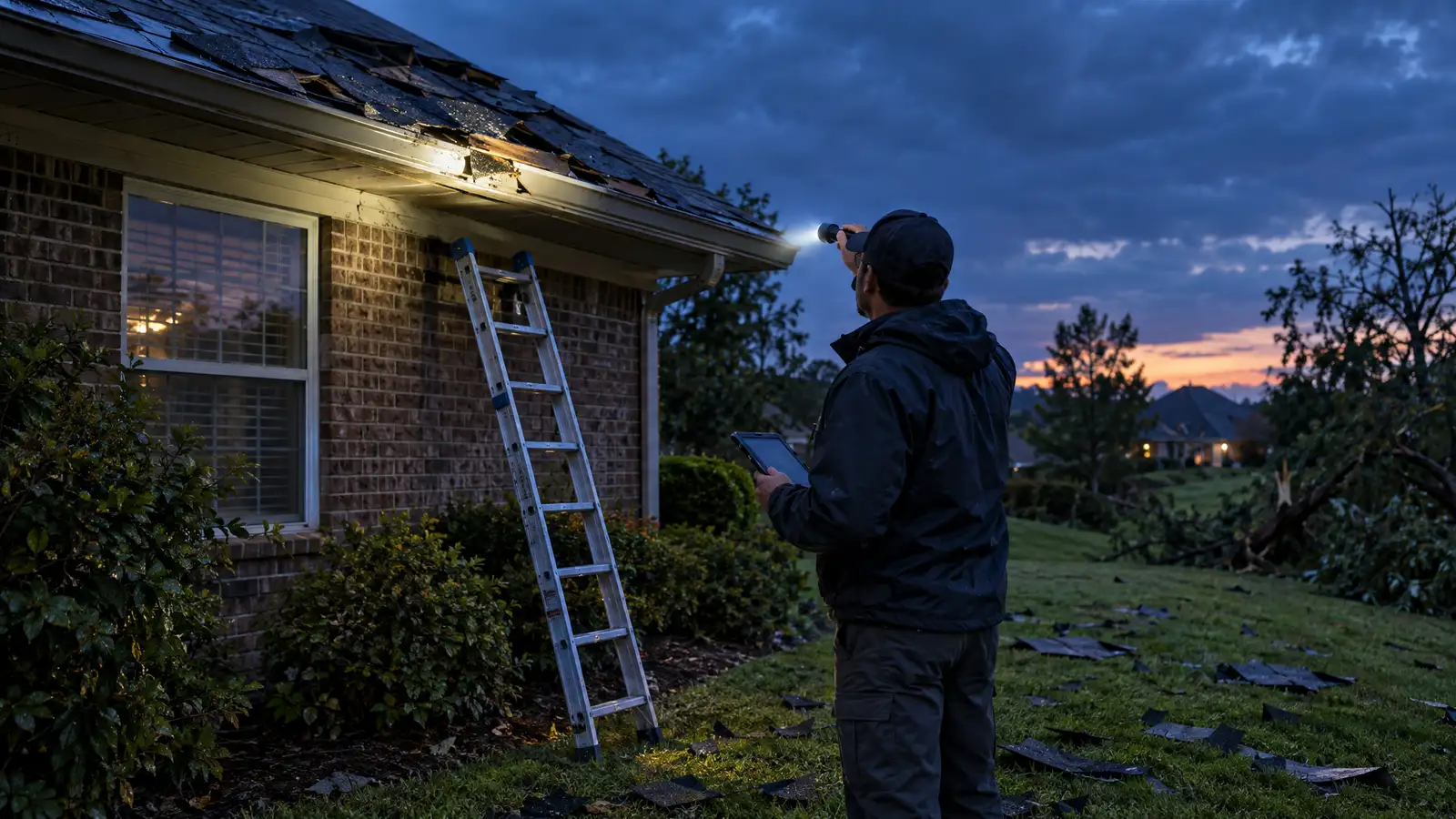
Photograph and video the water, the stains and any damaged belongings, and note the date and weather. These records help with repairs and any insurance discussion.
Keep receipts for emergency steps you take.
Stop the source
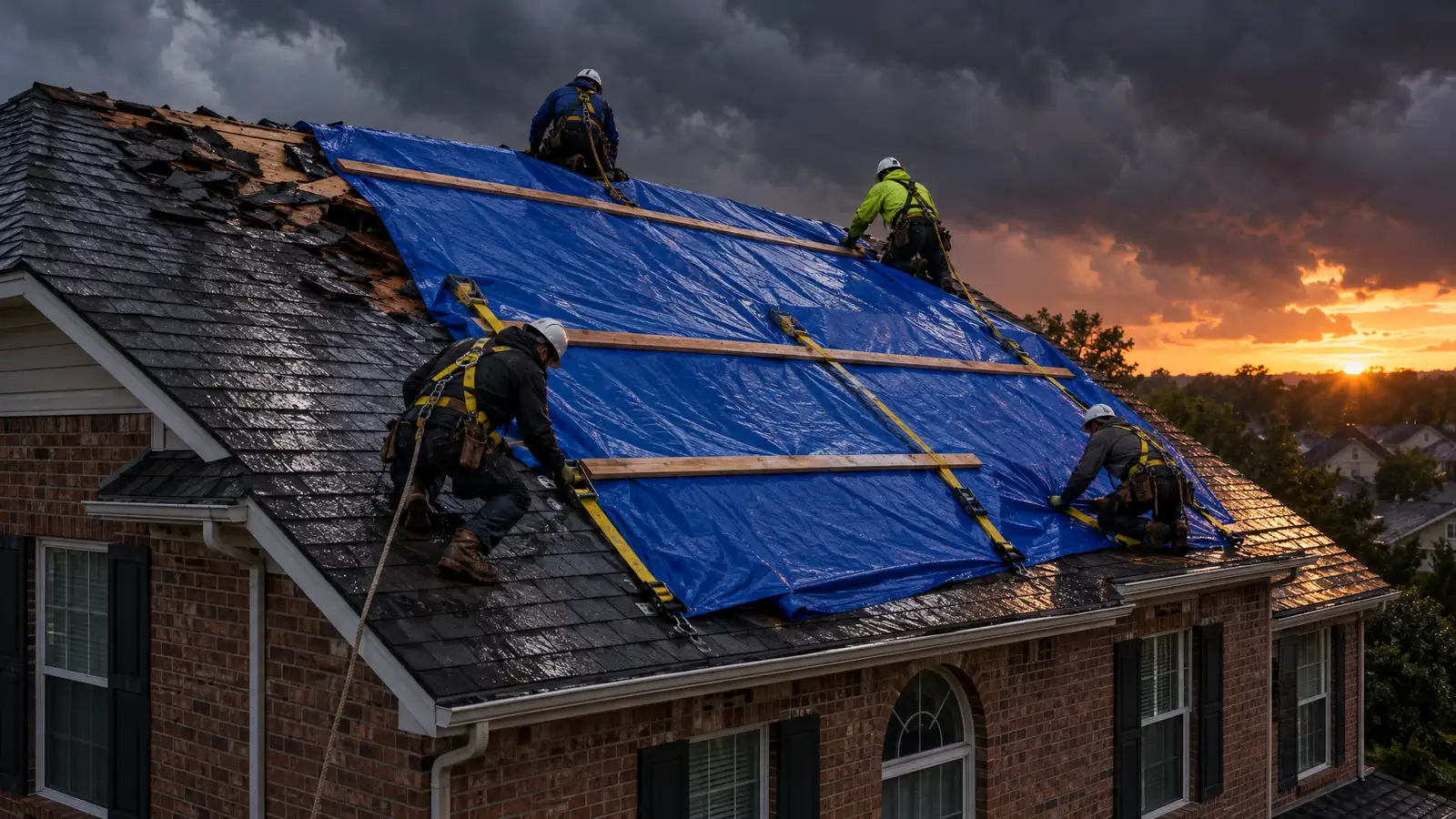
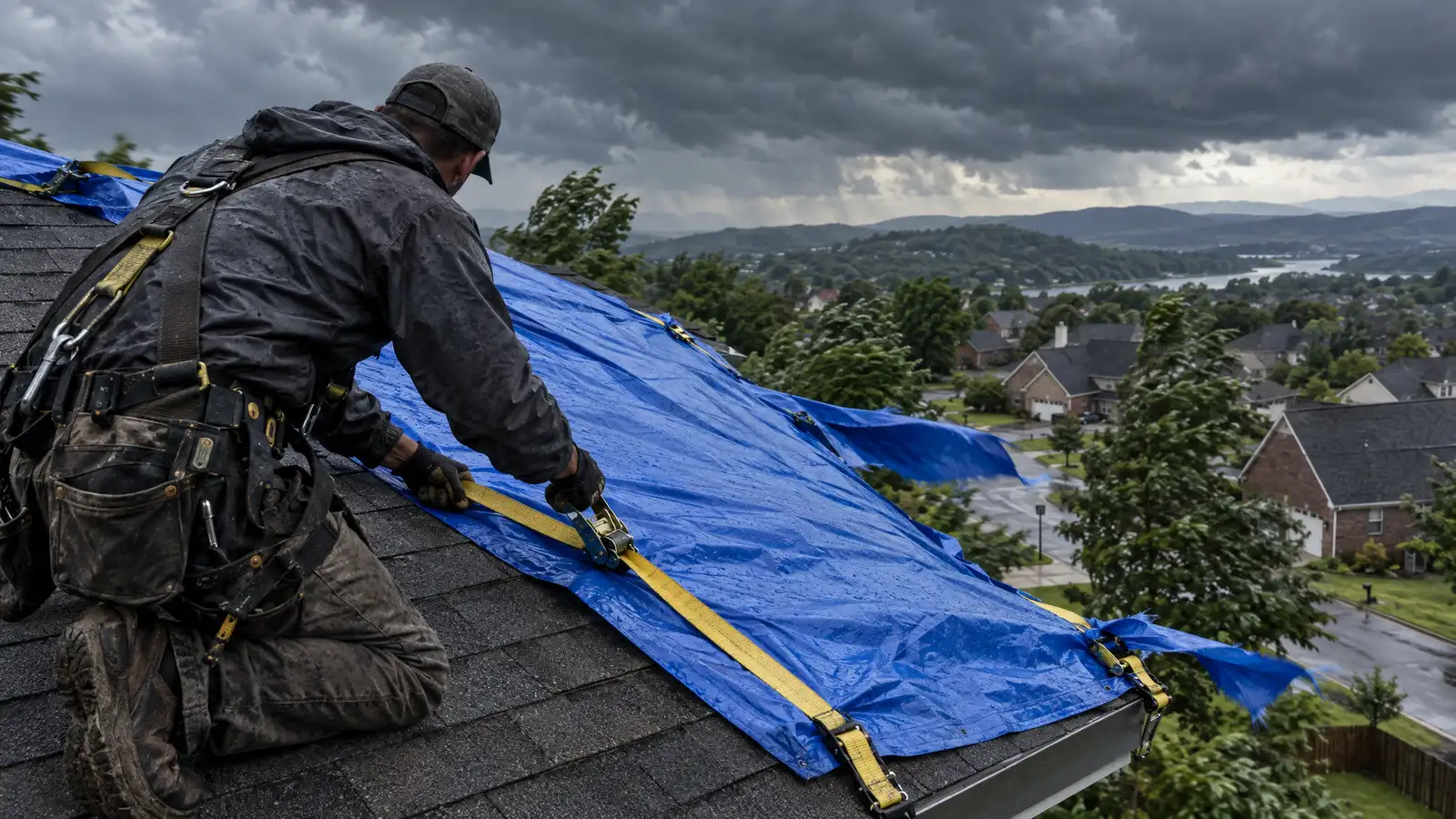
The leak will not stop on its own. The opening is somewhere on the roof, often above and away from the stain. A roofer can trace it and cover or seal it.
Do not climb onto a wet roof to look for it yourself.
General information, not engineering, legal, insurance or safety advice. Roofs, policies and local requirements vary, and every situation should be judged on its own facts. If anyone is in danger, call emergency services first.