The short version
- Tarps are meant to be short-term
- Sun, wind and rain wear them down
- Regular checks extend their useful life
- Plan the permanent repair early
No exact number
There is no single answer. Tarp quality, installation, weather and roof shape all matter. A well-installed heavy tarp can last a while, and a poor one can fail in a day. What matters is that it is checked and replaced as needed.
We are not going to promise a figure, because it would be a guess.
Signs it needs attention
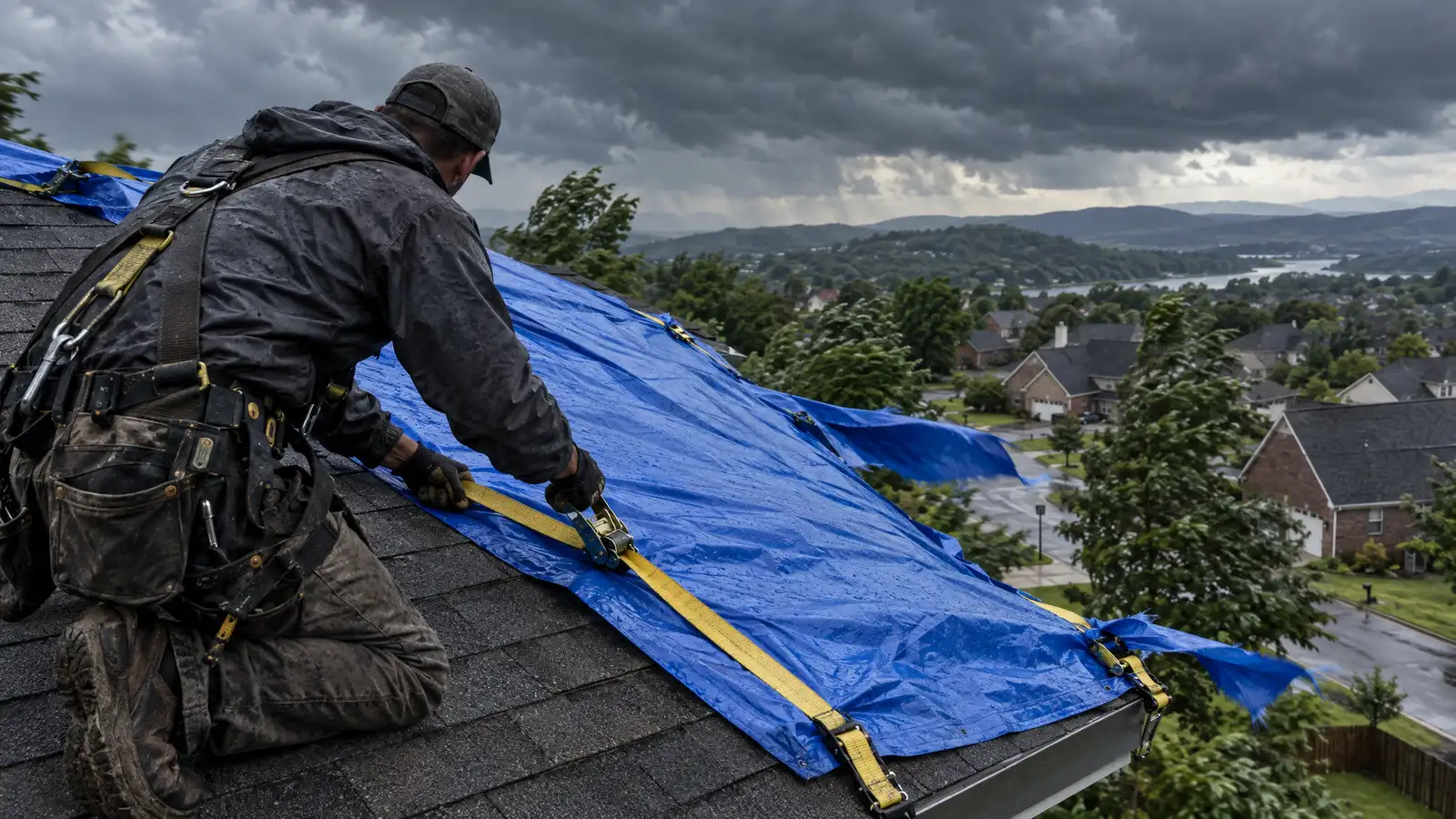
Flapping edges, tears, pooled water, loose battens and fading fabric are all signs. After a storm, any change in how the tarp sits is a reason to have it checked.
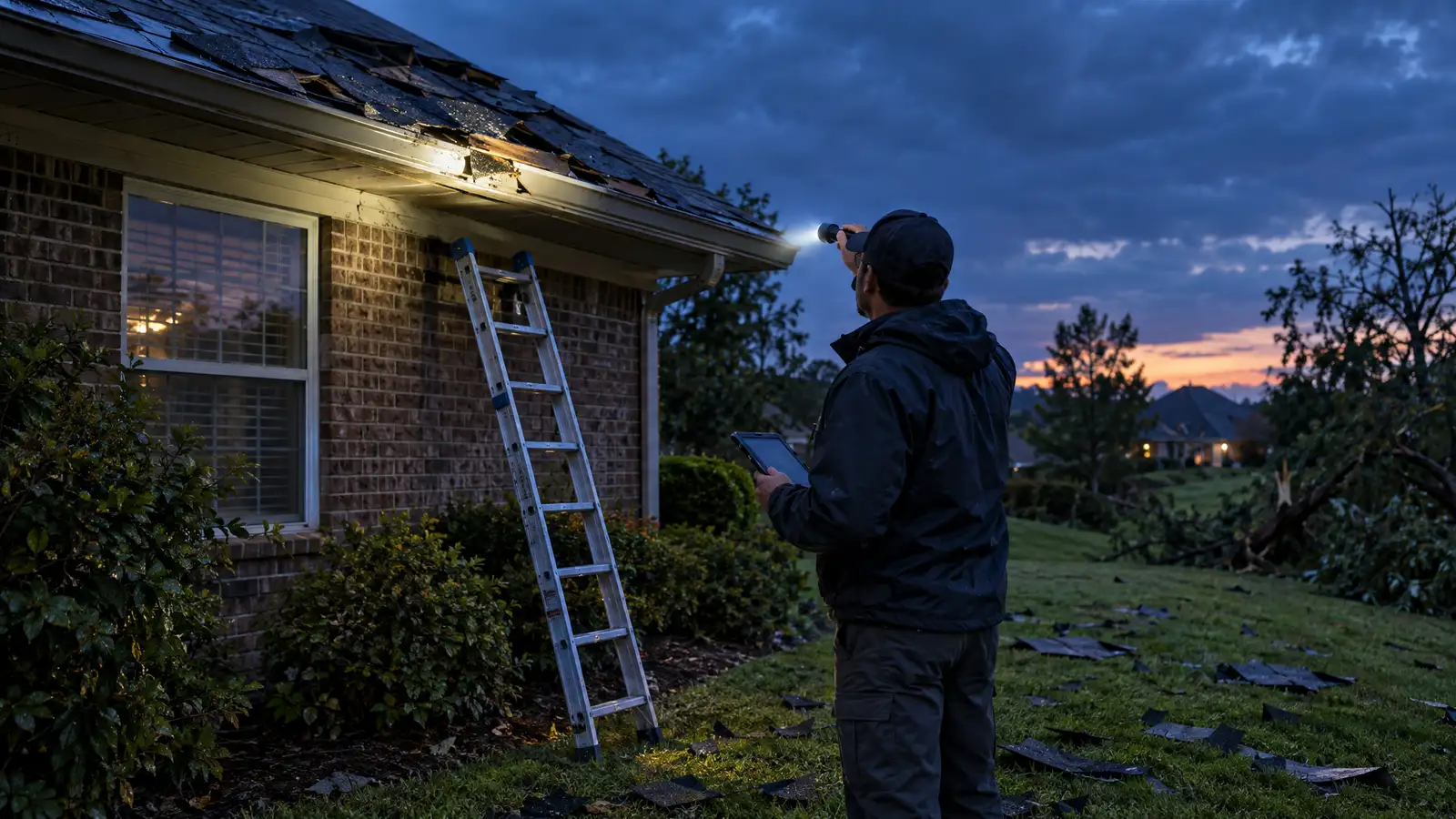
Check from the ground, not the roof.
Why waiting costs more
The longer a tarp stays on, the more exposure there is to failure, and the longer the roof beneath goes unrepaired. Delays can also mean more interior damage if the cover fails.
Treat the tarp as a bridge, not a destination.
Plan the next step
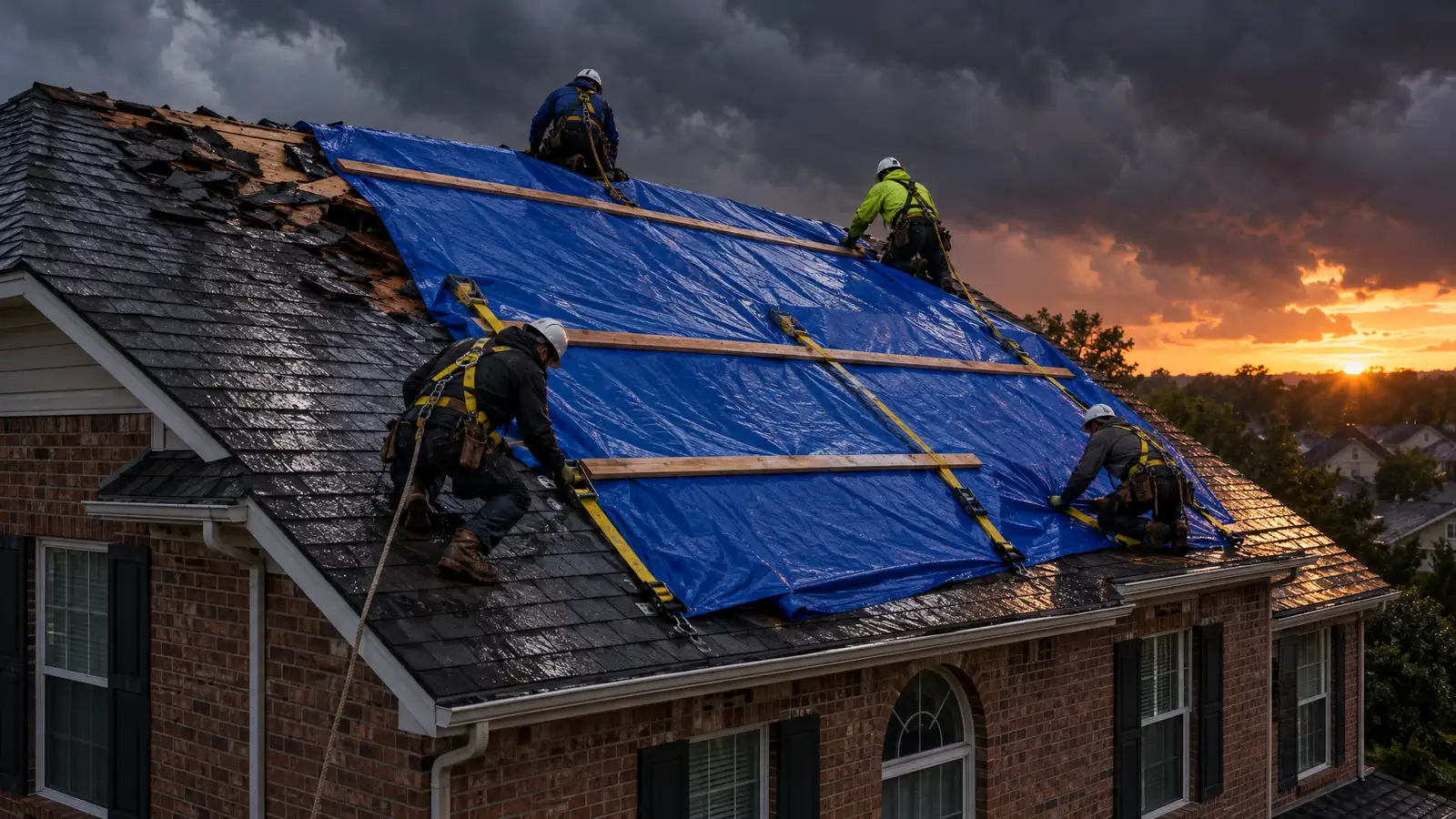
Get the permanent repair scheduled as soon as materials, approvals and weather allow. Ask your roofer what is reasonable for your roof, and keep photographs of the tarp installation for your records.
If an insurance process is delaying you, ask the roofer to check the tarp more often.
General information, not engineering, legal, insurance or safety advice. Roofs, policies and local requirements vary, and every situation should be judged on its own facts. If anyone is in danger, call emergency services first.