The short version
- Safety comes first: lines, gas and structure
- The tree may be holding damaged framing up
- Removal should be planned
- Cover the opening and document
First steps
Check for downed power lines, gas smells and signs that the structure has shifted. If anything is unsafe, leave and call emergency services. Do not try to remove a tree yourself.
Photograph from a safe distance.
Why removal is delicate
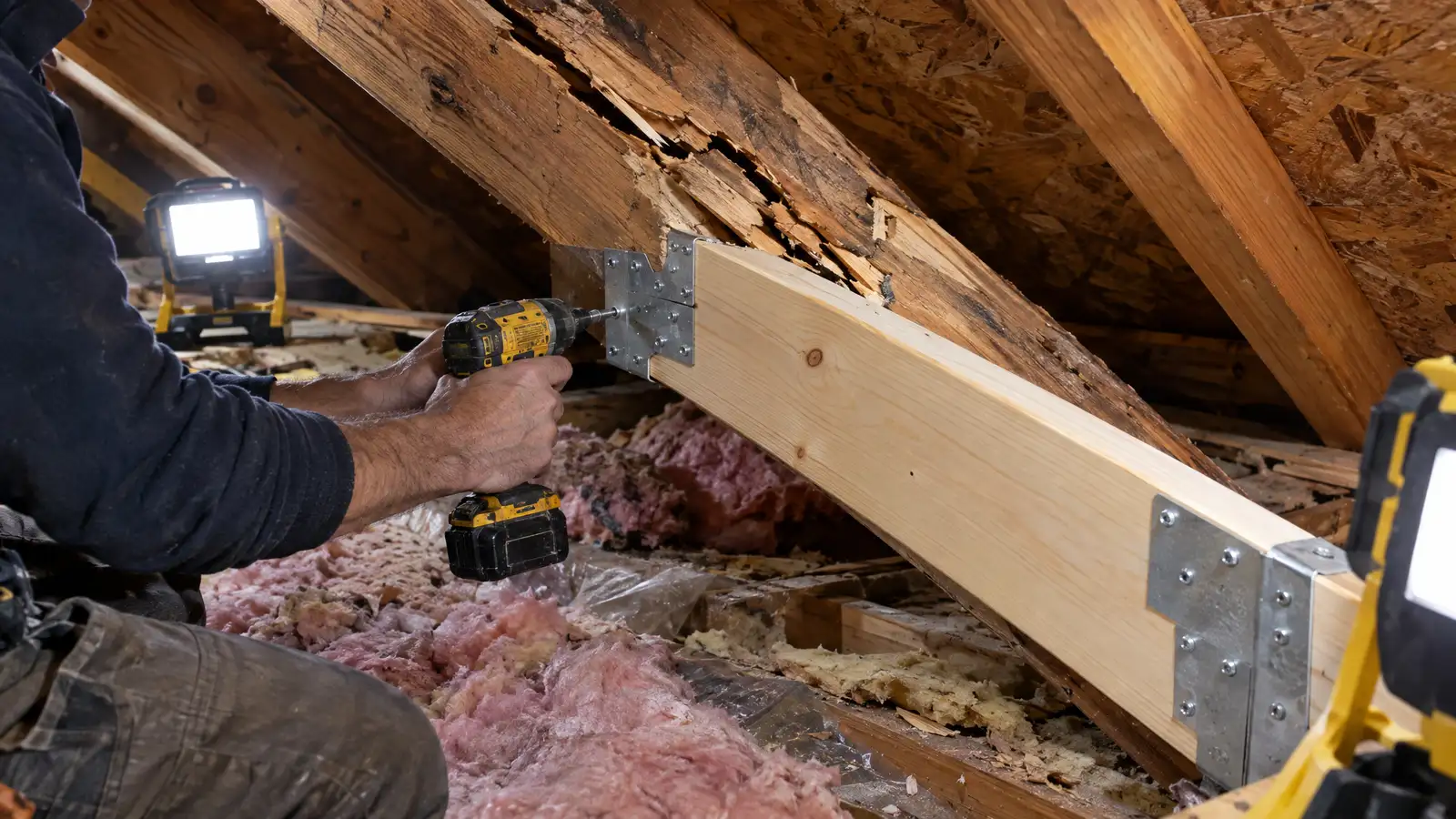
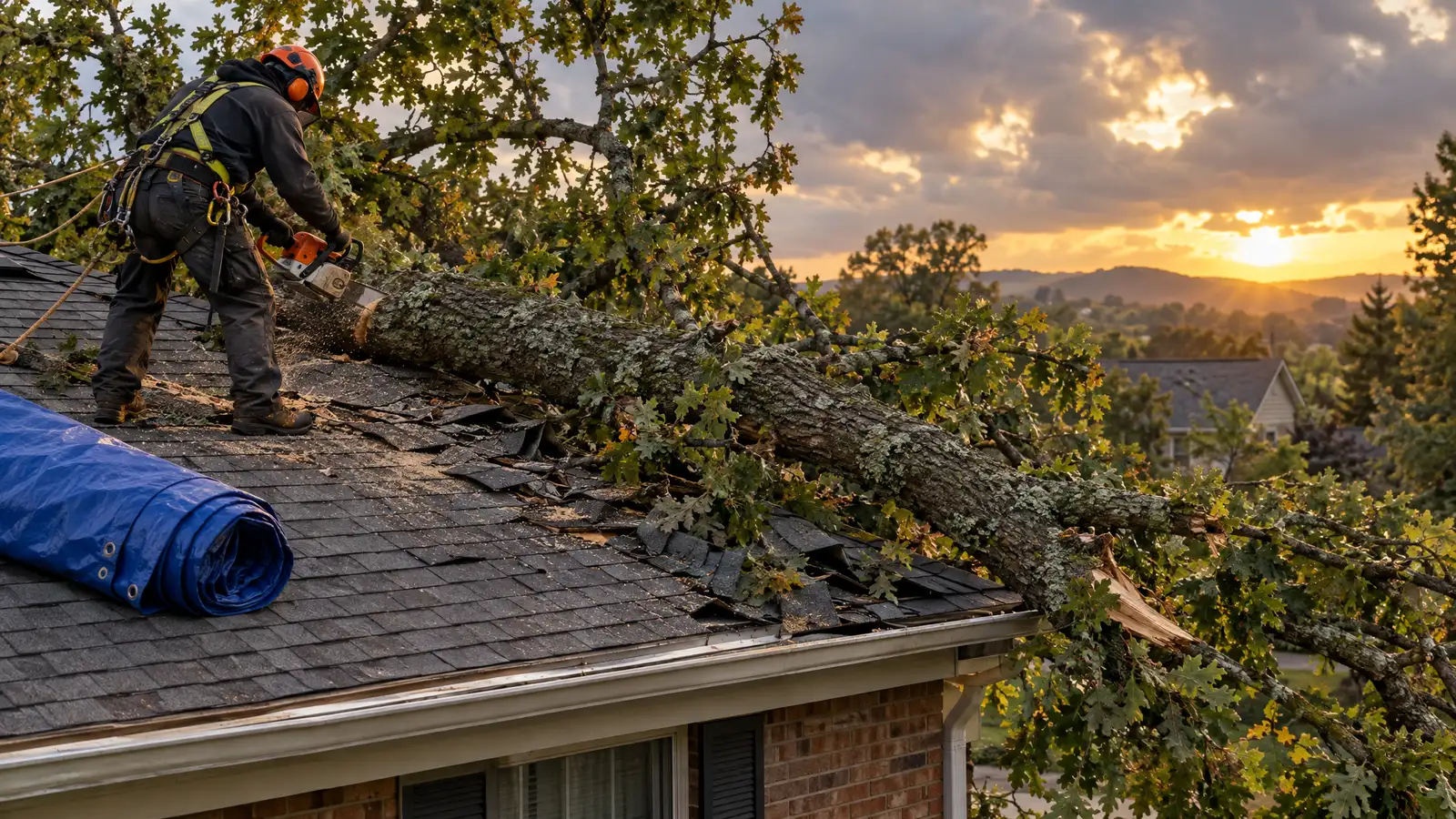
A heavy limb may be supporting broken framing, and moving it can cause a collapse. Removal is done in stages by crews with proper equipment, working from the outside in.
Large trunks usually need a tree service.
Protect the building
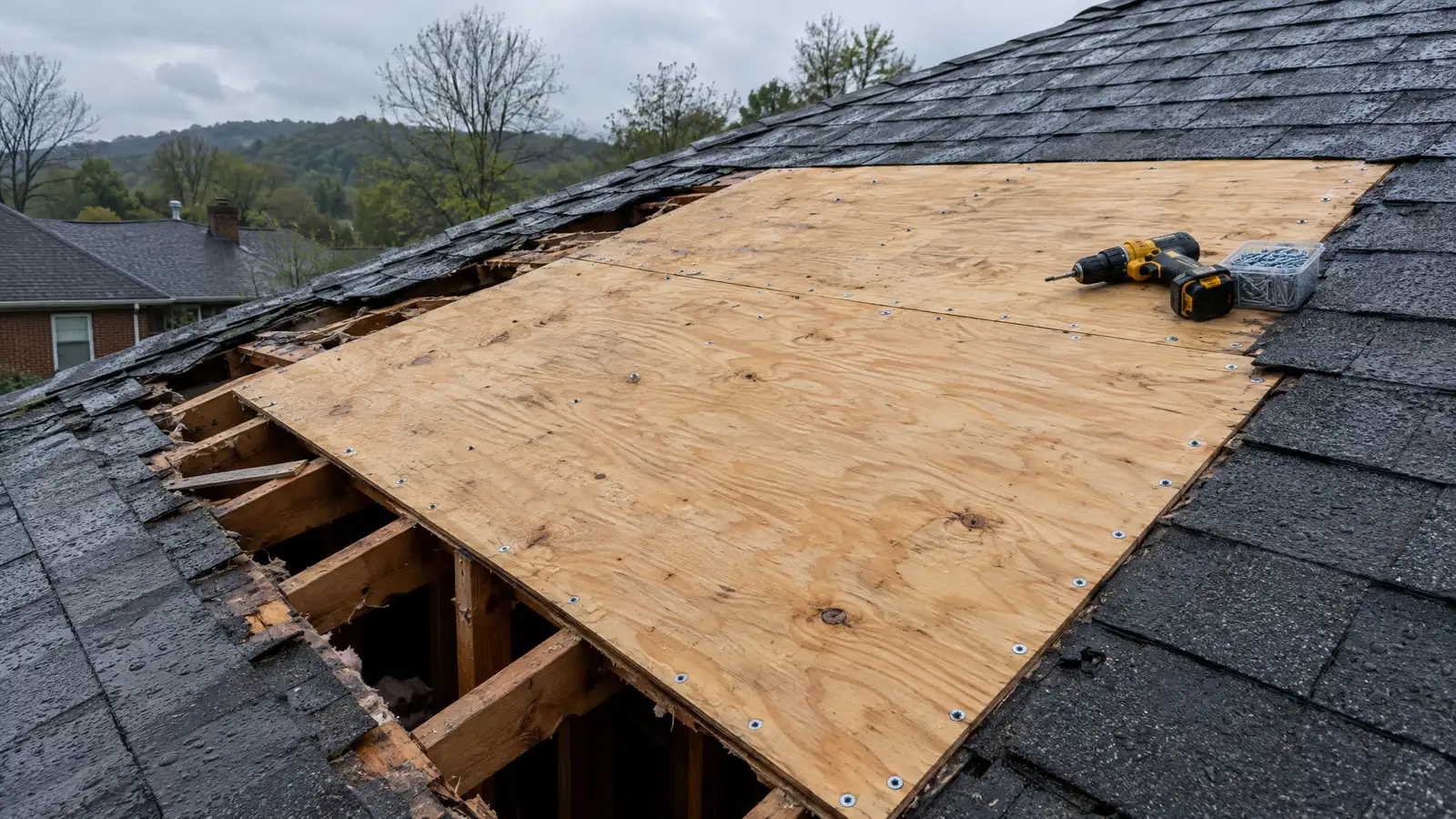
Once the weight is off, the opening is boarded and covered to stop water. The sooner the better, but not before the area is safe.
Interior protection and relief of water may also be needed.
Repairs and claims
Document the tree, the damage and the cover. Repairs may involve framing, decking and roofing. Insurance coverage depends on your policy.
Ask your insurer about tree removal coverage.
General information, not engineering, legal, insurance or safety advice. Roofs, policies and local requirements vary, and every situation should be judged on its own facts. If anyone is in danger, call emergency services first.