The short version
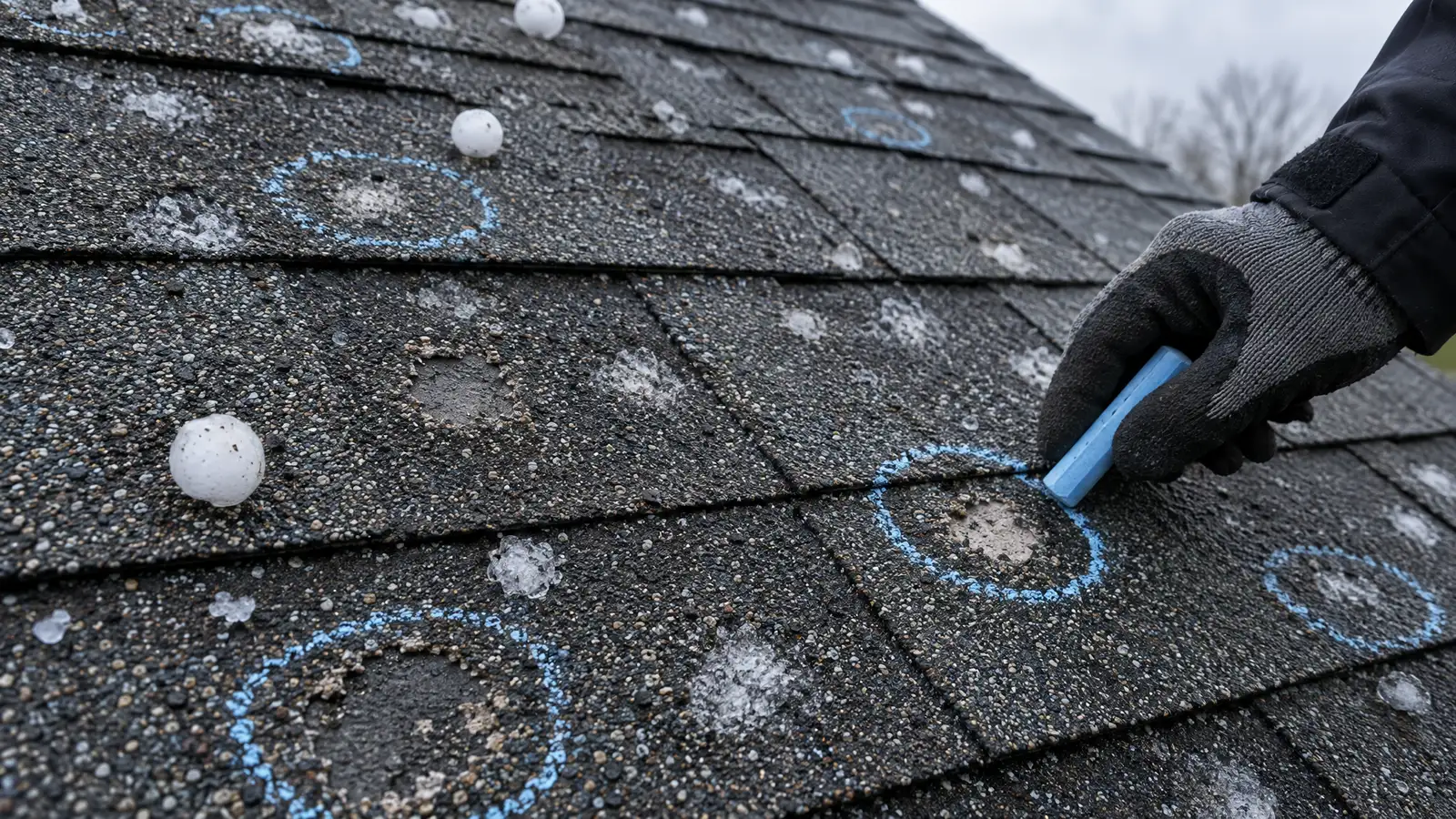
- Round bruises and bare spots are the classic signs
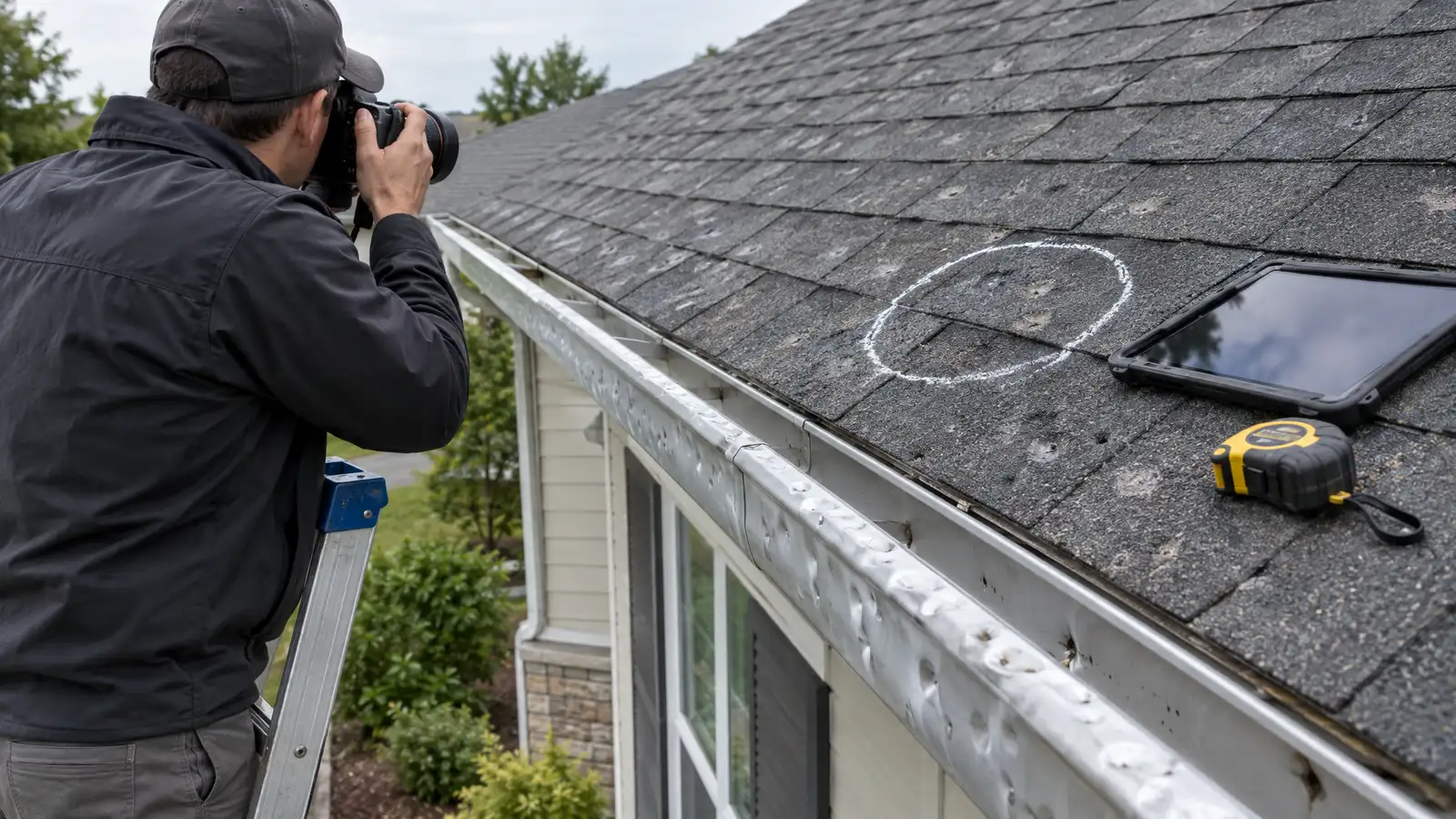
- Dented gutters, vents and AC fins confirm hail
- Damage is random, not in rows
- It may not leak for months
On shingles
Hail knocks granules off in round patches and can crack the mat beneath. The spots look dark and may feel soft. Impacts are scattered across the slope, not lined up.
Granules in gutters and at downspouts are a clue.
On metal and soft metals
Vents, gutters, flashing and air conditioner fins dent easily. If they are dented, hail fell, and the size of the dents hints at the size of the hail. Metal roofs may dent without leaking.
Look at these first from the ground.
Hail or old age
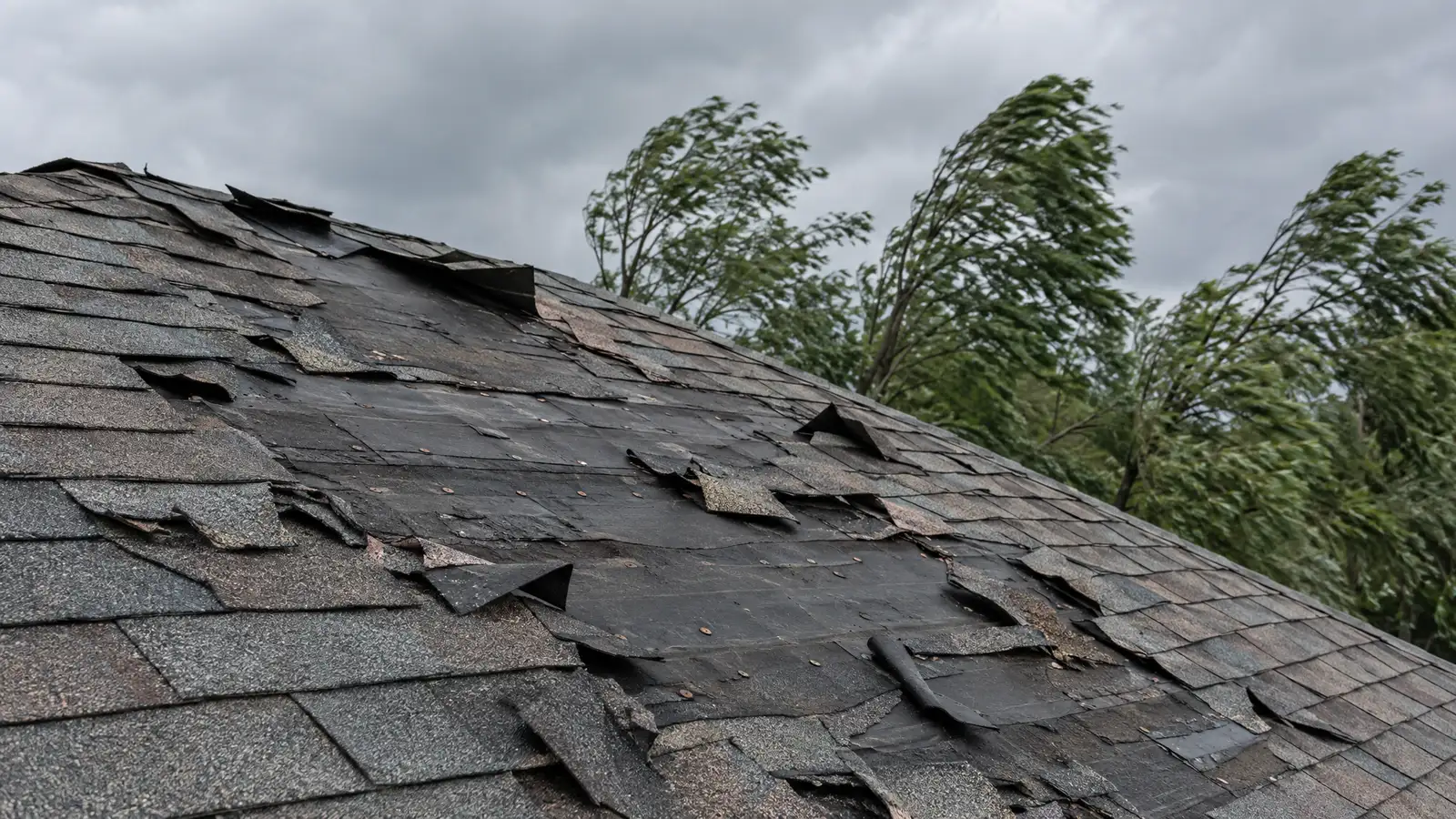
Normal aging causes broad, uniform wear. Hail creates localized, round impacts. Other causes, such as blisters and foot traffic, can look similar, which is why a close inspection matters.
Photographs and marks help tell them apart.
What to do
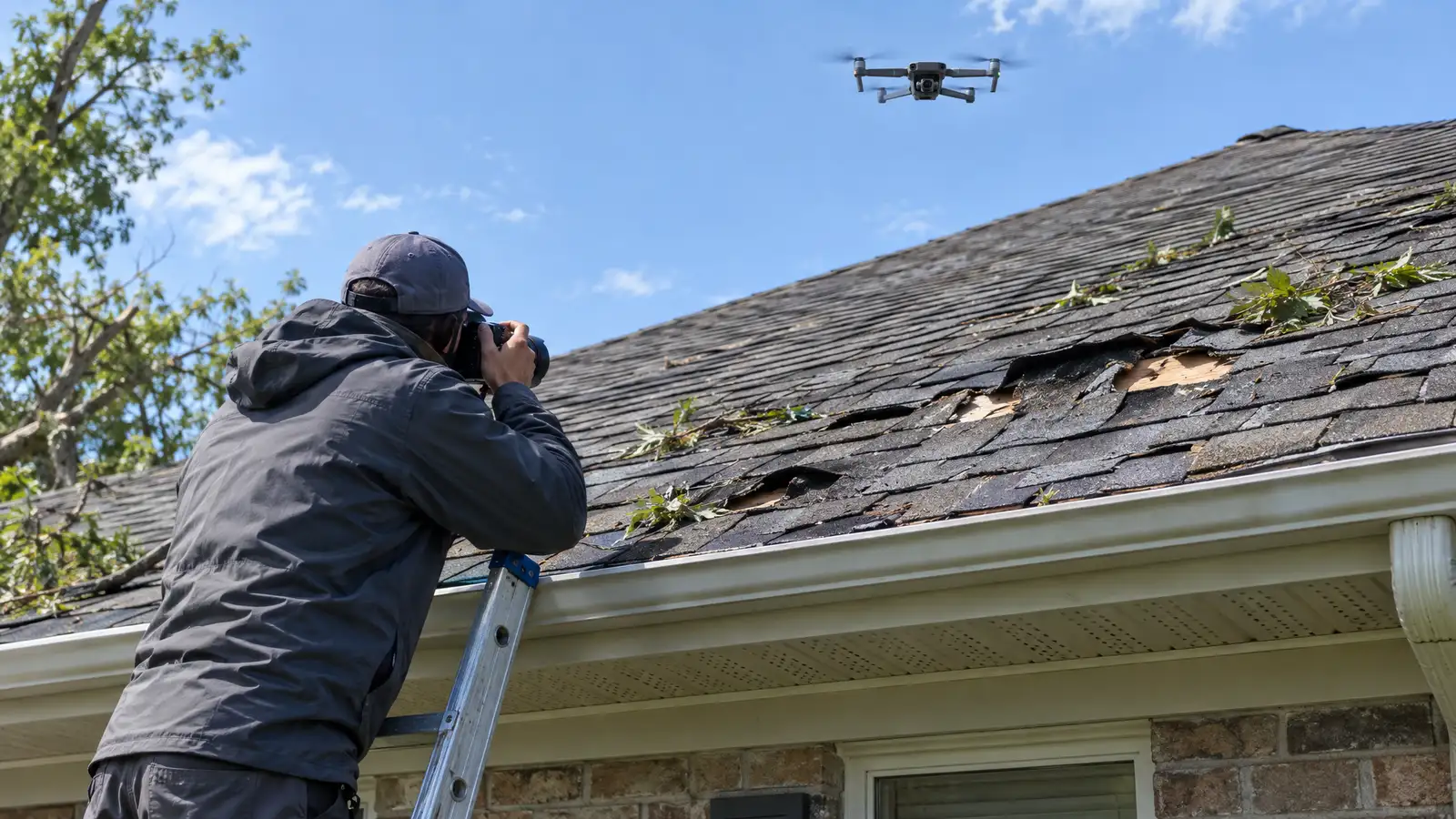
Photograph what you can see from the ground, note the date of the storm and have the roof inspected before the next heavy rain. Do not climb up yourself.
A documented inspection helps with repairs and claims.
General information, not engineering, legal, insurance or safety advice. Roofs, policies and local requirements vary, and every situation should be judged on its own facts. If anyone is in danger, call emergency services first.