The short version
- Photograph before you move anything
- Take wide, medium and close shots
- Date and label your photos
- Never risk a fall for a photograph
Start from the ground
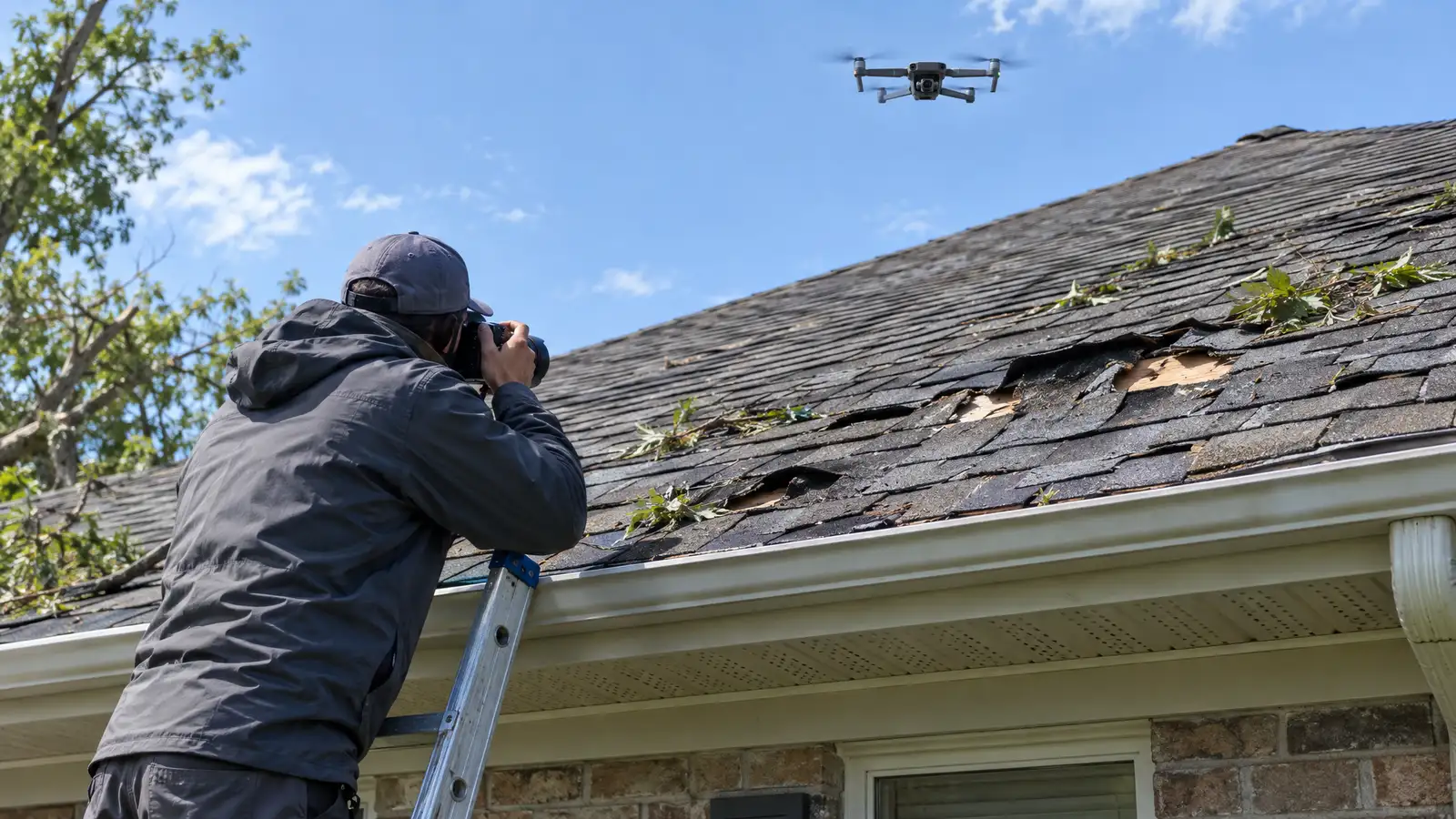
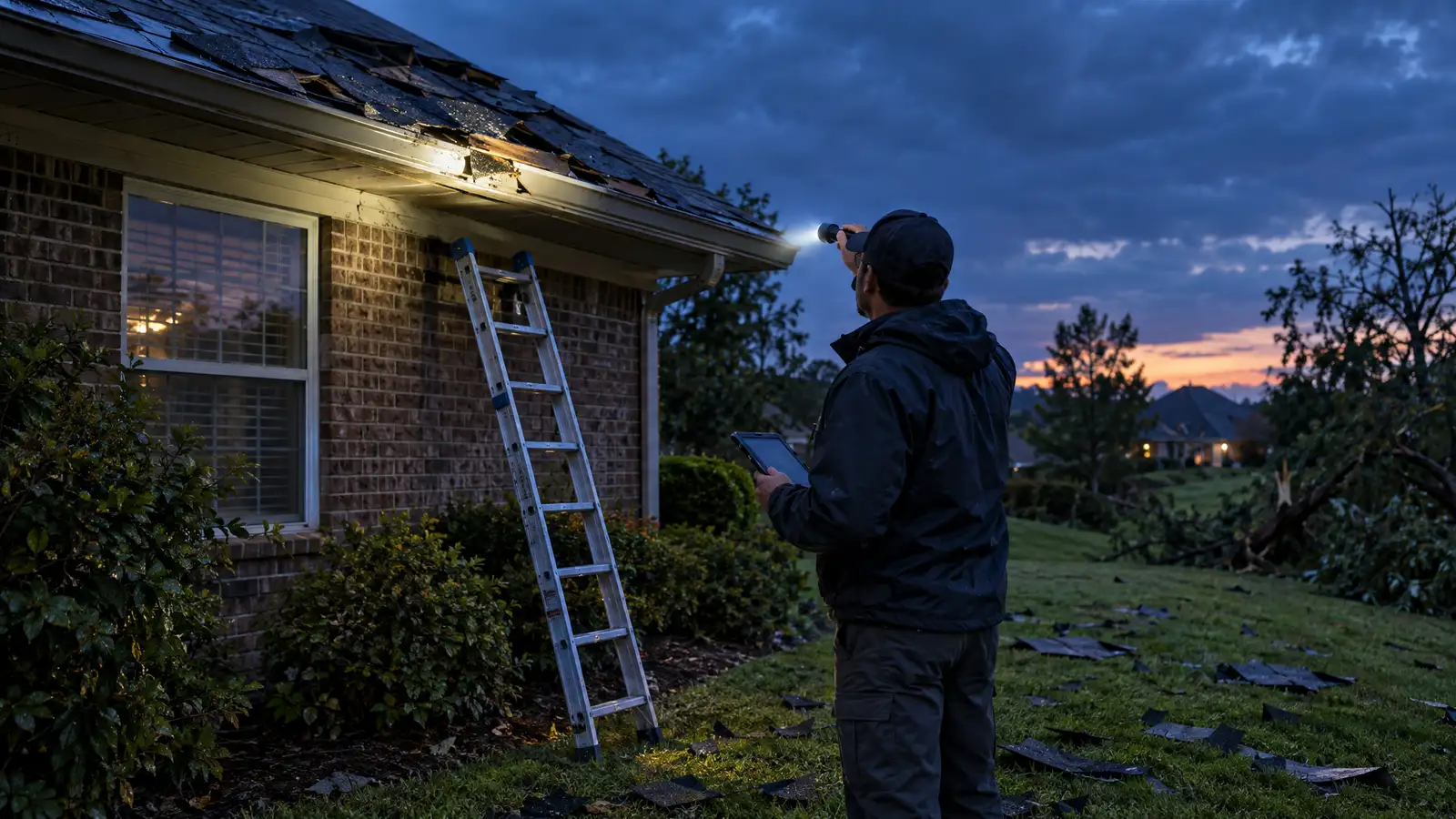
Photograph each side of the house, the yard debris and any visible roof damage. Use zoom rather than climbing. Early or late light shows texture well.
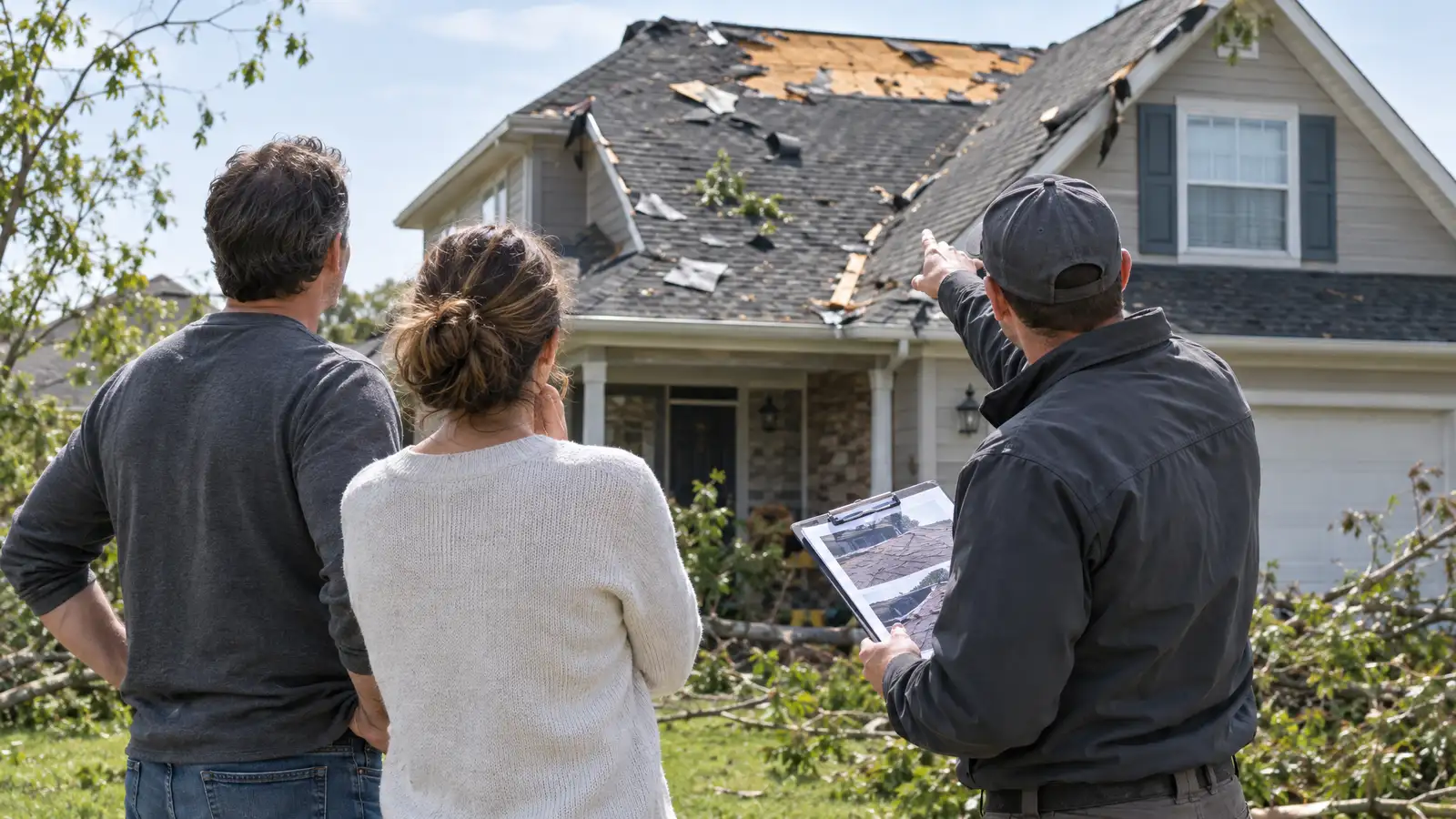
Include the whole house in at least one picture.
Damage close up
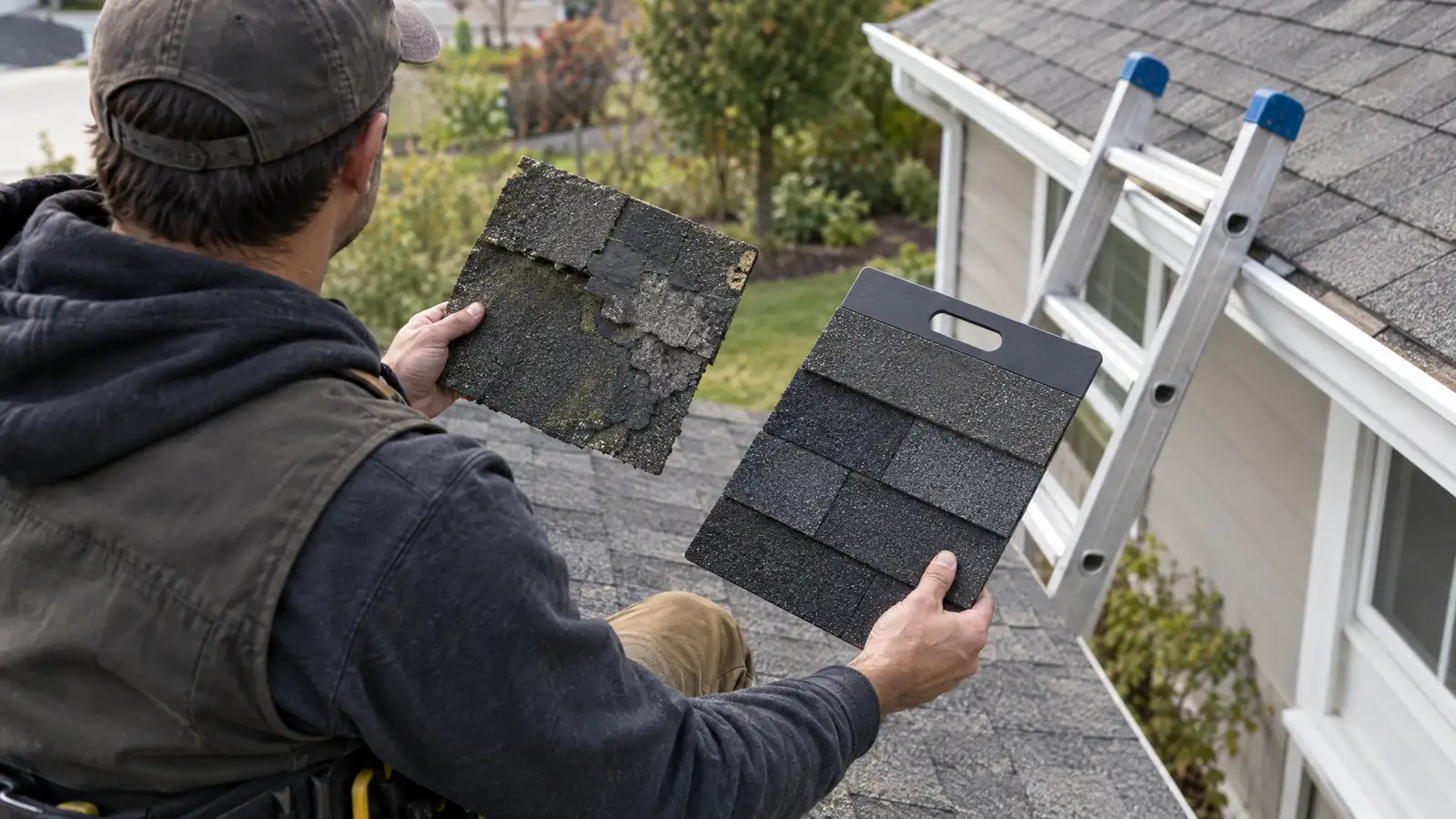
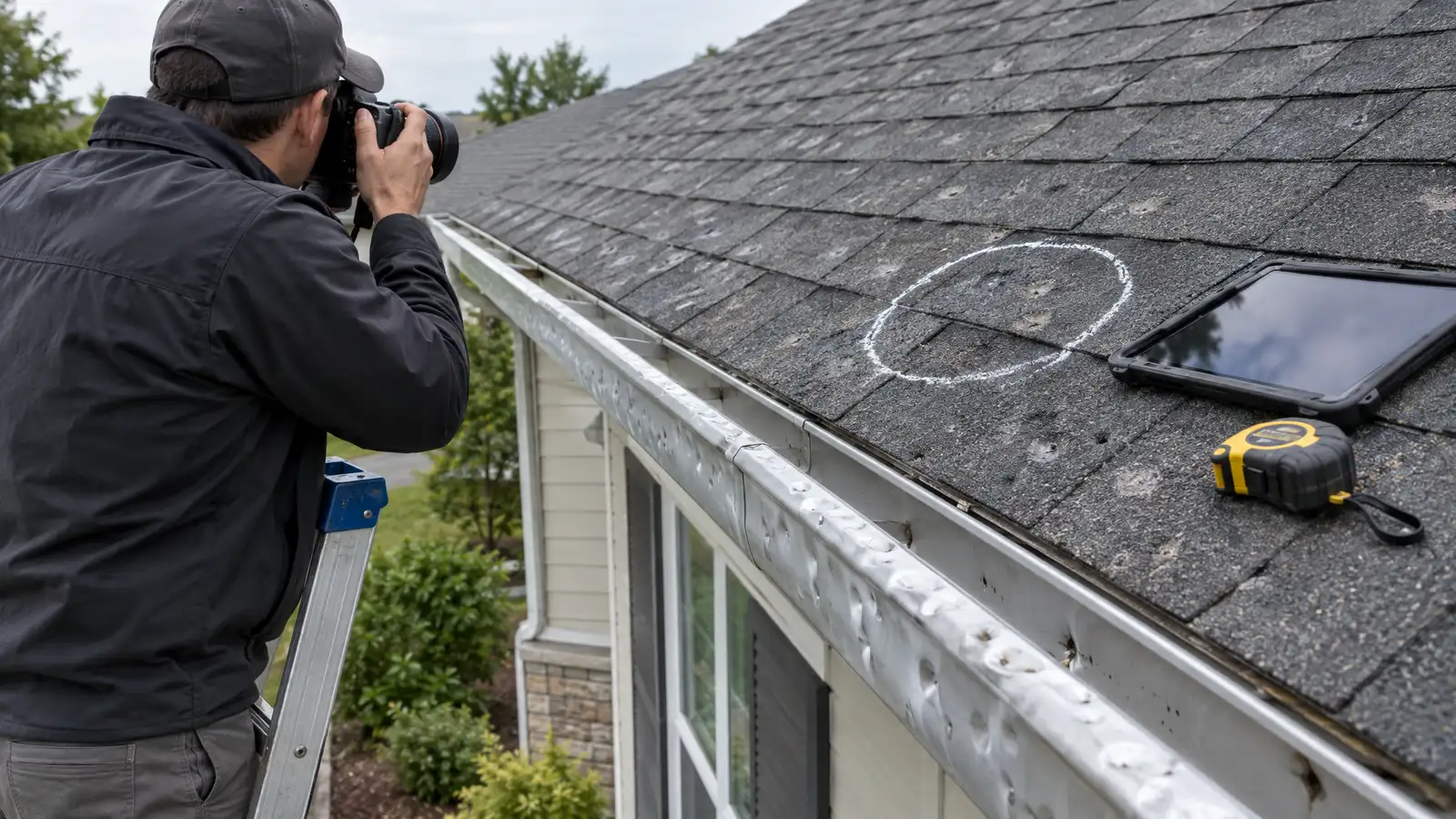
For each damaged spot take a wide shot for location, a medium shot for context and a close-up for detail. A coin or ruler beside a hail mark shows scale. Photograph soft metals such as gutters and vents too.
Chalk marks on reachable areas help.
Inside the house
Photograph ceiling and wall stains from several angles and note their size. Photograph wet insulation and attic stains if you can reach them safely. Keep notes on when you noticed each.
Moisture readings by a professional add objective data.
Keep it organized
Store photos in dated folders, back them up and do not edit or filter them. Keep receipts for emergency steps such as tarping. A professional inspection adds coverage you cannot safely capture yourself.
Organized evidence makes every later conversation easier.
General information, not engineering, legal, insurance or safety advice. Roofs, policies and local requirements vary, and every situation should be judged on its own facts. If anyone is in danger, call emergency services first.