The short version
- Hail falls in narrow swaths
- Spring is the peak season
- It may not be visible from the ground
- A neighbor’s damage is a reason to check yours
Hail swaths
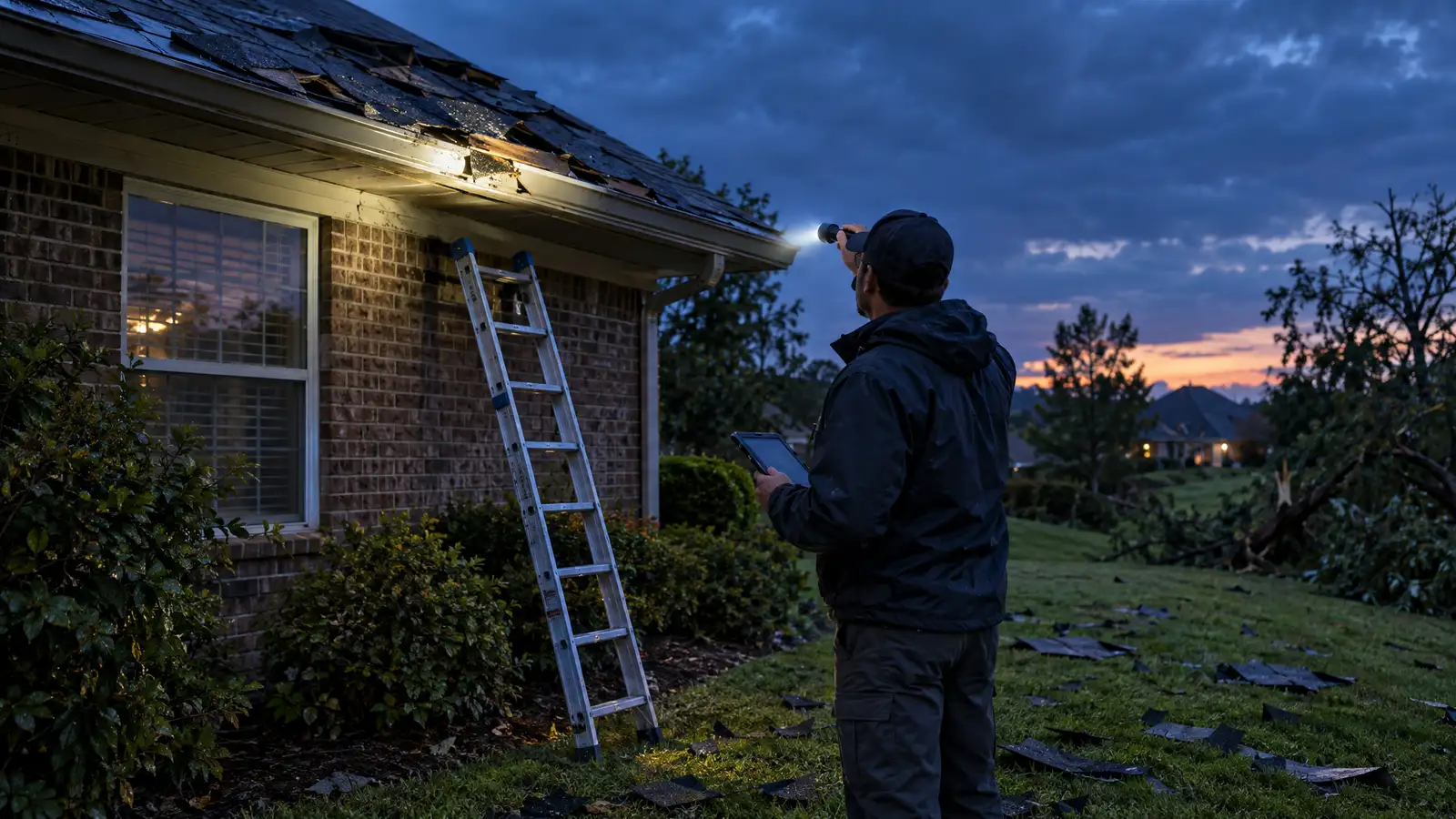
Hail often falls in narrow bands, so one street can be hit and the next spared. Local reports and neighbors’ damage are clues, and hail can fall with little warning.
Check alerts and local news.
When it falls
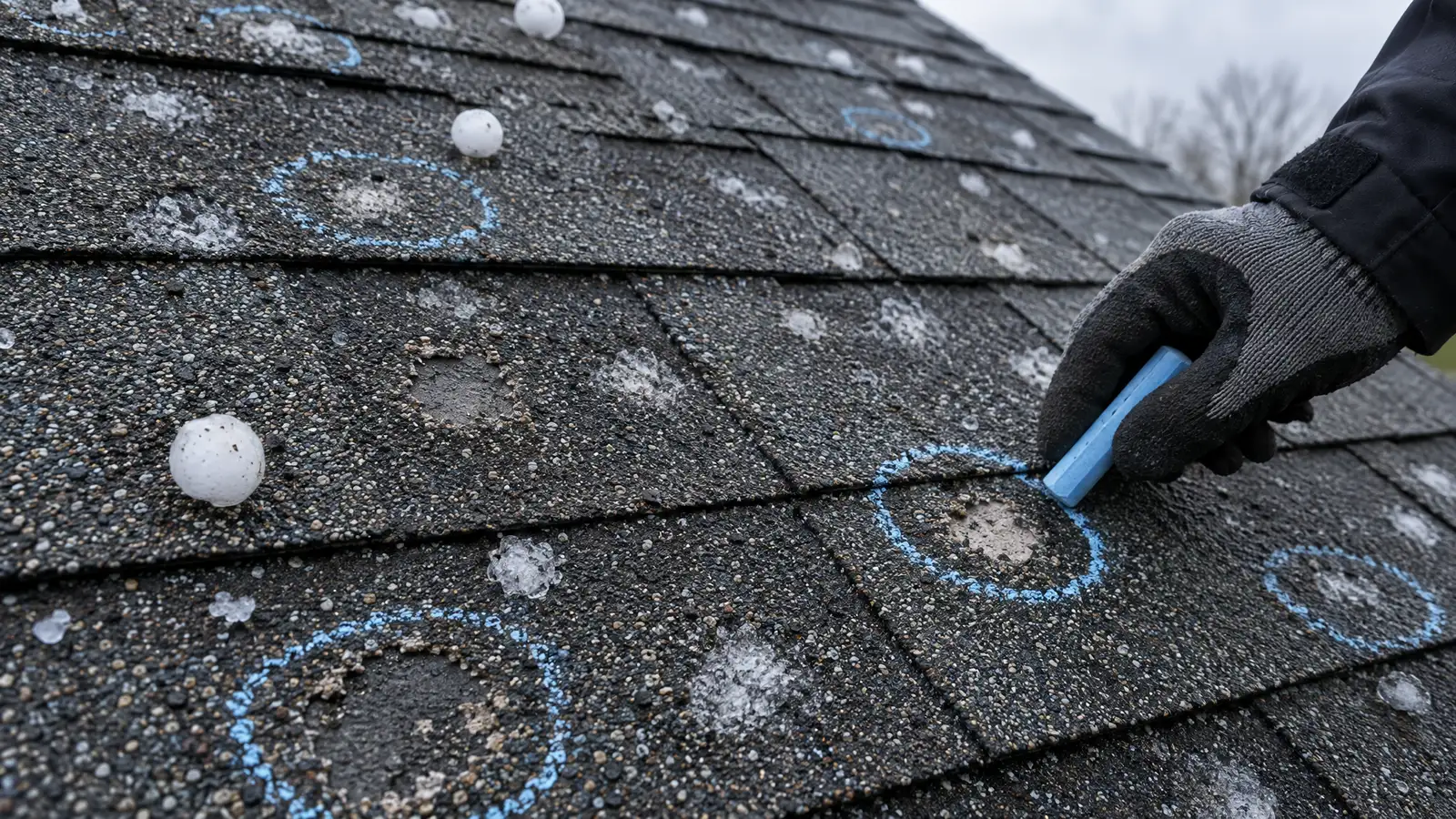
Spring thunderstorms are the most common source, though hail can fall in other seasons. Sizes vary from small to large, and the damage depends on size, wind and roof.
Smaller hail can damage older roofing.
Hidden damage
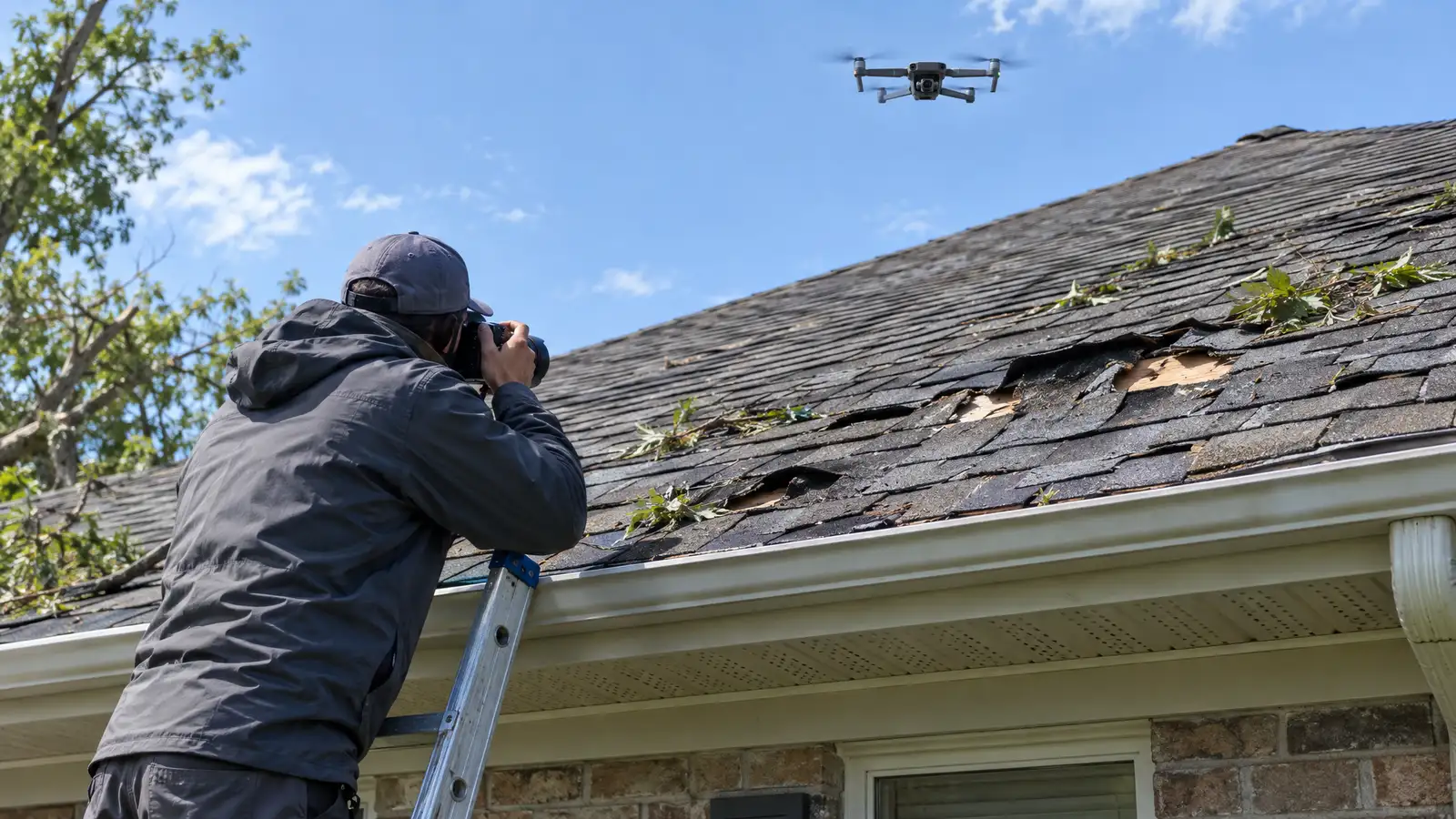
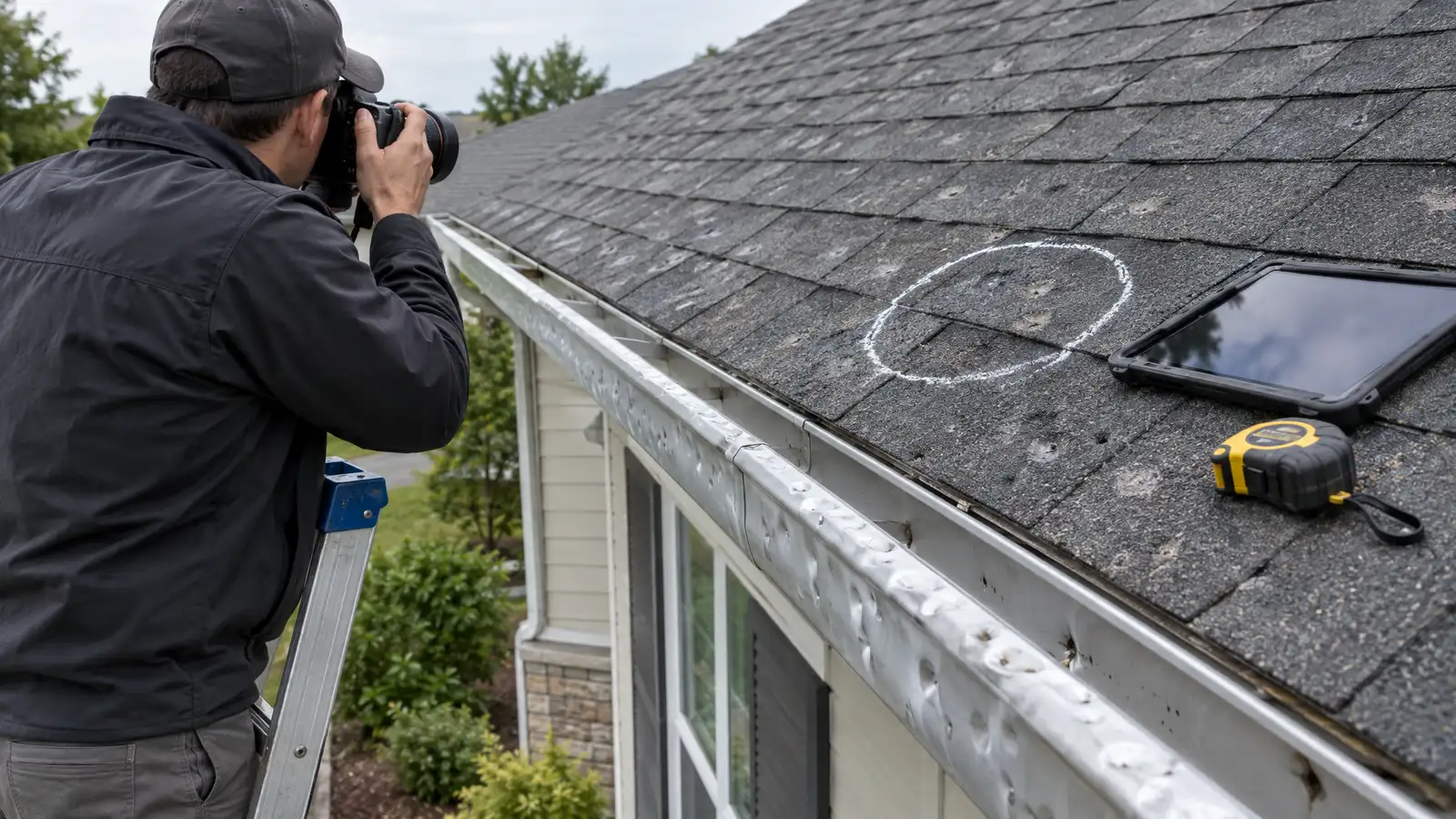
Bruises and fractures are often visible only up close. Soft metals dent and give an early sign. Damage may not leak for months.
An inspection is the only way to be sure.
What to do
Photograph from the ground, note the date, check soft metals and have the roof inspected before the next heavy rain. Be wary of pressure from door-to-door contractors after storms.
Get documented findings first.
General information, not engineering, legal, insurance or safety advice. Roofs, policies and local requirements vary, and every situation should be judged on its own facts. If anyone is in danger, call emergency services first.