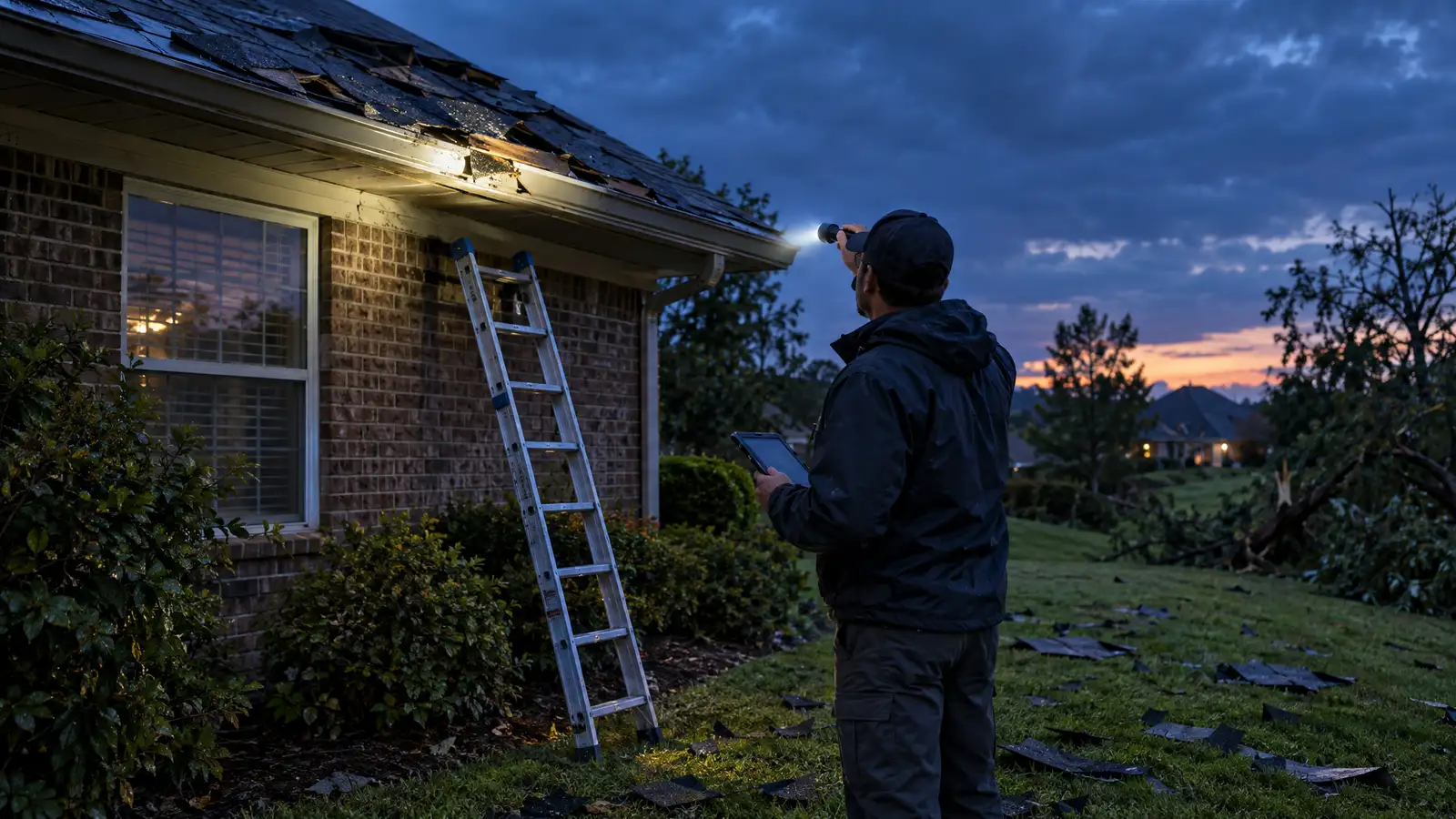
The short version
- Have the roof inspected
- Trim trees and clear debris
- Check flashing, vents and gutters
- Keep photographs of the roof’s condition
Inspect
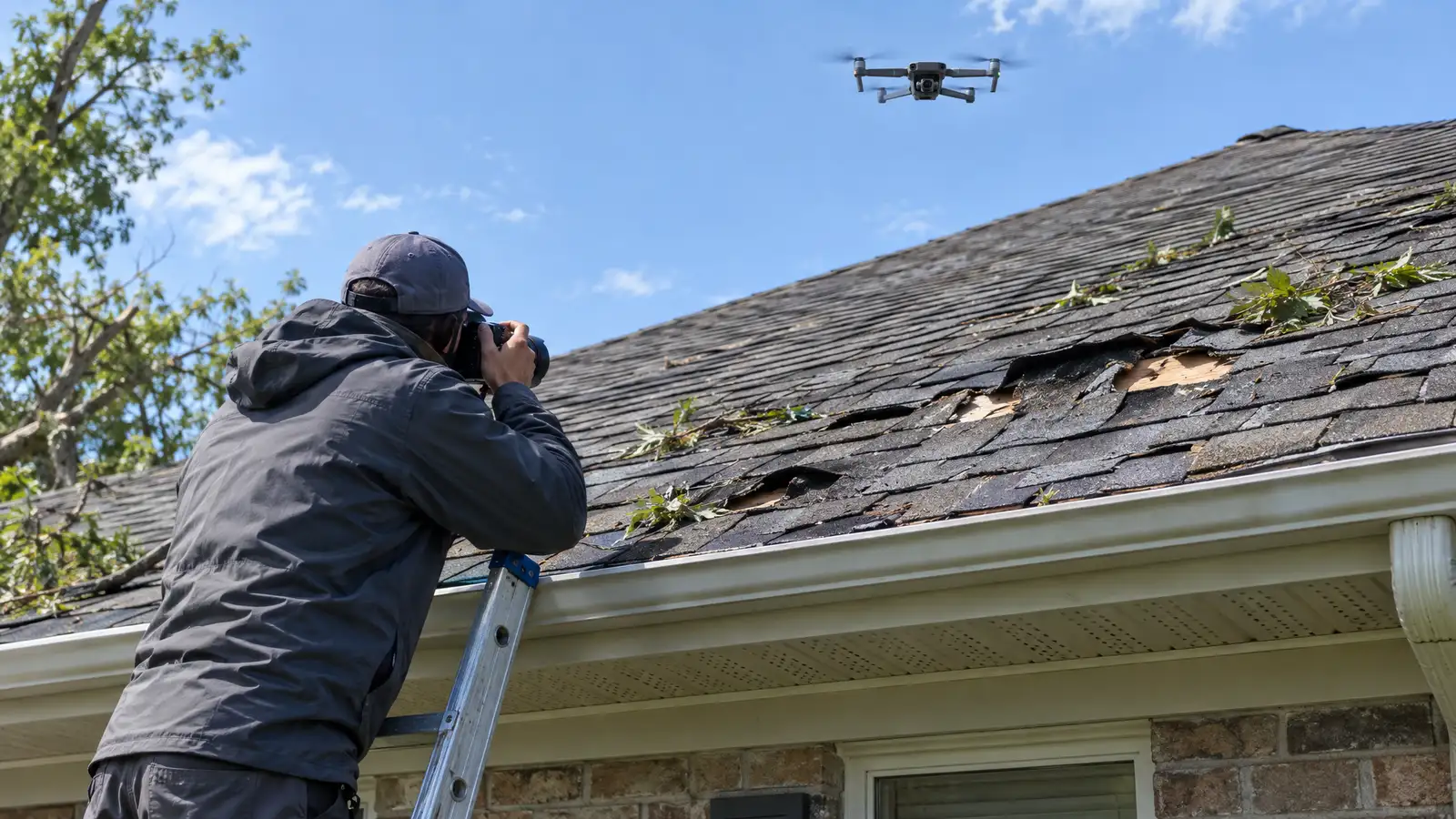
A pre-season inspection finds weak spots, such as worn boots, lifted shingles and loose flashing, before a storm exploits them. Get repairs done early.
It also creates a baseline record.
Trees and debris
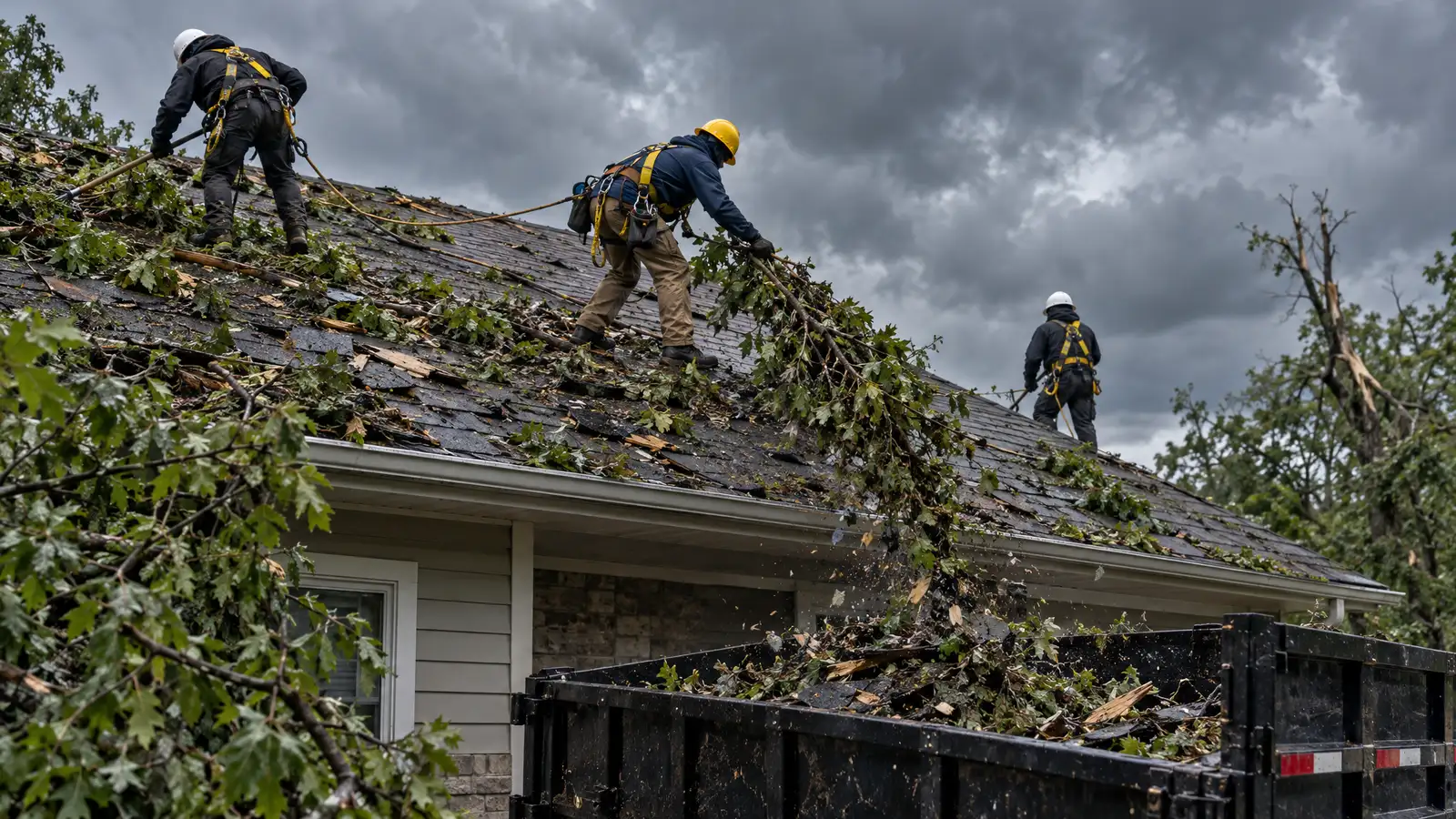
Trim branches that overhang the roof and remove dead limbs. Clear leaves from valleys and gutters so water can flow. Tree work near the house should be done by professionals.
Dead limbs are the first to fall.
Details
Check flashing, vents, chimney and skylight seals, and the gutters and downspouts. A small repair now is much cheaper than a leak later.
Do not climb up if unsure.
Records and plan
Take dated photographs of every slope and of your home. Know your insurance policy, deductible and deadlines, and keep a roofer’s number handy.
Have a plan for protecting belongings in a leak.
General information, not engineering, legal, insurance or safety advice. Roofs, policies and local requirements vary, and every situation should be judged on its own facts. If anyone is in danger, call emergency services first.