The short version
- Know who calls whom
- Keep roof records and plans handy
- Identify what must be protected first
- Agree on documentation steps
Contacts and roles
Decide who in your organization calls the roofer, the insurer and the staff, and keep an up-to-date contact list. After hours, someone needs to be reachable.
A short written plan saves time in a crisis.
Roof information
Keep roof plans, membrane type, age, warranty paperwork, past repairs and access instructions in one place. A roofer who knows what is on the roof can work faster and safer.
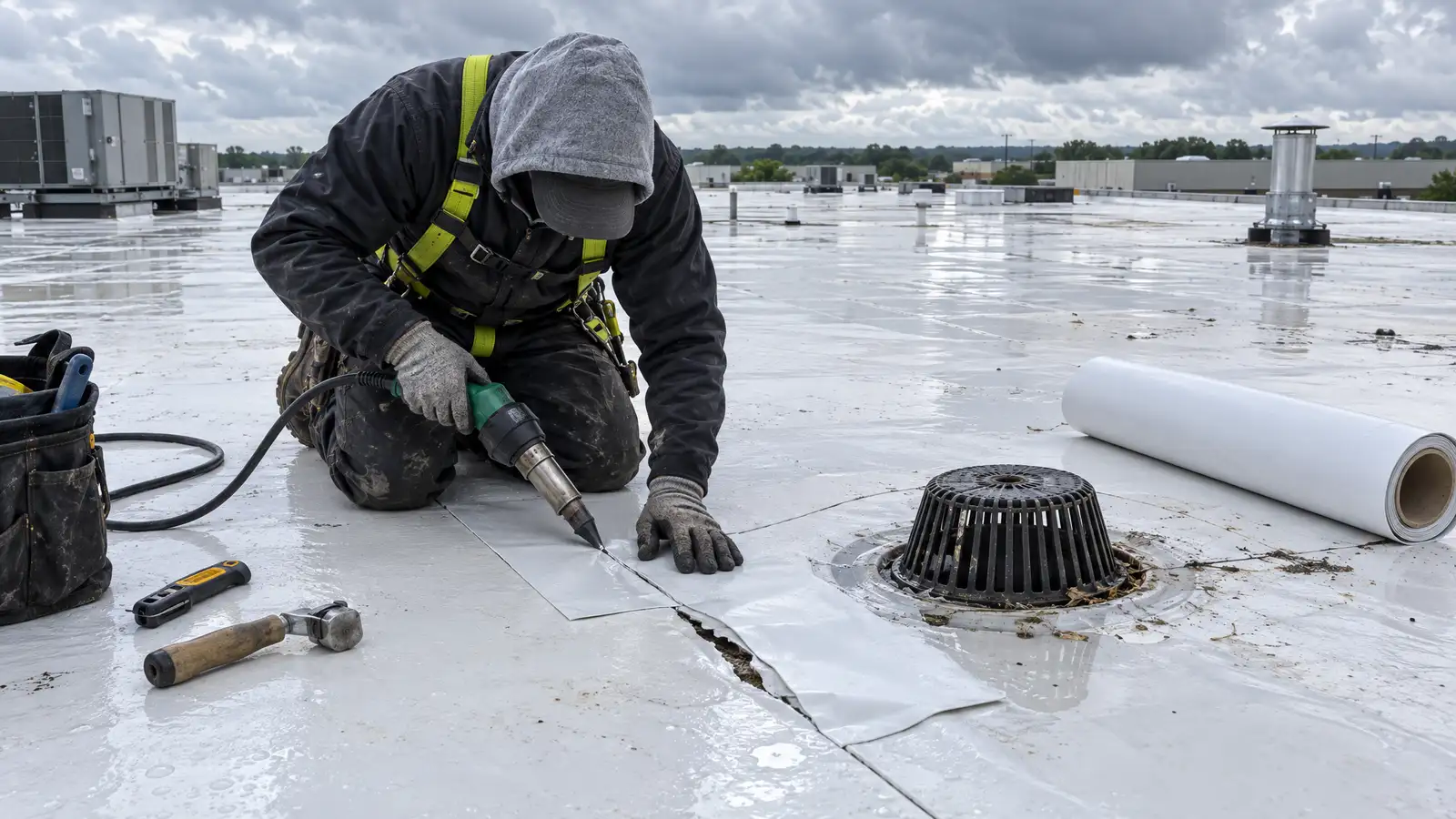
Note where equipment and drains are.
Priorities
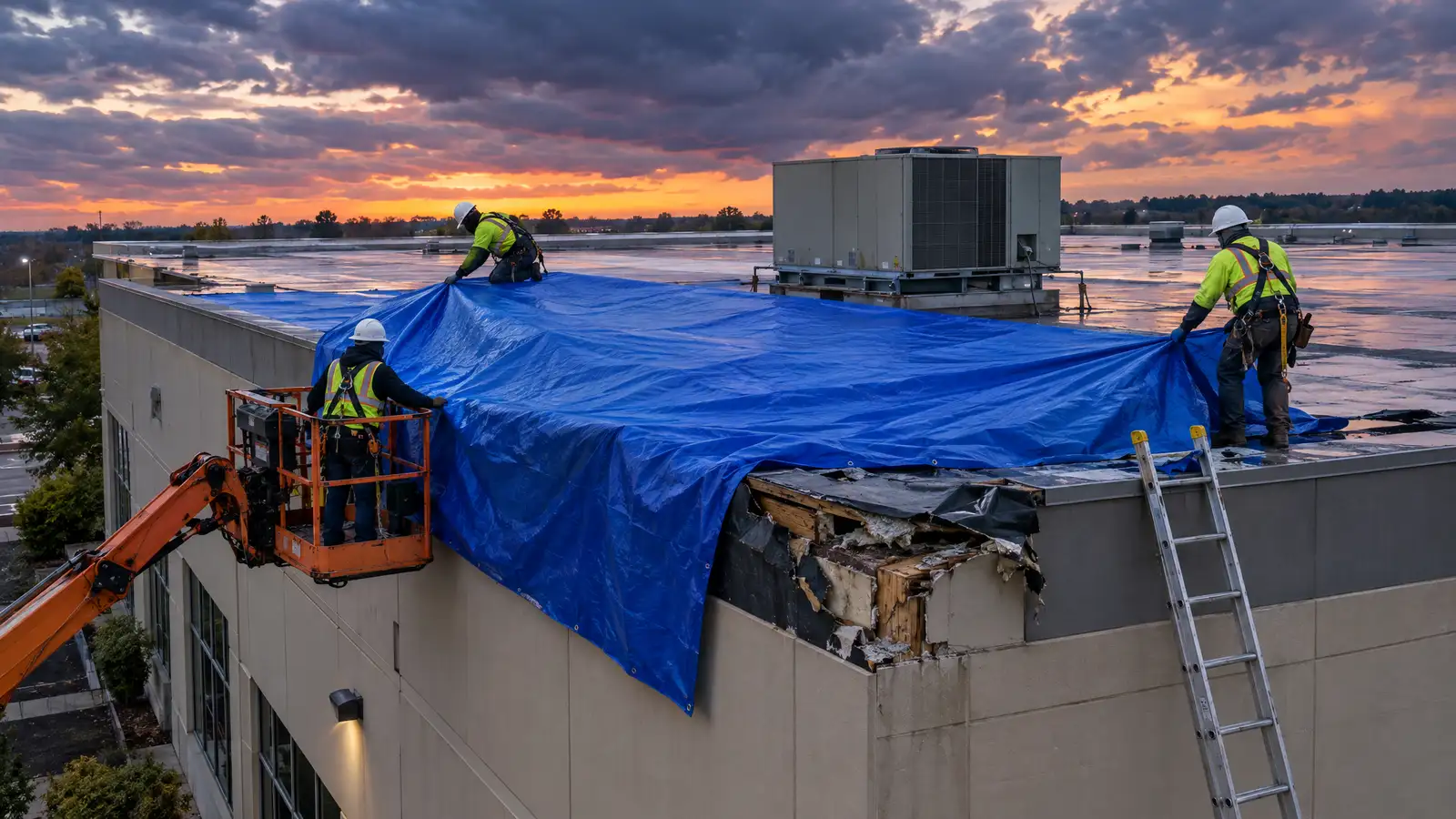
List what must be protected first: stock, servers, machinery, sensitive records. That tells a roofer where to focus coverage and where staff should move contents.
Keep supplies for covering equipment inside.
Documentation
Agree who photographs damage, who keeps receipts and who talks to the insurer. After the event, collect photographs, repairs and costs in one file.
Review the plan yearly.
General information, not engineering, legal, insurance or safety advice. Roofs, policies and local requirements vary, and every situation should be judged on its own facts. If anyone is in danger, call emergency services first.