
The short version
- Flat roofs shed water slowly
- Drains, seams and flashing are the usual suspects
- Ponding stresses membranes
- Wet insulation can hide the extent of damage
How flat roofs shed water
A flat roof has only a slight slope, so water relies on drains, scuppers and gutters to leave. Any blockage turns the roof into a shallow pond, and any opening in the membrane becomes a leak.
Drainage is half the story.
Common leak points
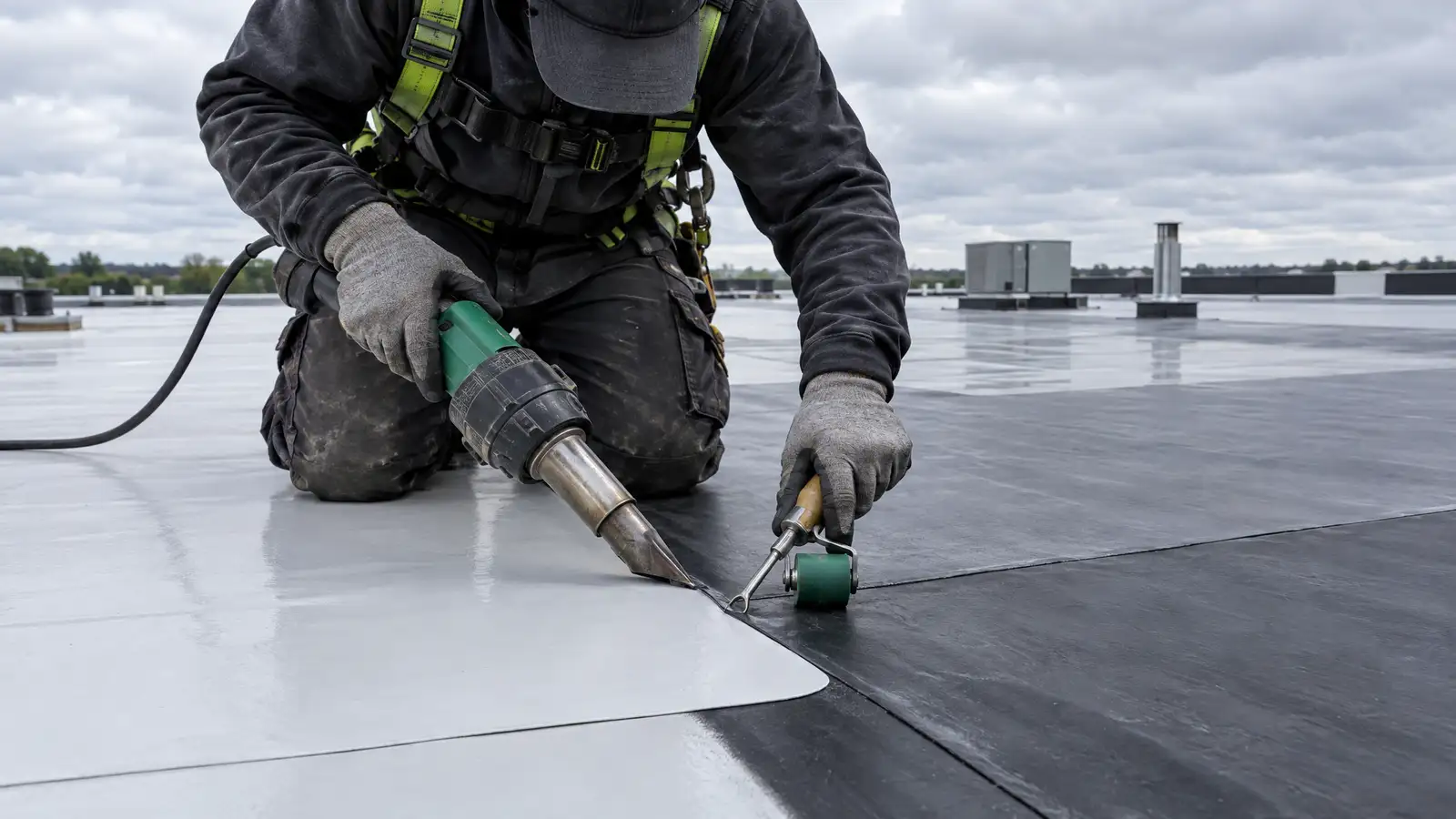
Seams, flashing at walls and curbs, pipe and equipment penetrations, drains and punctures account for most leaks. Storms also tear membranes and lift edges.
Checking these first saves time.
Ponding
Water that stays on a flat roof for long periods ages membranes, adds weight and finds weaknesses. Clearing drains and addressing low spots helps.
Persistent ponding may need drainage changes.
Hidden moisture
Water that enters a flat roof can spread through insulation, so the leak inside may be far from the opening. Moisture surveys can map wet insulation, and repair may involve removing it.
A visual look is not always enough.
General information, not engineering, legal, insurance or safety advice. Roofs, policies and local requirements vary, and every situation should be judged on its own facts. If anyone is in danger, call emergency services first.