The short version
- Protect stock and equipment first
- Cover the roof, then plan repairs
- Communicate with staff and tenants
- Document for insurance and continuity
Protect what matters
Move or cover stock, records and equipment under leaks, and protect electrical systems. Quick action on the inside reduces losses while the roof is being covered.
Plastic sheeting and pallets help.
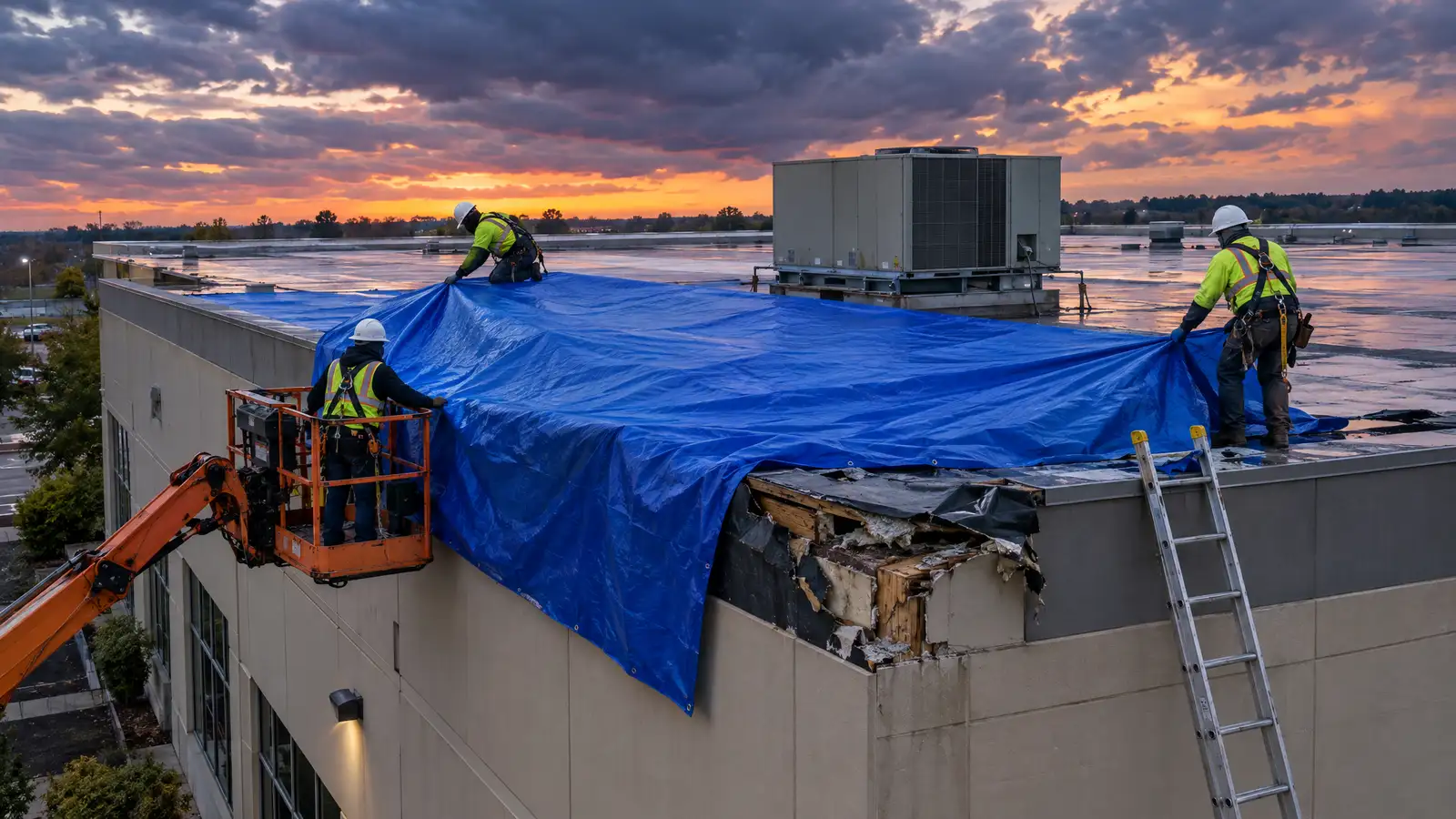
Cover the roof
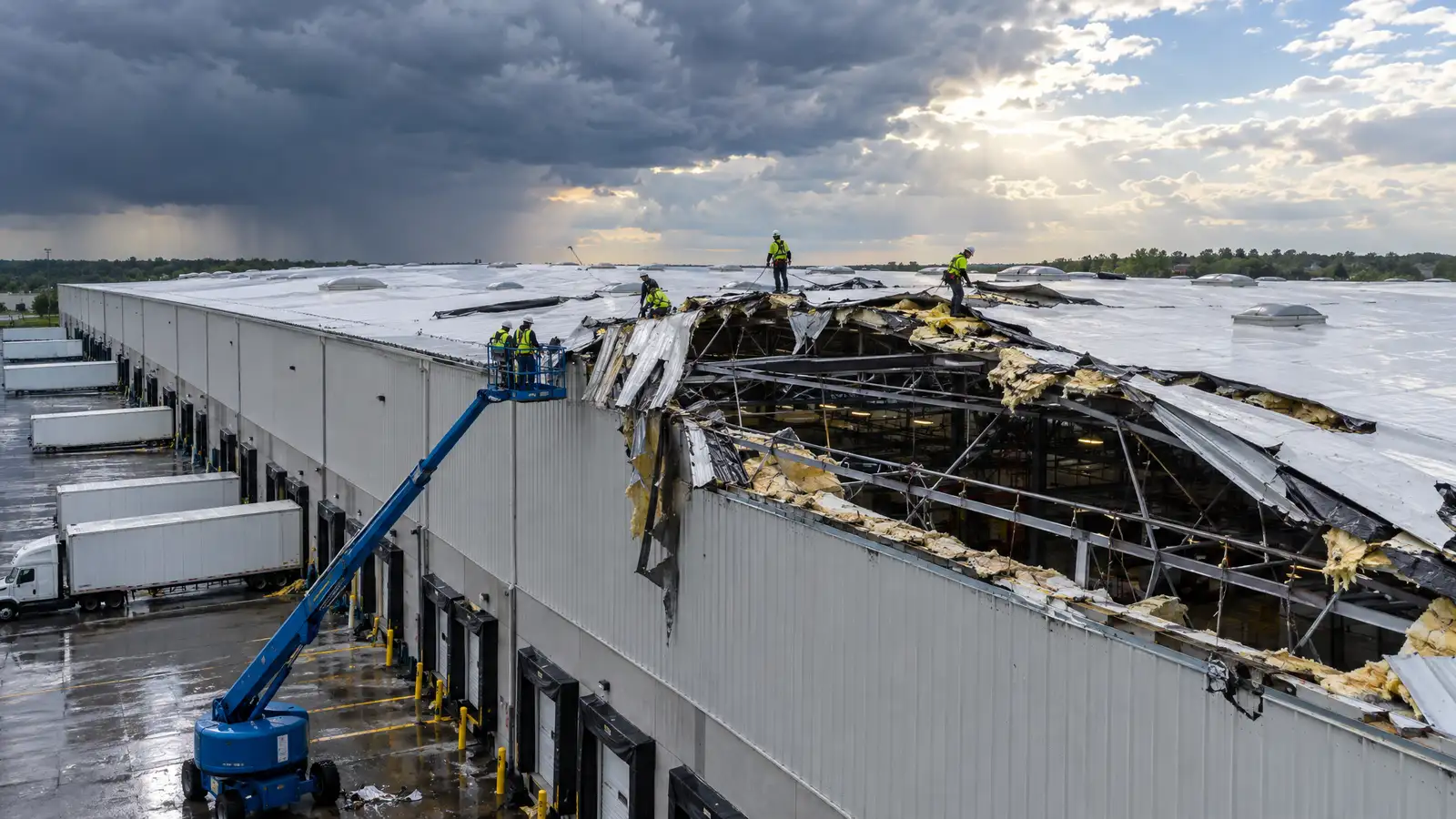
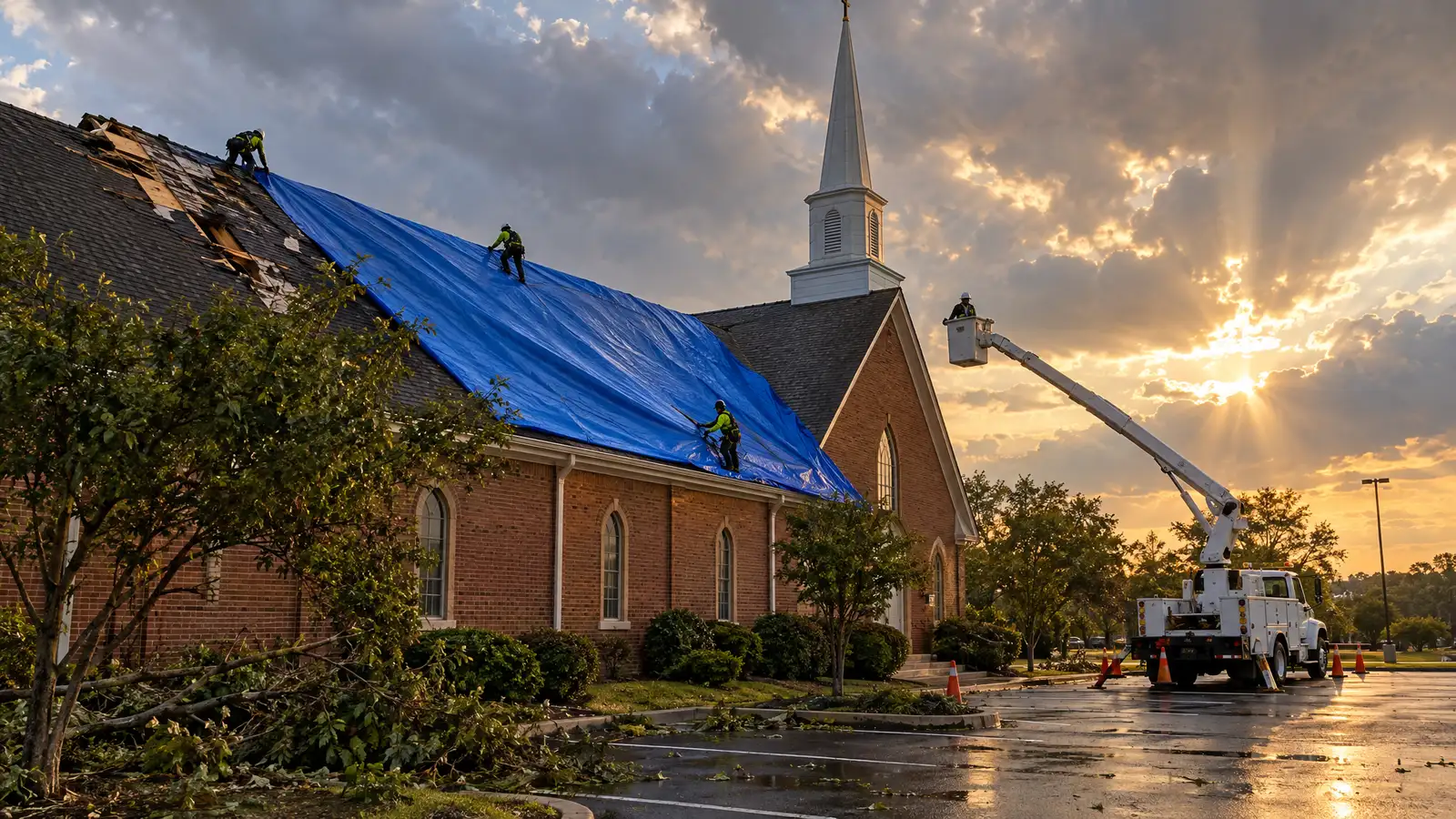
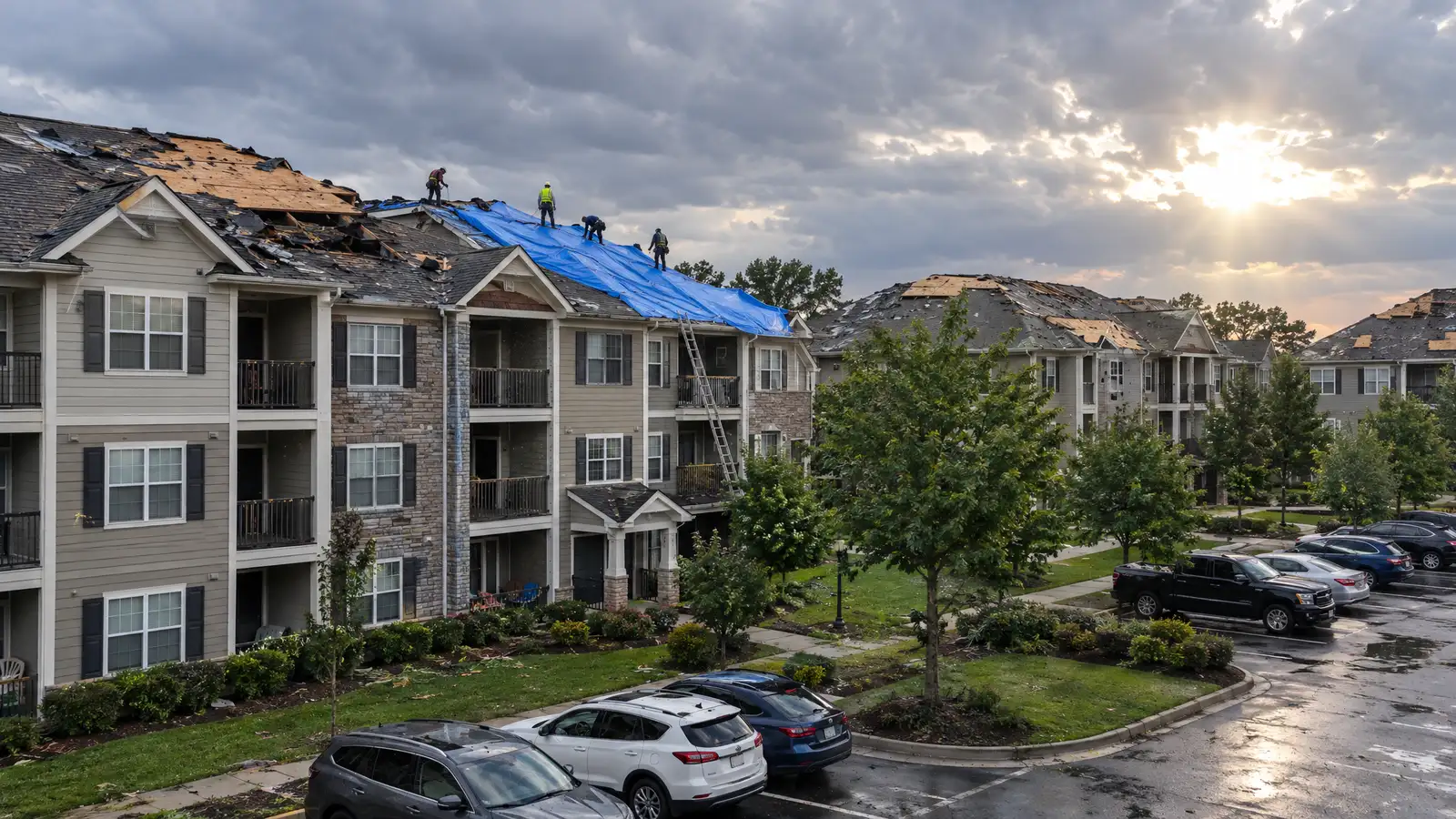
A temporary cover can often be installed without closing the whole building. Work is planned around access, hours and safety, and sections may be protected in phases.
Ask your roofer about the plan.
Communicate
Tell staff, tenants and customers what is happening and what to expect, and set up a point of contact. Clear information reduces confusion.
Update them as things change.
Document and plan
Photograph damage and losses, keep receipts and track downtime. Then plan the permanent repair so that it fits business needs.
Ask about business interruption coverage in your policy.
General information, not engineering, legal, insurance or safety advice. Roofs, policies and local requirements vary, and every situation should be judged on its own facts. If anyone is in danger, call emergency services first.